

Gunnison Copper’s strategic turnaround faces a high-risk funding test
CR
Cashu Research
Cashu Finance·5 min read
Cashu Research rating
BUY- Target price
- CA$0.70
- 12-18 Months
- Price at report
- CA$0.26
- as at 2025-09-21
- Current price
- CA$0.39
- Implied upside
- +79.5%
TL;DR
- Cashu Research rates Gunnison Copper a BUY with a C$0.70 target versus C$0.26 at the report date, but assigns HIGH risk.
- The thesis rests on Johnson Camp production, an updated Gunnison PEA, a later PFS, and a strategic funding partner.
- The key risks are the more than $1.3 billion financing hurdle, high projected costs, stronger rivals, and changing US policy support.
Gunnison Copper Corp is trying to turn a troubled development story into a domestic copper production platform in Southern Arizona. In its September 21, 2025 note, Cashu Research rates TSX: GCU a BUY with a C$0.70 price target, compared with a current price of C$0.26, and a 12–18-month horizon. The report presents that target as a 169% upside opportunity, while also assigning the investment HIGH risk.
This is a commissioned report for Gunnison Copper Corp. Its disclosure says Cashu Research received compensation for non-investment-banking services from the issuer directly, an investment manager, or an investor-relations consulting firm engaged by the issuer. The report was prepared by Cashu Research, a division of Cashu Group, and the target and rating represent the research house’s view rather than Cashu Finance advice.
A conventional mining reset
Gunnison’s original plan focused on a novel in-situ leaching method at its flagship Gunnison Project, but persistent technical issues forced a strategic reset between 2023 and 2024. The company instead partnered with Rio Tinto’s Nuton to restart the smaller, adjacent Johnson Camp Mine using conventional methods, with Nuton funding the capital costs in exchange for testing its technology.
At the same time, Gunnison re-envisioned its main asset as a traditional large-scale open-pit mine. The company released a preliminary economic assessment in the fourth quarter of 2024 and is undertaking a High-Value-Add Work Program intended to improve the project’s economics ahead of an updated PEA in the first quarter of 2026.
The pivot has already produced an important milestone: Gunnison reported first copper production from Johnson Camp in August 2025. Cashu Research describes that achievement as moving the company from a struggling developer to a small-scale producer with a path toward larger-scale development.
A large market, but no escape from execution risk
The investment case is tied partly to the push for domestic US copper supply. Cashu Research estimates the global copper market at more than $250 billion annually and the US market at about $14.4 billion. It also points to US import reliance of 41% and a structural premium for US-based copper of roughly 31% above the global benchmark.
That backdrop gives Gunnison a potential positioning advantage: its projects are intended to produce finished copper cathode in the United States for American energy, defense, and manufacturing supply chains. However, the report is clear that demand is not the central risk. Gunnison’s challenge is producing efficiently enough to benefit from the domestic premium while remaining competitive in a globally priced commodity market.
The milestones that could close the valuation gap
Johnson Camp is the near-term proof point. Its solvent-extraction and electrowinning plant has a stated production capacity of 25M lbs/year, and reaching nameplate production would provide evidence that management can execute after the company’s earlier technical problems. Cashu Research also identifies the updated Gunnison PEA, expected in early 2026, as a catalyst that could incorporate the results of the High-Value-Add Work Program.
Further ahead, the report highlights a Gunnison open-pit PFS expected in late 2026. A positive PFS would give investors a more developed economic basis for valuing the main project. Cashu Research also points to the potential monetization of up to US$13.9 million in 48C Department of Energy tax credits, subject to final certification, as a way to reduce debt.
The valuation starts from a very depressed base. Cashu Research says Gunnison trades at 0.05x price-to-NAV, compared with approximately 0.45x for advanced developer peers. The report attributes the discount to the legacy of the failed in-situ project, competition from better-funded developers, and doubts over whether Gunnison can secure the financing needed for the open pit.
Cashu Research’s base case assumes the P/NAV multiple expands from 0.05x to 0.15x over the next 12 to 18 months. On that basis, it sets a C$0.70 price target, representing 169% upside from the C$0.26 price cited in the report. The target is based on a Gunnison Open Pit NAV of $1,260 million and a target P/NAV multiple of 0.15x.
The funding hurdle remains decisive
The main risk is the scale of the Gunnison open-pit financing requirement. Cashu Research says the project requires more than $1.3 billion and that the investment case is effectively binary if Gunnison cannot secure a strategic partner. Without that funding, the flagship asset could remain undeveloped.
Competition adds to the challenge. Arizona Sonoran Copper, Ivanhoe Electric, and Taseko are advancing larger or better-funded projects, while regional operators such as ASARCO provide a cost benchmark that Gunnison may struggle to match. Cashu Research cites Gunnison’s current PEA all-in sustaining cost of US$1.94/lb, compared with approximately US$1.04/lb for ASARCO.
The report says the projected cost is high for an established producer but competitive for a new mine in development. At today’s copper prices, it estimates that this cost structure could generate more than US$450 million in annual free cash flow, while also noting that the High-Value-Add Work Program is seeking to reduce capital and sustaining costs.
The political support behind domestic copper is another uncertainty. Cashu Research warns that the Made-in-America premium and government support reflect current US policy, which could change with a shift in administration or trade policy. If those advantages weaken, Gunnison’s relatively high-cost structure would face more direct exposure to global market pricing.
What would change the view
The research case depends on execution rather than immediate full financing of the main project. The key milestones are ramping Johnson Camp toward nameplate capacity, delivering the updated PEA, publishing a positive open-pit PFS, and securing a strategic partner for development.
Investors should also treat the PEA with caution. The report says it is preliminary, includes Inferred Mineral Resources, and offers no certainty that its conclusions will be realized. Its conclusion is therefore a high-risk, high-reward proposition: a successful operational and financing sequence could narrow Gunnison’s valuation discount, but failure to secure project backing would leave the central investment case exposed.
This research report was commissioned and paid for by Gunnison Copper Corp.. This article is general information only and is not personal financial advice; consider your own circumstances and seek independent advice before acting.
More research on Gunnison Copper Corp
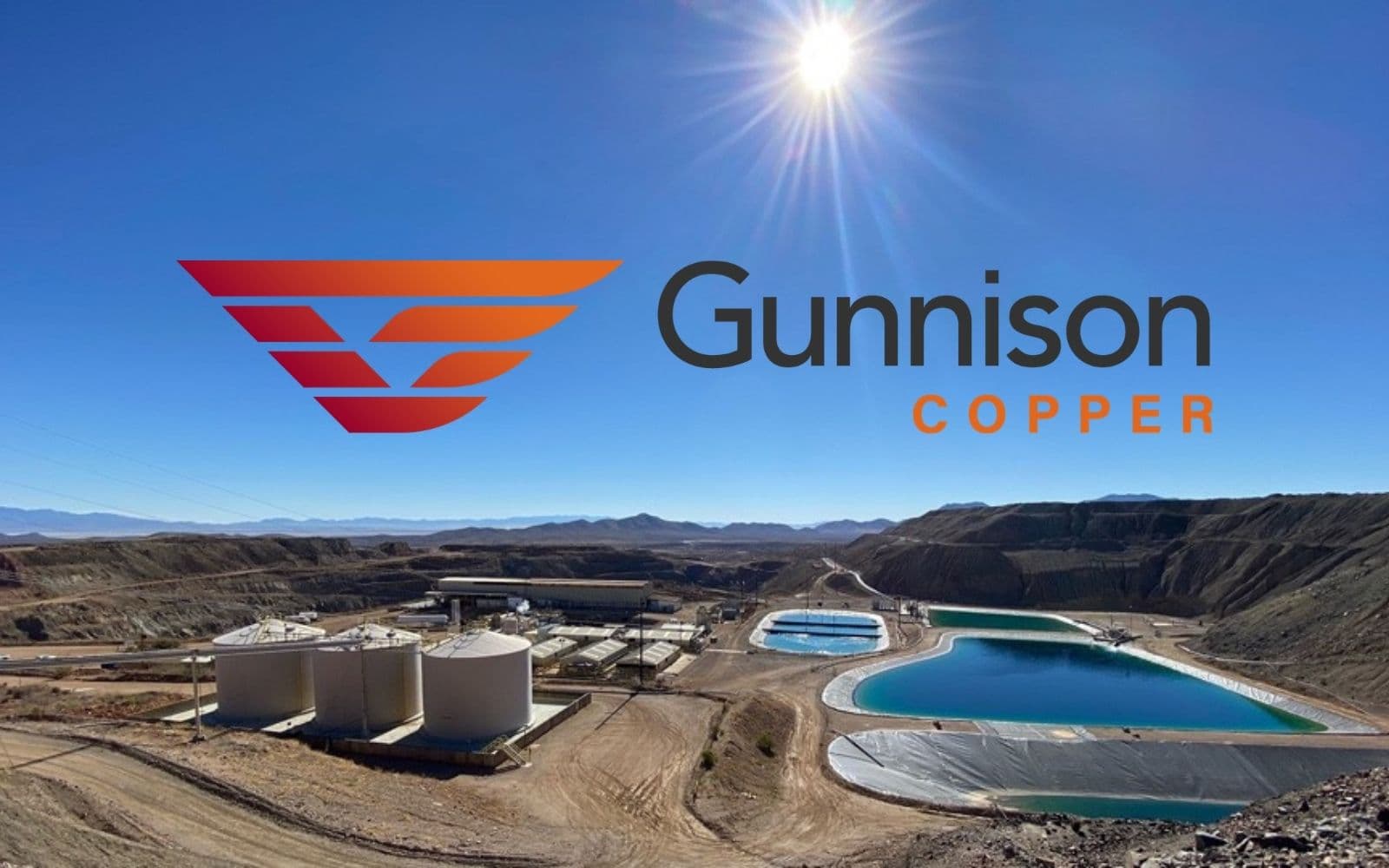
Gunnison Copper Corp. (TSX: GCU)
Gunnison Copper is transitioning from developer to producer with the operating Johnson Camp Mine producing Grade A copper cathode and a materially upgraded Gunnison Open Pit (2026 PEA NAV ~US$2.0B, IRR 22.5%, 21-year mine life). Strategic Nuton/Rio Tinto funding and an AWS offtake create a capital-efficient development pathway, and at ~C$0.47 (~0.20x P/NAV) the stock offers significant upside to the C$1.30 target despite elevated execution risk.