

Walmart's Strategic Journey in Retail
ED
Editorial
Cashu Finance·5 min read
TL;DR
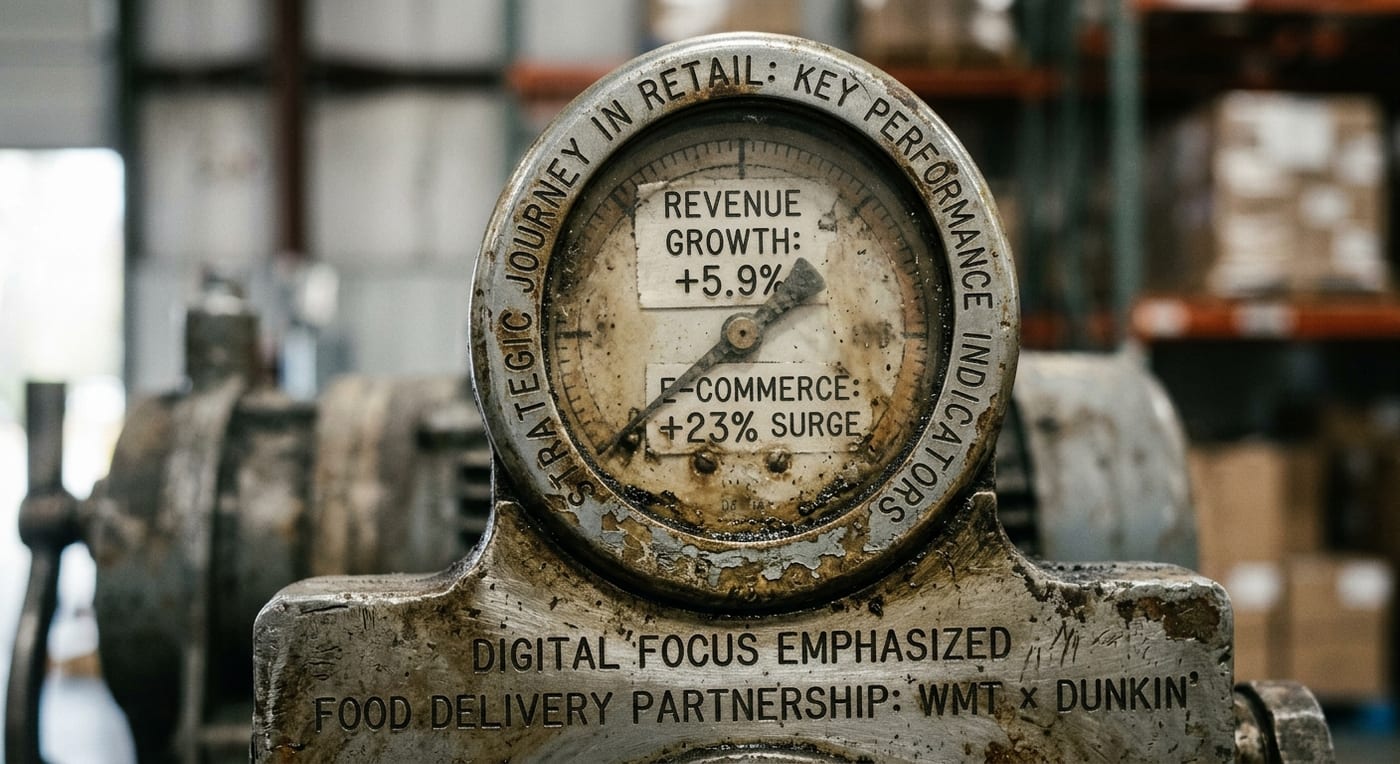
- Strong revenue growth of 5.9% despite stock market challenges.
- E-commerce sales surged by 23%, emphasizing digital focus.
- Strategic food delivery partnership with Dunkin' enhances customer engagement.
Walmart Inc. ( WMT) continues to innovate and adapt in a challenging retail landscape, providing insights into its market resilience and strategic pivots. With a reported revenue growth of 5.9% amounting to approximately $187.9 billion in its latest fiscal quarter, Walmart remains a pillar of strength in the retail industry. However, alongside this growth, the company has faced stock market fluctuations and evolving consumer demands that have tested its operations. This article examines Walmart's recent financial performance, its ventures into e-commerce and food delivery, and the broader implications of its strategies amidst economic pressures. That backdrop echoes earlier coverage of the issue, especially around how pricing, strategy, and demand feed into the current story.
Recent Financial Metrics and Market Reaction
The financial results revealed a double-edged sword for Walmart. While the revenue growth is commendable, the company experienced a significant decline in its stock, which fell by 9.2% to settle at $103.84. This decline can largely be attributed to a slowdown in comparable U.S. store sales, registering a modest 2.6% increase compared to a more robust 4.6% from the previous year. Analysts attribute this deceleration to the economic challenges faced by many consumers, particularly in light of rising inflation and high living costs. As Walmart scales its operations, it must navigate these turbulent waters while remaining ahead of competitors such as Costco, which recently reported a comparable sales increase of 6.7%.
Walmart’s E-Commerce Evolution
A vital aspect of Walmart's strategy lies in its e-commerce efforts. The retailer has aggressively expanded its online presence, amounting to a remarkable 23% surge in e-commerce sales. This growth showcases Walmart's successful transition in a market dominated by established online players like Amazon. Walmart's continued investments in logistics, fulfillment capabilities, and technology have allowed it to carve out a significant market share against its main rival. Additionally, Walmart has pivoted towards a strong digital strategy, enhancing its online shopping experience with tools such as its AI shopping assistant, Sparky, which aims to provide a personalized but fair shopping experience for customers. As CEO John Furner emphasizes, "We price the product, not the person," reaffirming Walmart's commitment to its pricing principles amidst the growing concern of personalized pricing practices in the retail landscape.
For further insight, Walmart's past article on its resilience highlights the importance of this e-commerce push, supported by substantial revenue increases from this avenue. The move coincides with a broader industry trend towards digital transformation, underscoring Walmart's adaptive strategy in an increasingly online world. As the company reinforces its digital capabilities, it positions itself as not just a brick-and-mortar entity but a vital player in the digital retail space.
Innovating in Food Delivery
In a bid to further engage its customer base, Walmart has recently entered the competitive food delivery arena, launching a strategic partnership with Dunkin'. This initiative aims to leverage Walmart's extensive retail network to offer a comprehensive shopping experience, combining grocery needs with restaurant delivery. The plan to roll out Dunkin’s products from selected Walmart locations is an innovative response to the competitive pressure from established food delivery services like DoorDash and Uber Eats.
Walmart's strategic approach towards food delivery signifies its understanding of consumer preferences shifting towards convenience and seamless service innovations. As evidenced in another recent article outlining Walmart's food delivery ambitions, this initiative is crucial for enhancing customer engagement and driving sales, especially as e-commerce gains traction.
Challenges and Competitive Landscape
Despite its strategic initiatives, Walmart faces mounting pressure from competitors such as Costco, which is currently outperforming Walmart in certain areas. With Costco’s recent growth showing greater resilience to consumer spending pressures, Walmart must continue to refine its operations and expand its market reach. In comparing performance, Costco reported a 19.5% growth in its e-commerce sales, surpassing Walmart’s recent tally. Additionally, challenges like regulatory scrutiny over rising prices in essential categories, particularly beef, present operational hurdles that require Walmart to carefully manage both consumer expectations and its pricing strategies.
As challenges mount, Walmart's leadership acknowledges these pressures while aiming to uphold the principles underlying its operations. The company is alert to maintaining its “Every Day Low Prices” (EDLP) philosophy, which has served to build trust with its customer base for over fifty years. This philosophy underscores its commitment to transparency and customer satisfaction in the face of evolving market dynamics.
Conclusion: The Road Ahead for Walmart
As Walmart Inc. navigates the complexities of the retail industry, its strategic resilience highlights a proactive approach to innovation and adaptation. The continued strengthening of its e-commerce capabilities and the welcome venture into food delivery align with consumer trends that favor convenience and efficiency. However, to sustain its competitive edge, Walmart will need to address challenges with agility while reinforcing its foundational principles of low pricing and customer trust.
The juxtaposition of Walmart's latest financial health against the backdrop of its strategic initiatives provides a comprehensive view of how the company positions itself within the constantly evolving retail landscape. Looking ahead, Walmart's ability to meld tradition with innovation will be crucial as it seeks to redefine its role in both physical and digital marketplaces. The same pressure is reflected in recent reporting on the issue, which helps explain why the company's pricing decisions remain under scrutiny.