

Walmart's Navigation Through Market Challenges
ED
Editorial
Cashu Finance·5 min read
TL;DR
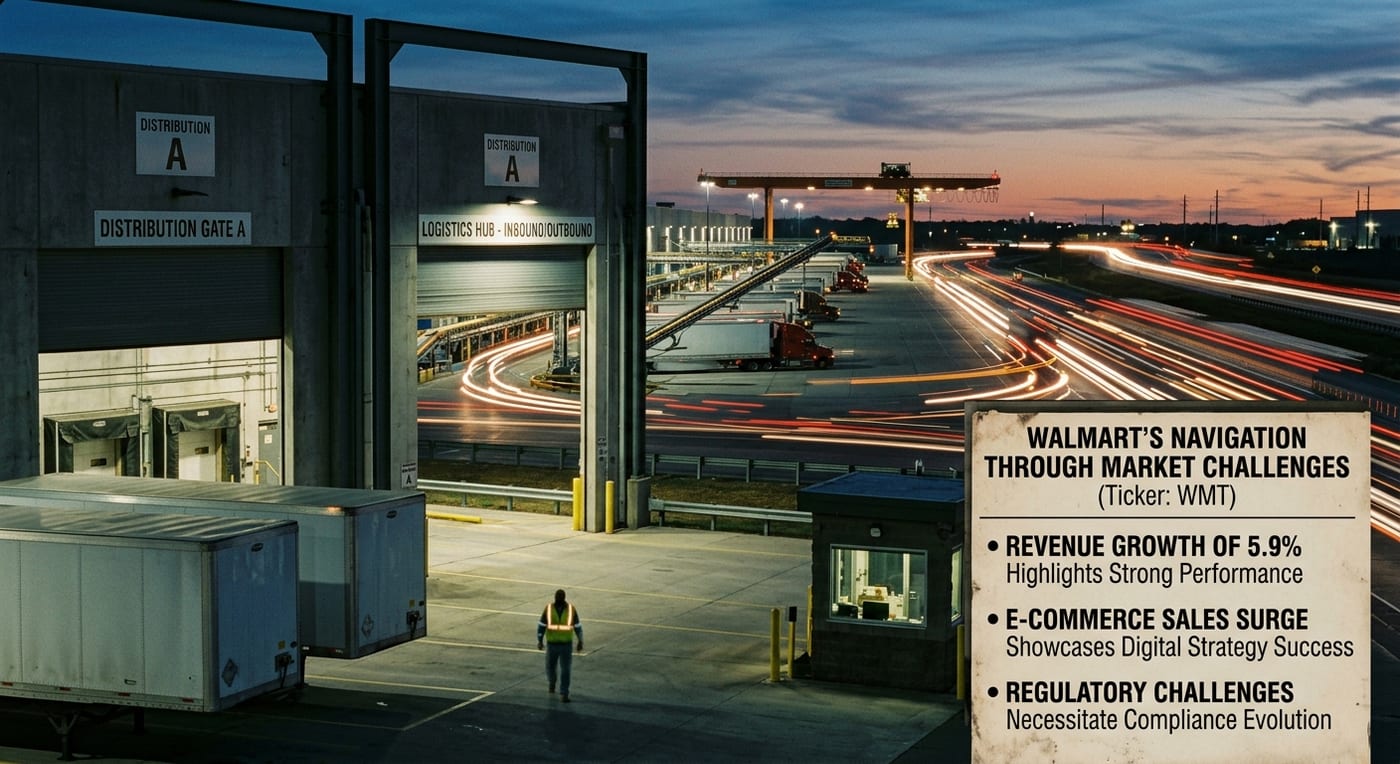
- Revenue growth of 5.9% highlights strong performance.
- E-commerce sales surge showcases digital strategy success.
- Regulatory challenges necessitate compliance evolution.
Walmart Inc. (WMT) remains a key player in the retail industry, striving to sustain growth amidst a backdrop of economic uncertainty and shifting consumer behaviors. The company is currently facing a complex environment that blends strong revenue performance with disappointing stock market reactions. For investors, Walmart's resilience and strategic adaptations are crucial to understand as they depict not just the company's recent past but also hint at its future trajectory.
Recent Financial Performance
In the most recent fiscal quarter, Walmart reported a notable revenue growth of 5.9%, reaching approximately $187.9 billion. This performance, however, has been juxtaposed against a 9.2% decline in its stock price, which closed at $103.84. The sentiment among investors has been mixed, primarily due to a significant slowdown in comparable U.S. store sales, which grew just 2.6%, as opposed to a much stronger 4.6% last year. This drop in growth underscores the need for Walmart to continuously innovate and adapt its business strategies to align with the changing market conditions.
Interestingly, while the stock price falters, the e-commerce segment has emerged as a beacon of growth for the retail giant, with sales in this area increasing by 23% year-over-year. This surge indicates a successful execution of Walmart's digital strategy, which has increasingly emphasized online sales and omnichannel approaches to enhance customer convenience. Such strategic adaptations are well documented in earlier evaluations of Walmart's performance, showcasing its ability to pivot effectively in times of adversity.
For instance, the company’s determination to solidify its digital presence stands out in its rapid adaptation to e-commerce advancements and shifting consumer preferences, further solidified in prior discussions of Walmart's resilience in a shifting retail landscape. More about this evolution can be found here.
Strategic Focus on Pricing
A crucial component of Walmart's strategy has been its unwavering commitment to pricing stability. As inflationary pressures continue to loom, the company leverages financial mechanisms to maintain its competitive edge in pricing. Recently, Walmart capitalized on nearly $3 billion in tariff refunds to execute over 11,000 price rollbacks across its U.S. stores. This tactical move highlights Walmart’s resolve to reassure consumers amidst worsening economic conditions and aligns directly with its fundamental value proposition of low prices. By doing so, the retailer aims to foster customer loyalty and counteract any potential downturns in consumer spending.
In light of these strategic pricing decisions, Walmart's ongoing efforts align closely with earlier discussions about its adaptability in an evolving market.
For instance, leveraging such tariff refunds not only supports the company's pricing model but also works as a financial cushion against economic fluctuations. This aspect of pricing resilience is explored further in discussions of Walmart's strategic approach to maintaining price competitiveness despite economic headwinds. Interested readers can find a deeper analysis on this topic here.
Navigating Regulatory Challenges
In addition to navigating economic pressures, Walmart has found itself contending with regulatory scrutiny in the form of a recent $50 million settlement lodged due to allegations of improper pharmacy practices involving opioids. The U.S. Department of Justice accused the company of filling illegal prescriptions, thus necessitating new compliance measures, including the establishment of monitoring systems for pharmacy dispensing patterns.
However, Walmart's response to such challenges reflects its broader strategic adaptability. The company has committed to reforming its internal compliance structures and enhancing accountability within its pharmacy operations. While this chapter presents immediate challenges, it may also lead to strengthened operational procedures that could improve Walmart's overall reputation in the long term.
More information on this settlement can be found here.
Market Outlook and Investor Sentiment
As Walmart adapts to these challenges, investor sentiment remains a critical factor. The company's stock has experienced volatility in recent months, with significant declines following disappointing fiscal reports. Although the overall revenue picture is positive, the pronounced slowdown in core sales metrics raises questions about the sustainability of growth in the immediate future. Current evaluations suggest that while the market may have overly reacted to short-term challenges, the long-term outlook for Walmart may remain solid if it can continue to innovate and respond effectively to market trends.
Looking ahead, investors are contemplating whether Walmart's current stock price provides an attractive entry point, especially given its historical resilience and track record of consistent dividend payouts. The company has maintained its Dividend King status, having increased its dividends for over 53 consecutive years, a factor that often resonates with income investors despite recent market tremors.
Discussions surrounding Walmart’s long-term value can be explored in the analysis of its stock performance trends and investor expectations available here.
Conclusion
In summary, Walmart Inc. (WMT) exemplifies the complexities of navigating the retail landscape during uncertain economic times. The juxtaposition of strong revenue growth against stock market challenges illustrates a broader story of resiliency and strategic evolution. As the company focuses on pricing strategies, digital growth, and compliance improvements, stakeholders will keenly watch how these adaptations play out in shaping Walmart's future trajectory. The ongoing fiscal adjustments, combined with a commitment to customer value and responsible practices, position Walmart strongly, albeit amidst ongoing market complexities.