

Walmart's Bold Move into Food Delivery
ED
Editorial
Cashu Finance·4 min read
TL;DR
- Walmart's partnership with Dunkin' boosts food delivery.
- E-commerce sales increased 23%, aiding growth.
- The company faces stiff competition from food delivery giants.
Walmart Inc. (WMT) is on a transformative path, intensifying its focus on food delivery to leverage its expansive retail network further. In a bold strategy, the retail giant recently announced plans to partner with Dunkin' to deliver items from both its stores and Dunkin's locations, challenging established players in the food delivery space like DoorDash and Uber Eats.
The Expansion into Restaurant Delivery
Walmart’s new delivery initiative began with an initial rollout of Dunkin' products from select Walmart locations, with plans for significant expansion across the approximately 10,000 Dunkin' locations nationwide. This initiative encapsulates Walmart's ambition to deepen customer engagement through its app, providing a seamless shopping experience that combines grocery shopping and restaurant deliveries in one transaction.
Walmart’s spokesperson emphasized this effort as adding value to the shopping experience that existing customers are already familiar with. In practice, this means that while customers are ordering a breakfast item like a coffee or doughnut, they can conveniently add household products to their cart—essentially increasing the average transaction size. As Hongseok Jang, an assistant professor at Tulane University, pointed out, this strategy plays to Walmart’s strengths in logistics and customer proximity, as 90% of Americans live within 10 miles of a Walmart store.
Competing with Established Delivery Services
The move into the food delivery segment is seen as a direct challenge to established delivery services like DoorDash and Uber Eats, which have dominated this market. Walmart's approach fosters a more extensive local-commerce platform by evolving beyond its traditional retail operations to include food delivery services. This strategic shift is not just about adding a new revenue stream; it also enhances customer loyalty by creating a more comprehensive and convenient shopping experience.
The market dynamics indicate that while Walmart is a formidable player in logistics, operational challenges still loom. Competitors like DoorDash and Uber Eats possess established brand loyalties and advanced operational capabilities. For instance, Uber Eats has been enhancing its service efficiency by utilizing self-driving delivery robots, while DoorDash continues to expand its service capabilities through acquisitions.
Insights from Recent Performance
Walmart’s recent earnings report highlighted the duality of its current situation: while the company achieved a commendable revenue growth of 5.9%—reaching about $187.9 billion—its stock price faced significant pressure, declining by 9.2%. The minor growth in comparable U.S. store sales—only 2.6% versus 4.6% a year prior—has raised questions about future consumer spending patterns and the overall robustness of its core retail segment.
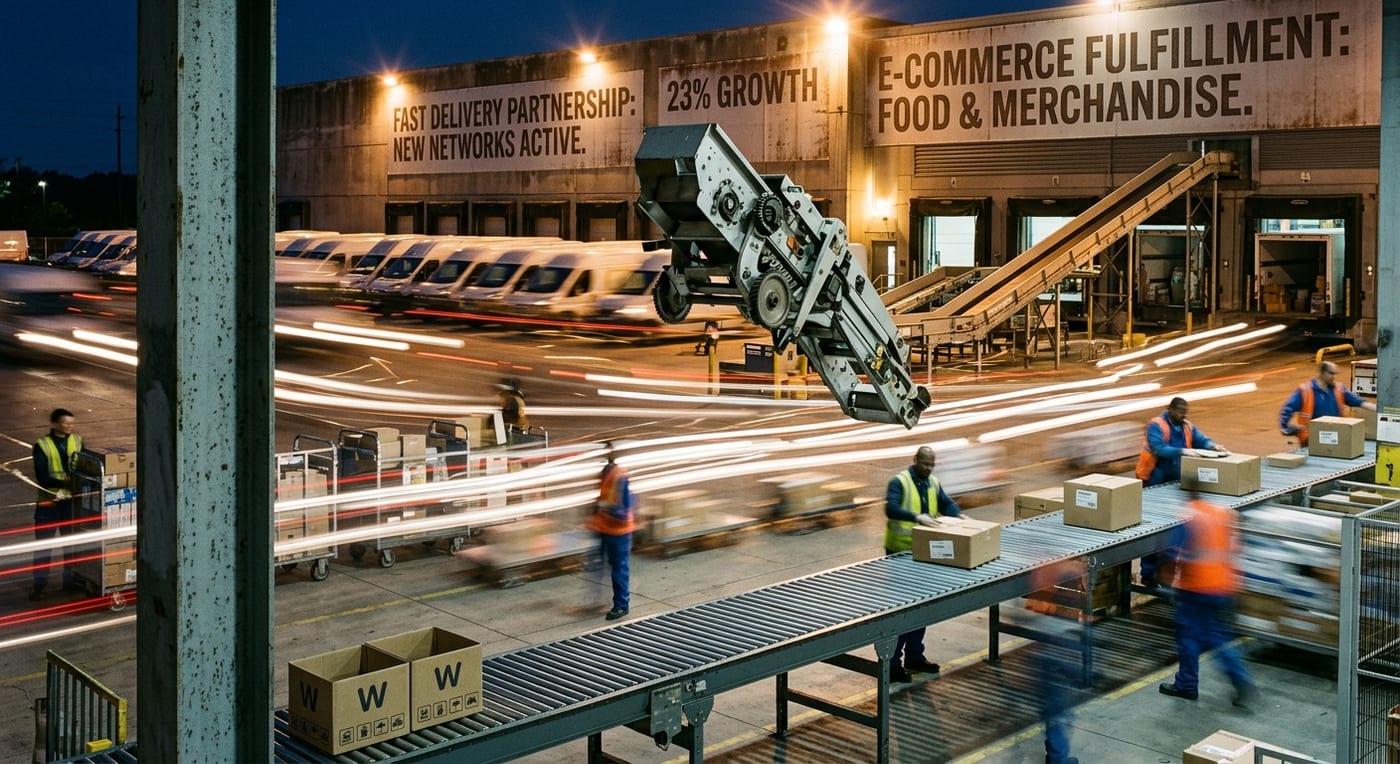
As Walmart pivots towards enhancing its e-commerce offerings, bolstered by a robust 23% growth in online sales, this pivot to food delivery could pay dividends by attracting more customers to the app and increasing overall order sizes. The analysts focus on whether Walmart can effectively merge e-commerce with food delivery, a relatively untested venture.
Customer Engagement and Retention
Walmart’s entry into restaurant deliveries is not only about expanding service offerings but also about enhancing customer engagement. Initial tests conducted with Subway's partnerships have already reported high integration success, where nearly 65% of restaurant orders included additional items from Walmart, underscoring the potential for cross-selling and increasing overall customer basket sizes.
Moreover, the company's ability to tap into existing customer bases through its Spark delivery service and engage with both independent contractors and established delivery platforms gives it a unique advantage in creating a more seamless delivery experience. As noted by Walmart's CFO, improving delivery speeds can drastically enhance customer satisfaction, which is crucial amid rising competition.
Future Outlook
As Walmart Inc. continues to adapt its business model amidst these evolving market conditions, the intersection of retail and food delivery presents exciting opportunities and challenges. The company’s focus on convenience through its new delivery services reflects broader trends in consumer demand for integrated shopping experiences.
This move could set the stage for a competitive landscape that could redefine food delivery and retail convergence. If successful, Walmart’s ambitions in this space could indeed challenge the longstanding dominance of existing players and reshape how consumers interact with their favorite brands. Investors and market observers will keenly watch how this strategic initiative unfolds in the upcoming quarters.
In conclusion, while Walmart Inc. has faced mixed investor sentiment in the wake of its recent financial performance, its bold foray into food delivery illustrates an unwavering commitment to innovation and customer satisfaction. As it continues navigating this new terrain, the interplay between its extensive retail network and delivery aspirations could very well become a defining narrative for the retail behemoth in the years to come. The same pressure is reflected in recent reporting on the issue, which helps explain why the company's pricing decisions remain under scrutiny.