

Vertiv's Strategic Expansion in AI Infrastructure
Cashu Finance·4 min read
TL;DR
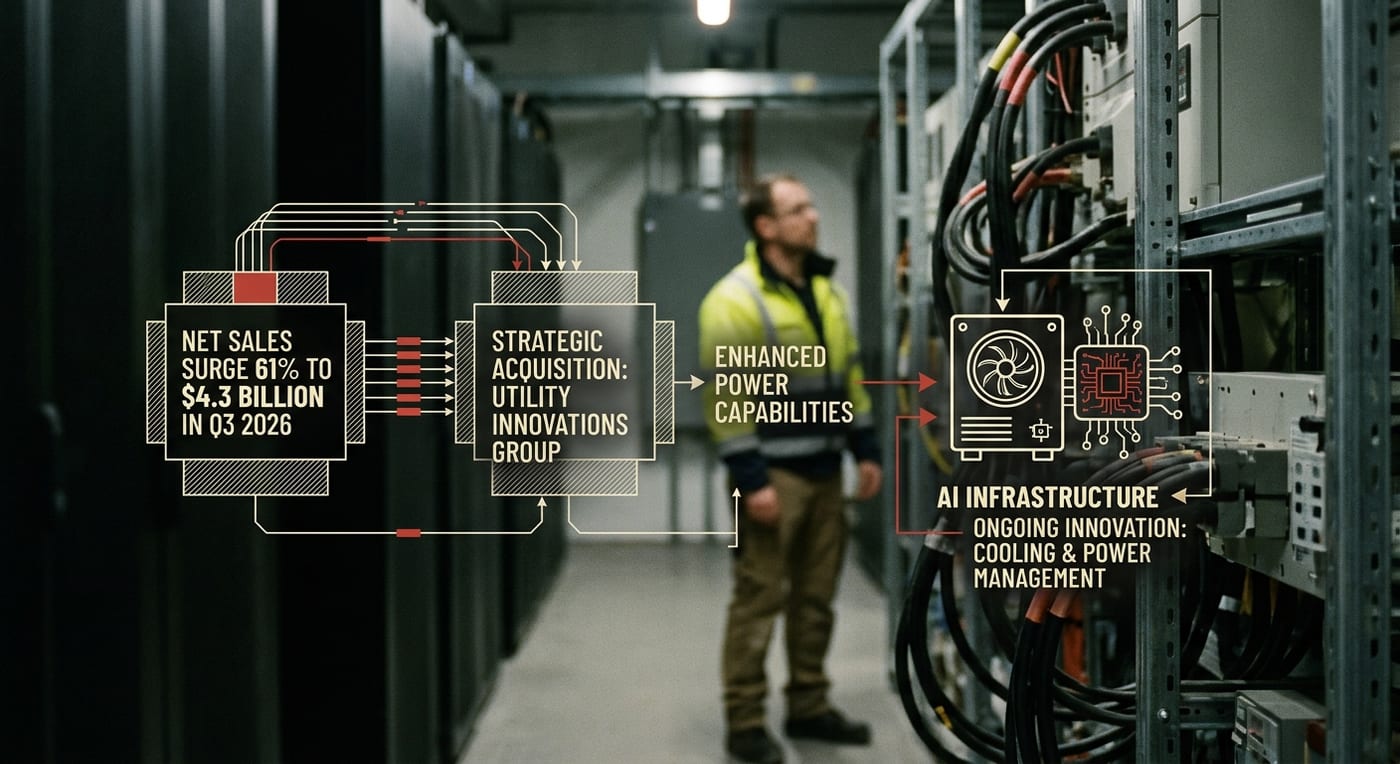
- Vertiv reports 61% surge in Q3 2026 net sales to $4.3 billion.
- Strategic acquisition of Utility Innovations Group enhances power capabilities.
- Ongoing innovation drives competitive edge in cooling and power management.
Vertiv Holdings Co (VRT) is navigating a rapidly changing digital landscape, driven primarily by the insatiable demand for artificial intelligence (AI) and advanced cloud solutions. With a 61% surge in net sales to $4.3 billion for Q3 2026, the company is solidifying its position as a pivotal player in the evolving data center infrastructure market. The impressive growth is not merely a flash in the pan; it stems from strategic decisions and critical acquisitions aimed at capitalizing on growing trends that underscore the need for robust digital infrastructure. This article will explore Vertiv's recent performance, future strategies, and the broader implications of their moves within the AI sector.
Navigating Demand in AI and Cloud Computing
The demand for data infrastructure solutions is escalating, particularly as enterprises and hyperscale data centers ramp up their AI capabilities. Vertiv's CEO, Gio Albertazzi, revealed that their project pipeline is expanding, and the speed of this growth reflects a resilient market outlook that extends beyond North America. The pressures surrounding power availability, key to the deployment of data centers, are being addressed through recent strategic investments and the acquisition of Utility Innovations Group (UIG). This technology allows for better coordination of on-site power generation with the electric grid, enhancing Vertiv's capabilities and offering a competitive edge in the market. This strategic direction is underscored by an earlier report highlighting how such measures position Vertiv for long-term success in this booming AI-driven landscape.
Product Innovations in Digital Infrastructure
Vertiv is consistently innovating, especially in its product lines catering to the needs of modern data centers. The rapid evolution of technology necessitates efficient cooling and power management systems, and Vertiv's solutions address these requirements head-on. The company is reportedly investing in manufacturing efficiencies that shift assembly from on-site to factory settings, reducing complexity while enhancing product quality. This transformation reflects a commitment to meet the demands of high-density computing environments, with innovations in modular designs becoming more prevalent in their portfolio. Moreover, as data center cooling needs crescendo in tandem with rising computational densities, Vertiv's diversification into both liquid and air cooling technologies provides flexibility amid evolving customer demands. The gradual acceptance of liquid cooling technology is spotlighted as a critical area given its efficiency in terms of space and energy use as highlighted by Albertazzi. Here, liquid cooling is positioned not as a replacement but as part of a comprehensive thermal management strategy that may include traditional methods.