

Vertex's Bold Move with Crinetics Acquisition
ED
Editorial
Cashu Finance·5 min read
TL;DR
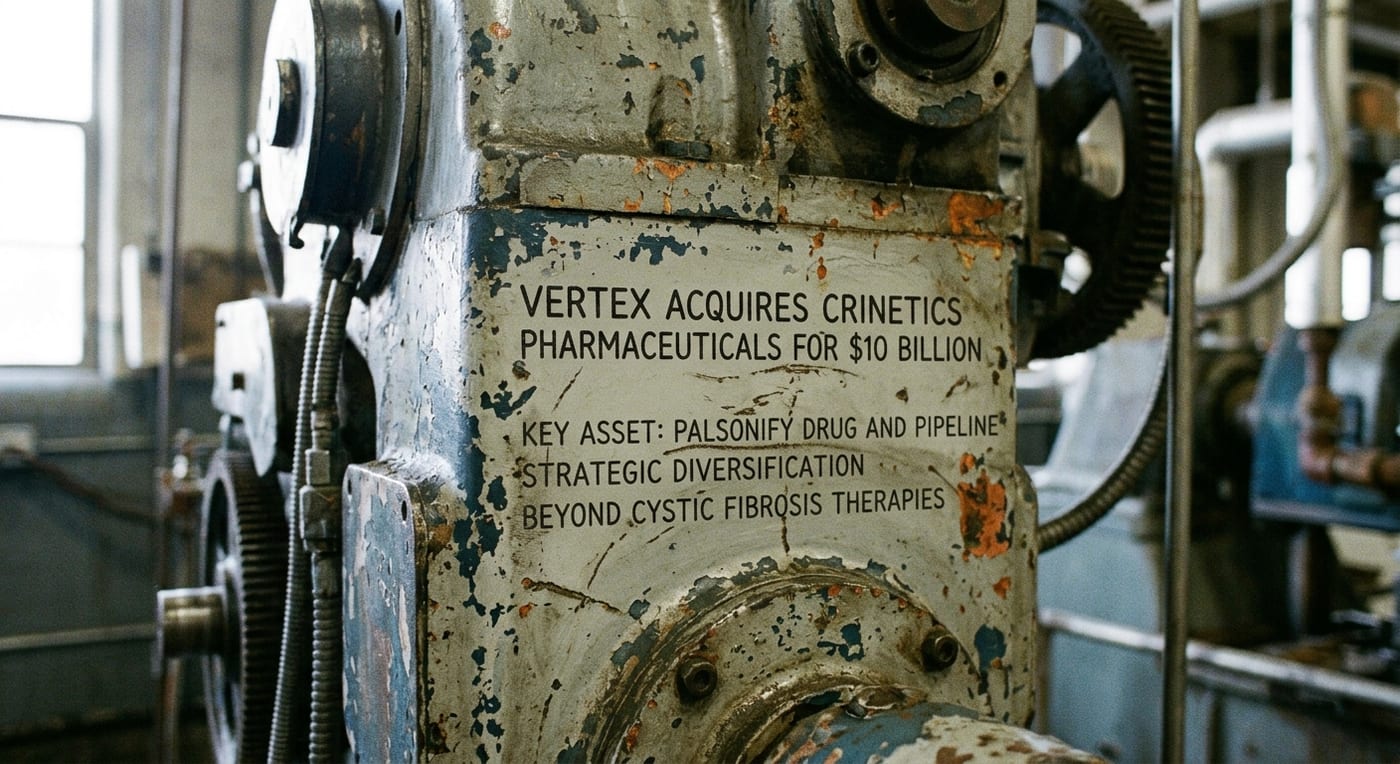
- Vertex to acquire Crinetics Pharmaceuticals for $10 billion.
- The deal includes the promising drug Palsonify and pipeline products.
- Vertex aims to diversify its offerings beyond cystic fibrosis therapies.
Vertex, Inc. (VERX) is making headlines once again with its strategic acquisition of Crinetics Pharmaceuticals, marking a significant shift in its business model and growth strategy. This bold $10 billion transaction aims to expand Vertex's portfolio beyond its established focus on cystic fibrosis, venturing into the realm of rare endocrine diseases. With the completion of this acquisition slated for the third quarter of 2026, the implications for Vertex and its shareholders are substantial.
A Major Acquisition: What Vertex Gains from Crinetics
The allure of Crinetics Pharmaceuticals lies mainly in its flagship product, PALSONIFY, the first and only once-daily oral medication approved for treating acromegaly in adults. Vertex's acquisition will allow them to tap into a market that has been historically reliant on injectable treatments, providing an effective and convenient option for patients. Furthermore, palsonify generated $10.7 million in revenue during its initial quarter post-approval, indicating a strong demand and market fit.
Crinetics also presents Vertex with a promising pipeline, particularly the late-stage drug atumelnant, which targets congenital adrenal hyperplasia (CAH) and shows potential for treating Cushing's syndrome as well. Vertex estimates that the combined peak sales for these products could reach upwards of $5 billion annually, underscoring the acquisition's future revenue potential. Coupled with a solid drug-discovery platform focused on endocrine diseases, the strategic alignment with Vertex’s core portfolio is clear.
Financing the Deal: A Careful Strategy
Given the significant financial outlay associated with the acquisition, Vertex has structured the deal to mitigate risks associated with debt. The acquisition will be funded with a combination of the company's existing cash reserves and a $4.5 billion bridge loan secured through partnerships with Bank of America and Morgan Stanley. Such financial maneuvering is feasible for Vertex, which reportedly had around $13 billion in cash and marketable securities at the end of the first quarter.
Vertex’s revenues remain robust, thanks to its established cystic fibrosis franchise, which generated a revenue increase of 8% year-over-year, amounting to approximately $3 billion. The company is confident that this acquisition will enhance their revenue streams in the long run, particularly as PALSONIFY launches and gains traction in the marketplace. This strategic approach shows that Vertex aims not only to sustain but to grow its market share in the pharmaceutical industry.
Understanding the Market Reaction: What Investors Need to Keep in Mind
As with any high-stakes acquisition, investors are weighing the costs against potential returns. Vertex is paying a premium of $85 per share for Crinetics, doubling the latter's market price prior to the announcement. While this may appear steep, analysts point towards the acquisition's alignment with Vertex's growth strategy focused on rare diseases with high unmet medical needs. Historically, Vertex has excelled in developing treatments for complex conditions with advanced biology, leveraging this expertise for its diversification into endocrine disorders.
Vertex acknowledges that the true financial benefits from this acquisition will take time to materialize. According to their estimates, the deal is expected to become accretive to non-GAAP operating income only by 2029. Investors should remain patient, as Vertex forges ahead with the launch of its new products while banking on the success of upcoming clinical trials for atumelnant.
A Strategy of Diversification: Addressing Growth Needs
In a constantly evolving healthcare landscape, relying solely on a single line of products can pose significant risks for pharmaceutical companies. Vertex's decision to expand its focus illustrates a proactive approach to growth and sustainability. By incorporating Crinetics' products into its portfolio, Vertex is not just adding to its offerings but also addressing an urgent need for new treatment options in the rare disease space.
Additionally, the potential for atumelnant to treat both CAH and Cushing's syndrome means Vertex could soon be known for multiple significant therapies. This diversification is particularly crucial as Vertex faces increasing competition and pressure to innovate within the pharmaceutical industry.
The opportunity to build on the success of PALSONIFY while also nurturing a promising candidate such as atumelnant could ultimately position Vertex for substantial long-term growth, shaping the company's identity beyond cystic fibrosis treatments.
Conclusion: Vertex Is Positioned for the Future
Vertex's acquisition of Crinetics Pharmaceuticals signifies both a calculated risk and a strategic opportunity to diversify its product offerings in the pharmaceutical market. With the potential for blockbuster drugs entering their pipeline, this acquisition enables Vertex to leverage its existing infrastructure, expertise, and financial resources effectively. The strategic alignment of both companies suggests that not only will Vertex create value for its shareholders, but it may also contribute significantly to the treatment landscape for patients facing rare diseases.
The path to validation for this acquisition will unfold in the coming years, making it crucial for investors to monitor Vertex's progress closely as it embarks on this new journey. The same pressure is reflected in recent reporting on the issue, which helps explain why the company's pricing decisions remain under scrutiny.