

Verra Mobility's Unprecedented Crisis
ED
Editorial
Cashu Finance·5 min read
TL;DR
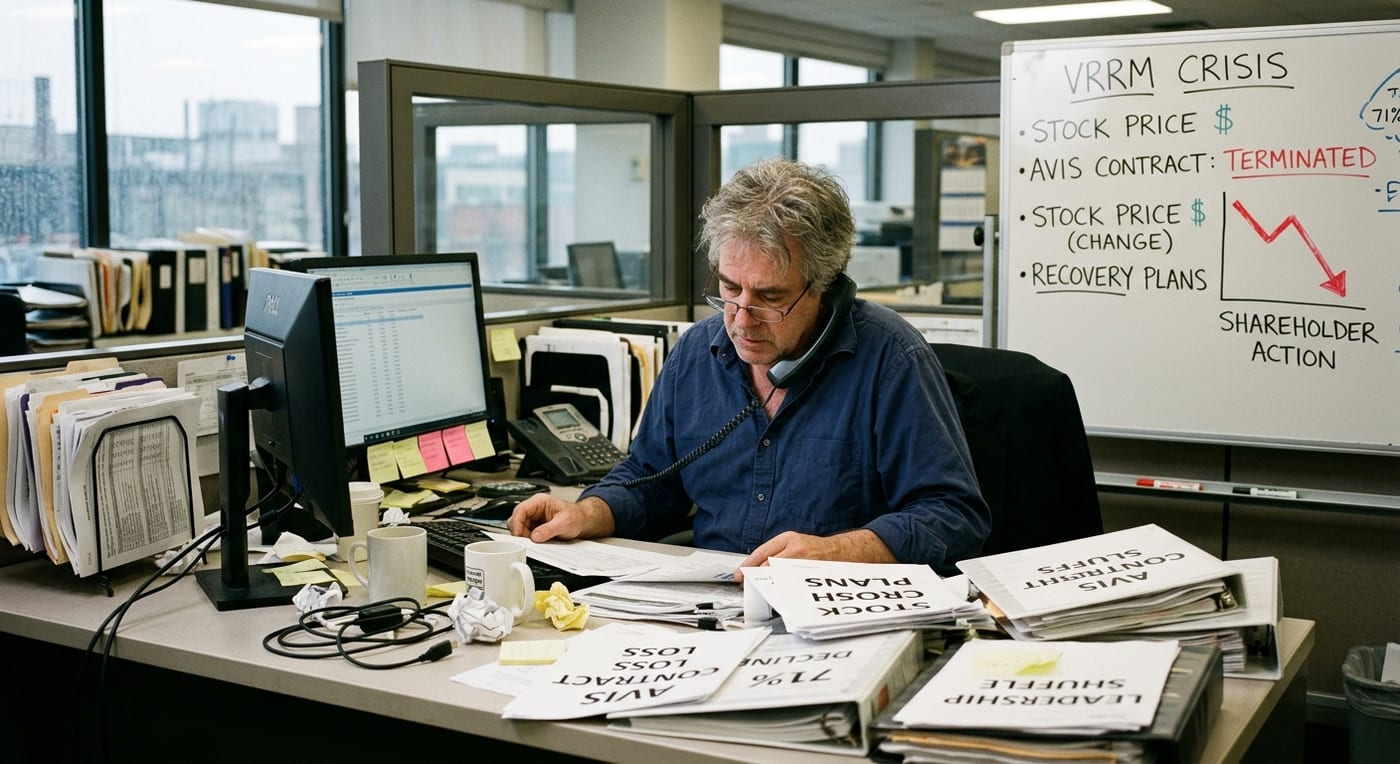
- Loss of Avis contract leads to 71% stock decline.
- Leadership changes add uncertainty to recovery efforts.
- Legal challenges mount for shareholders seeking redress.
Verra Mobility Corporation ( VRRM) is navigating a turbulent and complex crisis following the abrupt termination of its key contract with Avis Budget Group. This pivotal event has not only decimated investor confidence but has also beset the company with a leadership shake-up and looming legal challenges, all of which threaten its very existence in the competitive landscape of mobility solutions. As Verra Mobility's share price plummeted nearly 71% in a matter of hours, the ramifications extend far beyond immediate financial losses, posing crucial questions about the company's future direction and strategic adaptations.
The Avis Budget Group Contract Fallout
The loss of the Avis contract was disclosed in a shocking press release on May 26, 2026, which announced a termination notice that will take effect in September 2026. This termination eliminates a significant revenue stream for Verra Mobility, which had accounted for approximately $135 million to $145 million in annualized revenue. The immediate impact was catastrophic—Verra's stock price nosedived from $13.08 to $3.85 overnight, translating to a staggering loss of around $1.4 billion in market capitalization. Such a development raises alarm bells not only for investors but also for stakeholders who were closely monitoring Verra's operational health.
The swift decline in stock price indicates a deep-seated market concern regarding Verra's viability without its Avis partnership. The company’s Commercial Services segment, heavily reliant on contributions from Avis, now faces existential challenges in maintaining profitability and operational sustainability. Following this catastrophic event, potential competitors may even seize this opportunity to encroach upon Verra's market share.
Leadership Crisis Deepens
Adding to Verra's woes, the situation escalated further when CEO David Roberts unexpectedly resigned just days after the Avis announcement. Having been in leadership for over a decade, his departure raises doubts about the company's ability to recover and regain stability during this critical juncture. Investors and analysts alike are left questioning who will steer Verra Mobility through this unprecedented crisis, as leadership transitions often introduce an extended period of uncertainty and operational inefficiencies.
This void in leadership has magnified existing concerns regarding Verra’s strategic direction. The search for a new CEO will likely consume precious time, during which the company might struggle to articulate a clear path to recovery and growth. Investors are mindful of this uncertainty as the future leadership must quickly devise strategies to handle the fallout from the Avis loss while stabilizing investor sentiment and operational metrics.
Legal Challenges Looming
As if the operational challenges weren’t enough, Verra is now at risk of facing numerous legal challenges as a growing number of investors have initiated securities class action lawsuits. Claims of misleading statements and inadequate disclosures regarding the Avis business relationship during the Class Period—ranging from February 24, 2026, to May 26, 2026—have emerged. Legal authorities have noted that investors could be entitled to compensation, adding yet another layer of complexity to Verra's recovery efforts.
Among the legal firms announcing class action initiatives is the Rosen Law Firm, which has underlined the importance of investor counsel in light of the ongoing crisis. The law firm is encouraging affected shareholders to secure legal representation before the impending August 4 deadline. Investors are faced with the challenging decision of either participating in legal action or opting to remain passive members of the class.
Demand Dynamics and Future Outlook
In contemplating the future, Verra Mobility must also address how the demand for its services will adapt in the face of potential disruptions introduced by competitors capitalizing on its vulnerabilities. Avis's decision to terminate the contract could indicate a broader shift in the mobility solutions landscape, compelling Verra to reassess its service offerings and partnerships. Industry dynamics in mobility are evolving rapidly, and existing models may require substantial innovation to remain competitive. Verra's leadership, once firmly entrenched in partnerships, now faces the daunting challenge of pivoting to maintain relevance.
Furthermore, Verra’s reliance on traditional contract-based operations could become a risk as leading rental car companies explore alternative in-house or outsourced solutions. This emerging trend heightens the urgency for Verra to bolster its product offerings, diversify its partnerships, and reconsider its strategic market positioning.
Conclusion
In summary, Verra Mobility Corporation is entrenched in a crisis marked by the termination of the Avis Budget Group contract, resulting in significant financial and operational repercussions. With leadership transitions complicating the recovery efforts and burgeoning legal challenges threatening further damages, the pathway ahead remains fraught with difficulties. Investors will be watching to see how Verra addresses these multifaceted challenges and whether it can emerge stronger in an increasingly competitive landscape. The convergence of these factors will shape the narrative of Verra Mobility’s journey in the coming months, as the company stands on the brink of transformation driven by necessity and rapid market evolution. Each decision made will inevitably have lasting implications for Verra’s future, requiring profound introspection and strategic agility. The same pressure is reflected in recent reporting on the issue, which helps explain why the company's pricing decisions remain under scrutiny.