

Vanguard S&P 500 ETF: Resilience Amidst Market Shifts
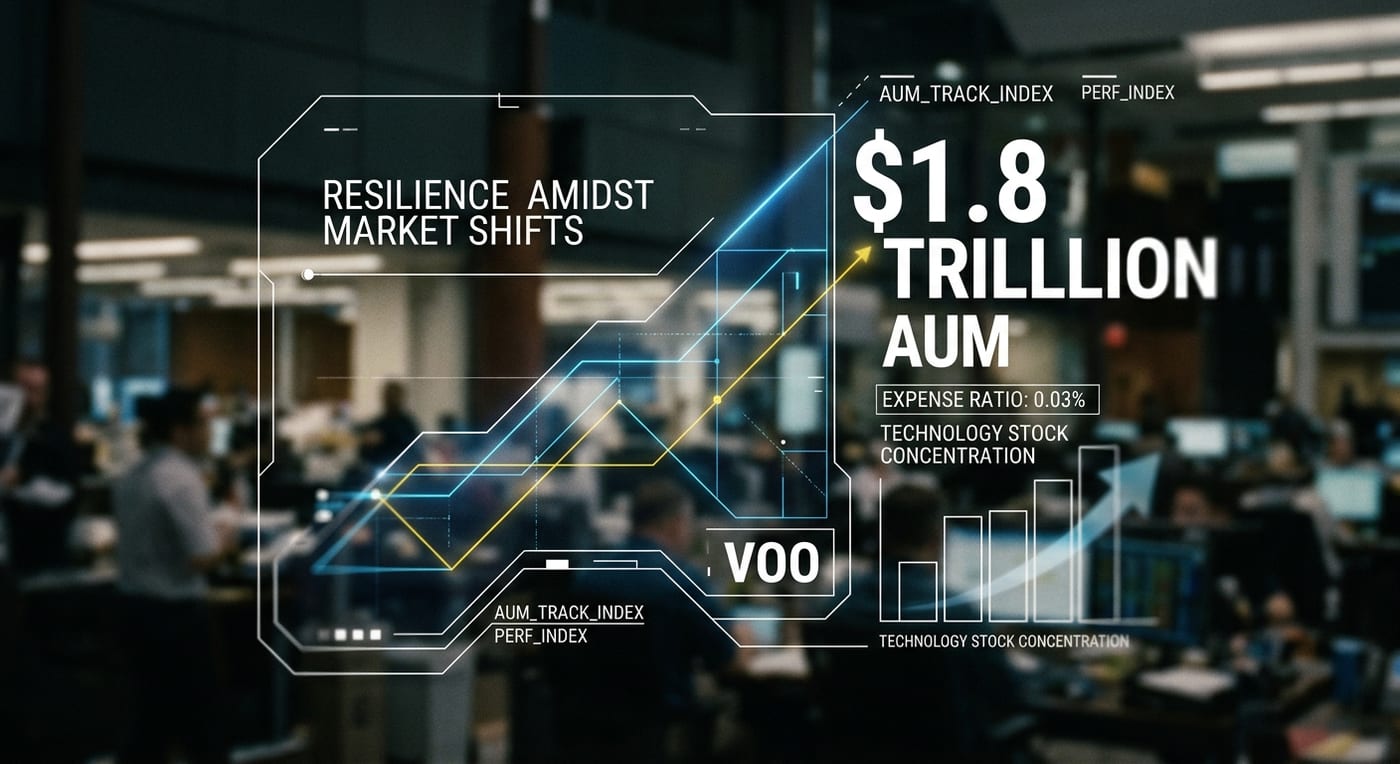
- VOO maintains over $1.8 trillion in AUM.
- Features a low expense ratio of 0.03%.
- Heavy concentration in technology stocks influences performance.
Vanguard S&P 500 ETF (VOO) has established itself as a prominent investment vehicle in the landscape of listed companies, especially during turbulent economic cycles. With more than $1.8 trillion in assets under management, VOO continues to attract a diverse range of investors, from institutional players to individual retail investors. Its low expense ratio of 0.03% enhances its appeal, enabling it to effectively track the performance of the S&P 500 index, comprising 500 of the largest publicly traded companies in the U.S. Recent evaluations highlight VOO's performance amidst macroeconomic challenges, investor sentiments, and shifts in market dynamics.
This article provides an in-depth look into how VOO navigates volatility, driven largely by its significant concentration in technology stocks—a sector that not only influences its performance but also shapes broader market trends.
Market Performance and Economic Influences
Over the past year, while the Vanguard S&P 500 ETF is experiencing some fluctuation—with a recent decline of about 6% from its October peak—it remains up approximately 10% year-to-date. This dichotomy reflects the enduring strength of long-term market trends and highlights VOO's resilience in the face of short-term volatility. The current market dynamics exhibit a complicated relationship between economic growth and investor sentiment, particularly following recent midterm elections, which have accentuated uncertainties surrounding technology investment and regulatory shifts.
The outcome of the midterm elections has resulted in concerns about potential slowdowns in the development of Artificial Intelligence (AI) and related infrastructure—key growth drivers for technology stocks integral to VOO's holdings. Notably, big tech companies have been projected to face headwinds due to anticipated restrictions on data center construction, impacting their capital expenditure plans and, subsequently, their stock performances in the ETF. Despite these immediate challenges, the long-term outlook remains positive, as corporate earnings growth continues to outpace expectations.