

UPS: Shifting Paradigms in Logistics
Cashu Finance·4 min read
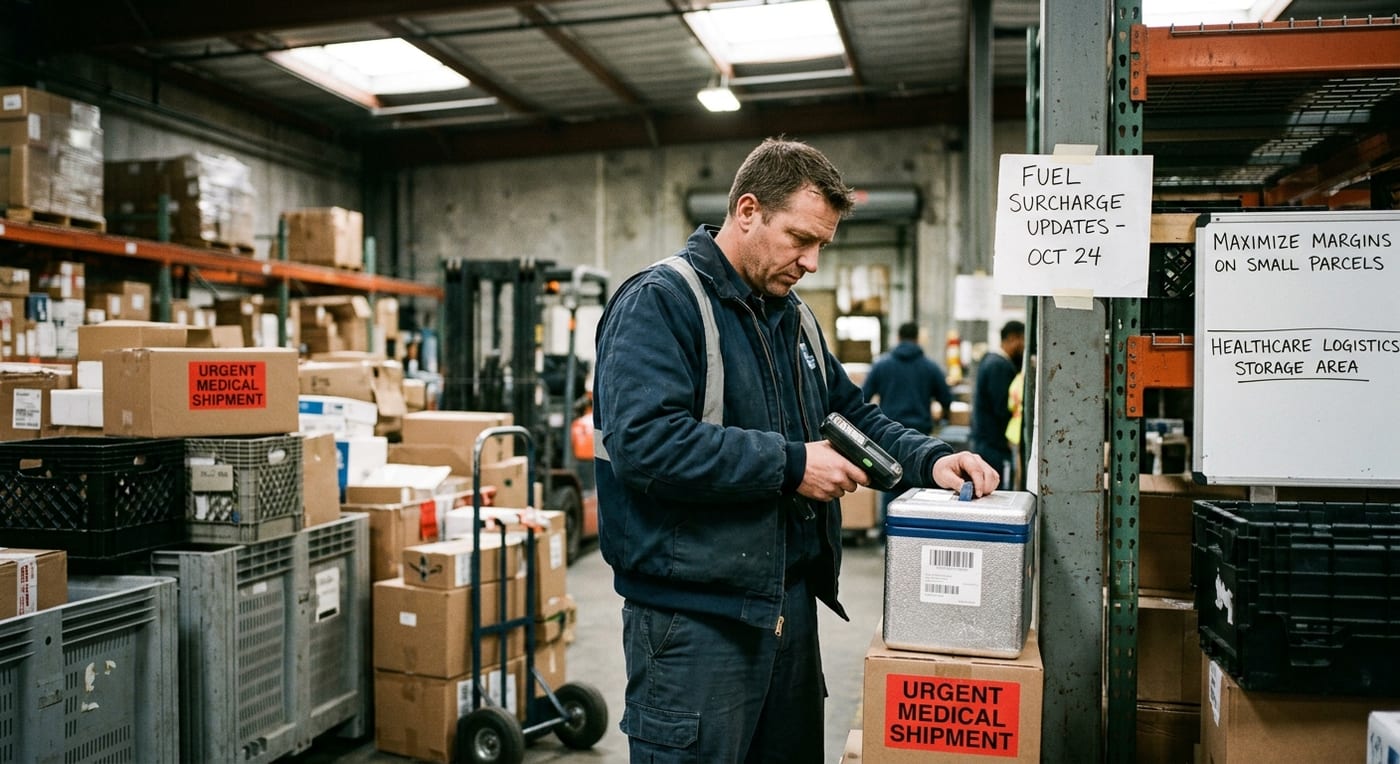
TL;DR
- UPS has reduced its delivery volume from Amazon, focusing on profitability.
- The company is investing in healthcare logistics with new temperature-controlled facilities.
- Concerns about UPS's earnings quality arise due to reliance on fuel surcharges for revenue growth.
United Parcel Service, Inc. (UPS) is drawing attention as the latest developments come into focus. United Parcel Service, Inc. (UPS) has embarked on a transformative journey that reflects its strategic pivot toward higher-margin services, particularly in the healthcare sector. This shift follows a deliberate scaling back of its relationship with Amazon, a move marked by significant operational changes that are redefining UPS's positioning within the logistics market. The recent restructuring not only enhances UPS's profitability but also aligns with changing consumer behaviors and demands for more specialized services.
The Amazon Factor: A Strategic Decoupling
In a bold move, UPS has effectively "fired" Amazon by pulling back 50% of its delivery volume in a lengthy process that was publicly concluded in mid-2026. This decision was part of CEO Carol Tomé's strategy to focus on delivering high-quality services rather than merely chasing volume. By removing approximately 2 million packages daily from its operations, UPS has shed around $4.5 billion in related expenses, allowing the company to enhance its profit margins significantly.
In the wake of this decision, UPS reported a 6% rise in second-quarter U.S. domestic revenue, driven by a remarkable 9.3% increase in revenue per package. As UPS navigated this transition, it also raised its full-year revenue guidance from $89.7 billion to about $91.2 billion, marking a significant strategic realignment. This financial trajectory not only signals a stronger operational model but also a targeted approach toward customer segments that yield better profit margins. As reported, the shift is in stark contrast to Amazon's continued expansion of its own logistics network; UPS’s lost volume partially fueled Amazon's growth in handling U.S. parcels, effectively setting Amazon on a trajectory to become the largest parcel carrier by volume.