

Unicycive Therapeutics' Regulatory Challenges
ED
Editorial
Cashu Finance·4 min read
TL;DR
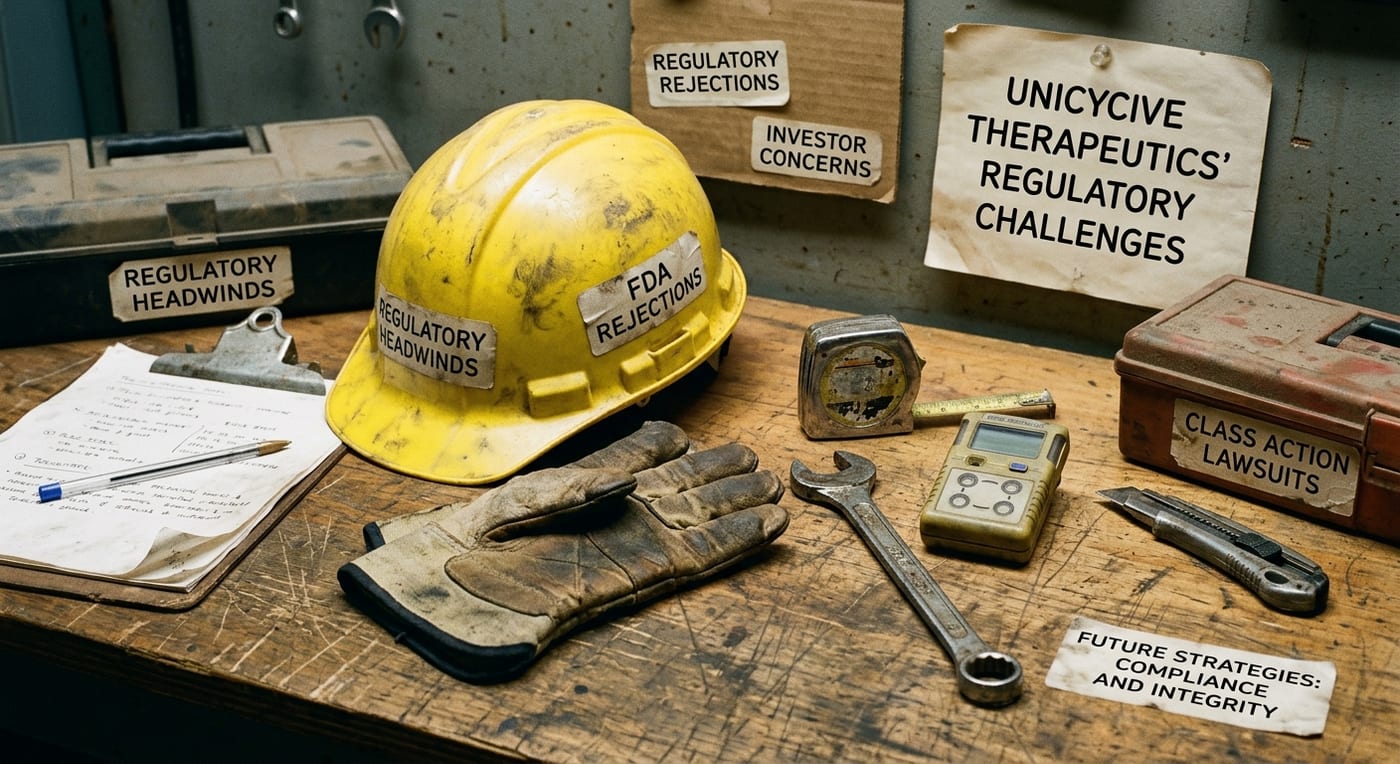
- Unicycive faces regulatory headwinds with FDA rejections.
- Class action lawsuits reflect investor concerns and skepticism.
- Future strategies focus on compliance and operational integrity.
Unicycive Therapeutics, Inc. ( UNCY) is currently navigating a perilous landscape characterized by significant regulatory challenges. Following the receipt of a Complete Response Letter (CRL) from the FDA regarding its New Drug Application (NDA) for oxylanthanum carbonate, an innovative treatment aimed at kidney disease, investors are growing increasingly concerned about the company’s future prospects. With a focus on maintaining regulatory compliance and restoring trust among shareholders, Unicycive is under pressure to reevaluate its strategies and operational frameworks.
Recent Regulatory Developments and Their Impact
On June 30, 2026, Unicycive announced that the FDA's second CRL reiterated issues surrounding third-party manufacturing deficiencies that were previously noted in June 2025. This regulatory setback has profound implications not only for Unicycive's product pipeline, particularly the promising oxylanthanum carbonate, but also for its stock performance. Following the announcement, the stock plummeted approximately 39%, signaling a lack of investor confidence in the company’s ability to navigate FDA requirements effectively. The stock closed at $4.69 per share from a previous value of $7.70.
The severity of these developments is compounded by ongoing investigations into potential securities violations. Kaplan Fox & Kilsheimer LLP has initiated a class action lawsuit against Unicycive, reflecting the investors’ dissatisfaction and concerns regarding the transparency of the company's disclosures. The allegations are rooted in claims that Unicycive misled investors about its manufacturing processes and the inherent risks associated with its regulatory submissions.
Market Dynamics and Regulatory Environment
The market for kidney disease treatments is anticipated to grow as the prevalence of renal ailments rises globally. With an aging population and increasing incidences of kidney disease, the demand for effective treatments is at an all-time high. However, Unicycive’s regulatory hurdles may hinder its ability to capture a significant portion of this market. Investors are closely monitoring the company’s next steps to address these manufacturing concerns, which, if left unresolved, could jeopardize its competitive edge.
Despite the chilling market response, Unicycive needs to focus on strengthening its relationships with regulatory bodies and ensuring compliance with Good Manufacturing Practices (GMP). If it can successfully address the deficiencies highlighted by the FDA, there may still be an avenue for recovery in both its operational strategy and stock performance.
Legal Challenges and Shareholder Sentiments
The class action lawsuit led by Kaplan Fox is a critical development, emphasizing the need for Unicycive to bolster its investor relations and improve corporate governance. The lawsuit, which pertains to purchases made during the Class Period, is situated against the backdrop of adverse regulatory outcomes, thereby amplifying investor skepticism. Legal challenges can derail a company’s efforts to regain market confidence, making it important for Unicycive to transparently communicate its strategies to address these issues.
The firm has set a deadline of November 2, 2026, for potential lead plaintiffs in the class action, highlighting the urgency and seriousness with which these investor grievances are being treated. Investors who feel misled by Unicycive’s prior communications regarding regulatory progress and product viability are now seeking restitution through this legal avenue.
Future Prospects and Strategic Focus
Moving forward, Unicycive must focus on several strategic initiatives to salvage its public image and business model. First and foremost is enhancing its operational integrity, particularly by conducting comprehensive audits of its third-party manufacturing processes. This focus on compliance is not just about appeasing regulators; it is also critical to re-establishing investor trust.
Another consideration for Unicycive is the potential diversification of its product portfolio. As the company actively seeks to mend relationships with the FDA, it may also explore additional therapeutic areas or partnerships that could mitigate the risks associated with singular product dependency.
Investors are looking for actionable insights from Unicycive's leadership on how they plan to address the fallout from the recent regulatory battles. Clear communication, strategic pivots, and reinvestment in quality assurance processes will be pivotal in alleviating investor concerns over the company's future viability.
In summary, Unicycive Therapeutics is at a critical intersection, facing heightened scrutiny from regulatory bodies and investors alike. The ability to adapt to these challenges will determine the company's trajectory in the coming months and years. The same pressure is reflected in recent reporting on the issue, which helps explain why the company's pricing decisions remain under scrutiny.