

Uber's Transformative Journey Ahead
Cashu Finance·5 min read
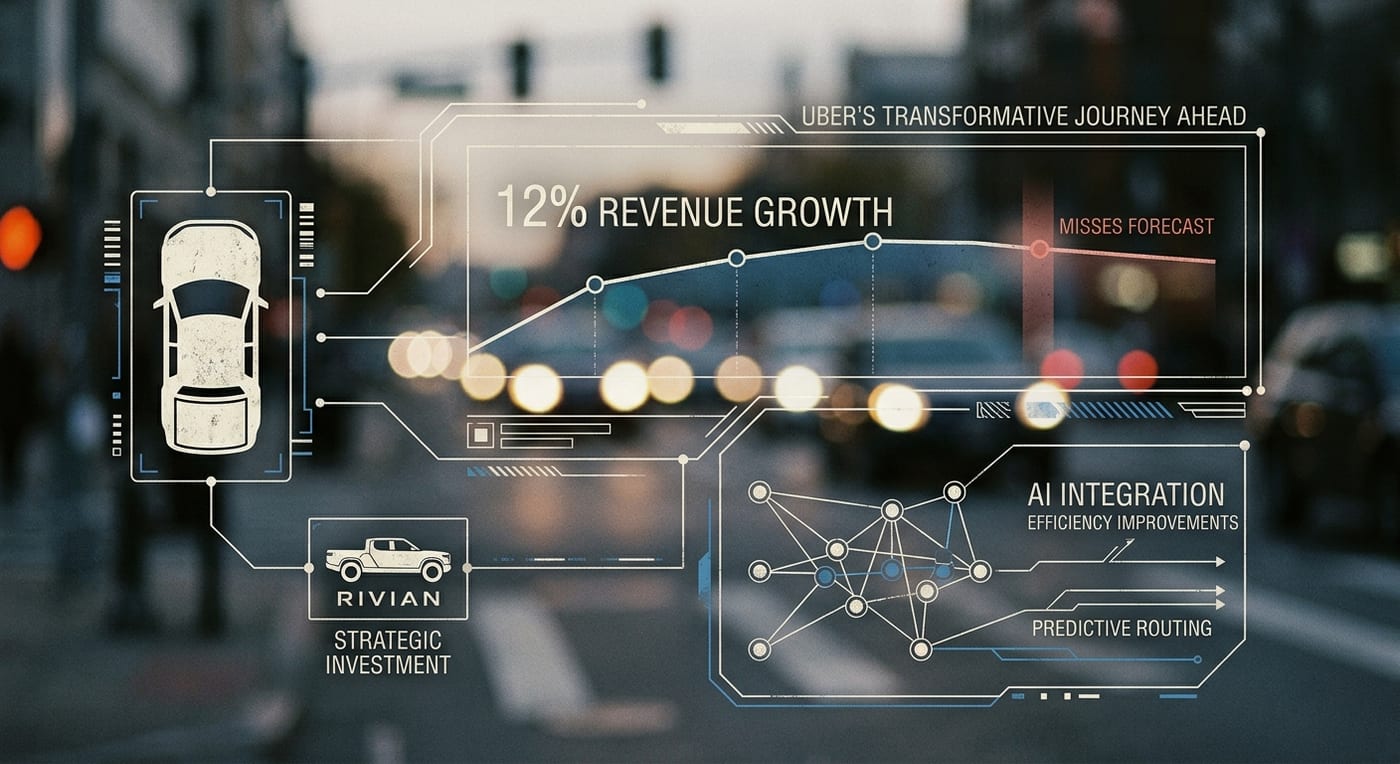
TL;DR
- Uber reports 12% revenue growth but misses forecasts.
- Strategic investment in Rivian aims to enhance autonomous services.
- AI integration is central to improving efficiency and user experience.
Uber Technologies, Inc. ( UBER) is undergoing a significant transformation as it navigates the evolving landscape of transportation and logistics, while strategically embedding advancements in technology into its operational model. As the company positions itself for future growth amidst challenges, a closer look at its financial performance, strategic initiatives, and market dynamics is essential. This examination provides insights into how Uber is recalibrating for continued success in a fiercely competitive market.
Financial Performance: Navigating Mixed Signals
In its latest earnings report, Uber showcased commendable growth, reporting an earnings of 81 cents per share on revenues of $14.19 billion—marking a year-over-year increase of 12%. However, these results fell short of analyst expectations, who had forecasted revenues of $14.24 billion. This disparity emphasizes the potential hurdles faced by Uber as it strives to maintain momentum within the challenging dynamics of the ride-hailing and food delivery markets.
Despite the robust revenue growth, the shortfall in expected outcomes reflects the ongoing complexities associated with high operational demands and competitive pressures. Furthermore, the increasing cost of providing services, alongside the mounting need to diversify revenue streams, adds layers of challenge to Uber’s financial ecosystem. As highlighted in previous discussions of Uber’s performance, the company's current trajectory underscores both its achievements and ongoing challenges in a market that expects nothing less than innovation and efficiency. That backdrop echoes earlier coverage of the issue, especially around how pricing, strategy, and demand feed into the current story.