

Uber's Strategic Evolution Amidst Market Dynamics
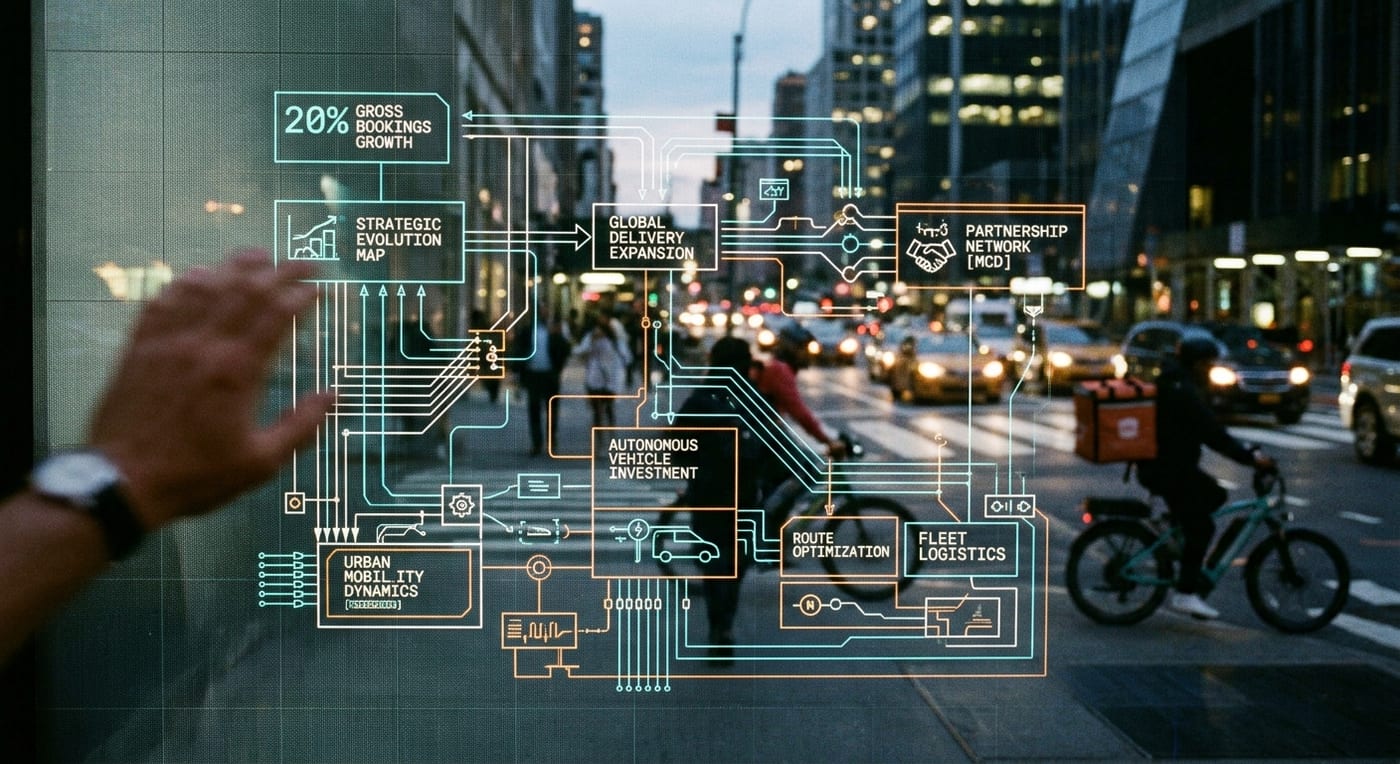
- Uber reports 20% growth in gross bookings - Partnership with McDonald's expands delivery capabilities - Investment in autonomous vehicles shapes future strategy
Financial Performance: A Candid Overview
In its latest quarter, Uber reported a remarkable 20% year-over-year growth in gross bookings, reaching an impressive $59.8 billion. Despite this substantial figure, the company's revenue trails with a modest increase of 10% to $14.77 billion. These results were slightly under analysts' expectations, highlighting the complexities of Uber's journey through a rapidly evolving environment.
CEO Dara Khosrowshahi noted that while the ride-hailing segment performed robustly, supply constraints particularly in international markets such as Brazil and India due to elevated fuel prices, have impacted growth. Conversely, the delivery segment saw a 23% jump in gross bookings, buoyed by an accelerating demand for grocery and retail services, which now operates at a $15 billion run rate.
Navigating Supply Challenges and Growth Trajectories
Amidst these mixed financial signals, Uber is actively investing in driver acquisition and retention strategies to mitigate supply issues. The company reported accelerated supply-hours growth in October, indicating a positive movement in addressing driver supply challenges.
This focus on supply acquisition aligns with Uber's outlook, which remains optimistic with projected gross bookings growth of 18% to 22% for the upcoming quarter.
The Role of AI: Uber’s Foray into Advanced Technology
As Uber continuously invests in enhancing its AI capabilities, recent reports indicate a lukewarm reception to AI agents in the realm of ordering rides and food. Despite predictions of a revolution in online ordering, the outcome has been far from transformative; only a fraction of Uber Eats orders stem from AI-driven tools.
During a recent earnings call, CFO Balaji Krishnamurthy remarked that AI agents contributed merely around 500 orders for Uber Eats within a peak week, underscoring that the integration of AI in consumer ordering is still in its infancy. Nevertheless, Uber maintains its commitment to evolving this technology and is developing tools such as a Cart Assistant to improve user interactions.