

The Next Chapter for Apple Inc.
ED
Editorial
Cashu Finance·4 min read
TL;DR
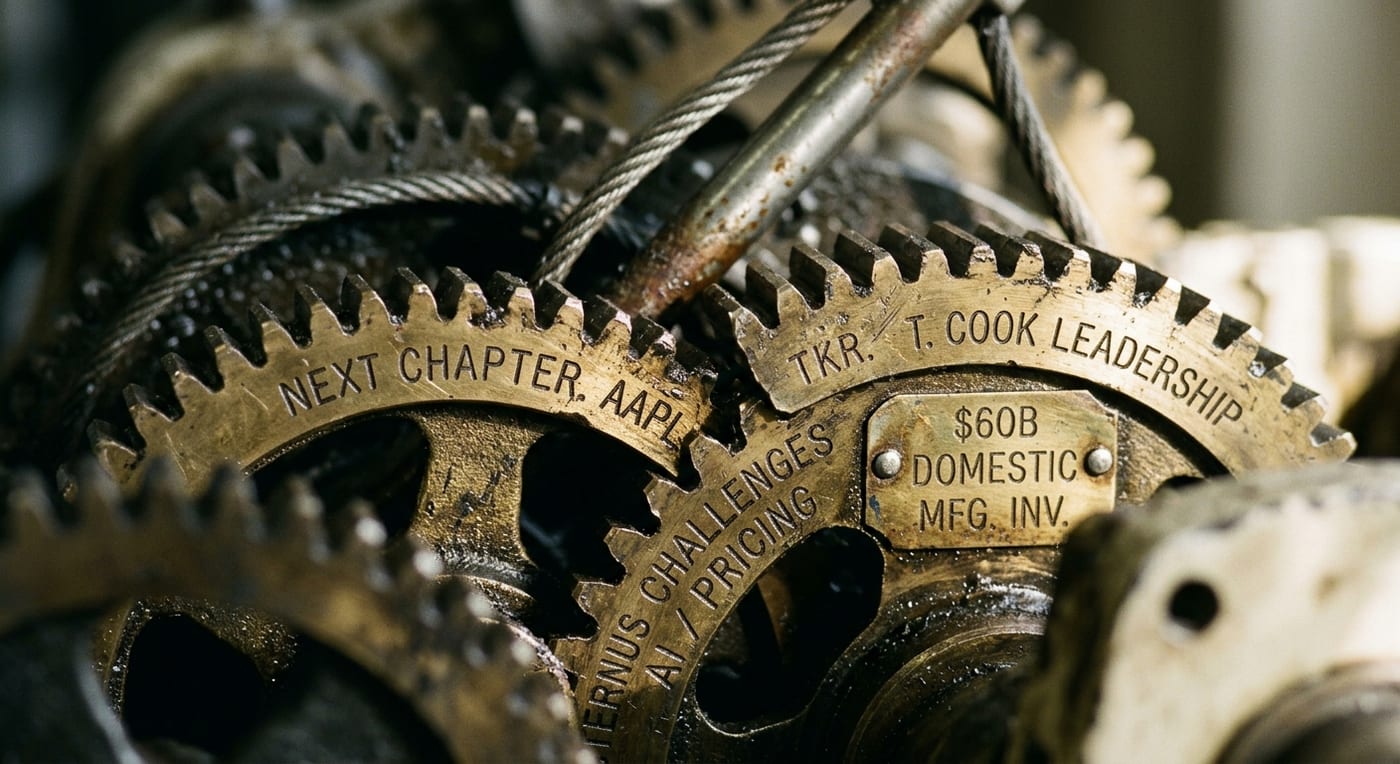
- Tim Cook's tenure propelled Apple to market leadership.
- John Ternus faces challenges in AI and product pricing.
- Apple invests $60 billion in domestic manufacturing for stability.
In August 2026, Tim Cook officially stepped down as Apple's CEO, concluding a remarkable 15-year tenure that saw the company transform into a market leader with a staggering market capitalization of approximately $4.6 trillion. Under Cook's stewardship, Apple quadrupled its annual sales and earnings, adapting to competitive pressures and evolving consumer preferences. The handoff to John Ternus, a seasoned Apple executive and chief of hardware engineering, marks the start of a new era.
Tim Cook's Legacy and Apple's Achievements
Cook's tenure was characterized by significant product launches, including the iPhone, Apple Watch, AirPods, and various services that expanded the company's ecosystem. Apple's revenue reached an astonishing $109.4 billion in Q3 2026, with iPhone sales surging 22%, contributing to nearly half of this revenue. These achievements showcase a company adept at capitalizing on market opportunities, particularly in high-demand emerging markets like India. Cook successfully maintained Apple’s values while implementing strategies focused on operational efficiency and market responsiveness.
Challenges Faced by John Ternus
As Ternus steps into the CEO role, he inherits an environment marked by intensifying competition, particularly in artificial intelligence (AI) and smartphone technology. Analysts speculate on the effect of a global memory crunch on product pricing, predicting that Apple may soon need to raise prices on devices, including the much-anticipated foldable iPhone. Analysts are whispering about potential price increases, emphasizing that rising production costs could disrupt demand patterns across Apple's product lines.
The immediate test of Ternus’s leadership will occur at Apple's upcoming product launch event, where new iPhones and possibly innovative devices will be showcased. This important occasion will not only set the stage for Ternus's vision but also indicate whether Apple can continue to captivate its audience amid a changing technological landscape. Tim Cook's departure marks a time when uncertainty meets opportunity for the company.
Investing in Domestic Manufacturing
Just as Ternus assumes the helm, Cook has cemented a $60 billion commitment to enhance domestic manufacturing, particularly in Texas, to fortify Apple's supply chain against future disruptions. This substantial manufacturing initiative is part of a broader $600 billion investment plan aimed at strengthening resilience against fluctuating tariff policies. Even though this push does not lead to domestic iPhone production, it signals a strategic move towards self-sufficiency in manufacturing and better control over product quality and costs.
AI Integration and Future Roadmap
Another significant aspect of Ternus's road ahead involves the integration of AI technologies into Apple's product offerings. As consumer demand shifts towards smarter devices, Apple has its work cut out in refining Siri into a more competitive AI voice assistant. This rollout will be critical in determining Apple's ability to reclaim market share in a space increasingly crowded by competitors leveraging generative AI features. The tech giant's active commitment to developing AI capabilities reflects an understanding that staying competitive hinges on innovation and adaptability.
Ternus’s approach will be pivotal in navigating these complexities as he aims to imprint his vision on the company's future, extending the legacy established by Cook. Analysts have noted that stock performance may hinge on how well Ternus can embrace challenges, adapt strategies, and connect with the evolving tech landscape. This transition is a crucial period that could redefine Apple’s trajectory.
Investor Outlook Amid Transition
Apple enters this new chapter with a well-established consumer base and a robust market presence, yet the path does not seem without pitfalls. Rising costs coupled with potential price adjustments may cloud Apple's near-term growth figures, raising concerns about customer retention and market competitiveness. However, there’s cautious optimism among investors, as analysts encourage vigilance without expressing overt alarm. Given Ternus's deep-rooted knowledge of the company and its mission, many believe he is well-equipped to steer Apple through these turbulent waters.
Conclusion: A Prepare for Future Innovation
In summary, Apple Inc. stands poised on the brink of a significant evolution as it transitions executive power from Tim Cook to John Ternus. The fiscal health showcased through impressive quarterly earnings underlines the strength of Apple's brand, yet the challenges inherent in a changing technological and economic landscape loom large. How Ternus navigates these developments will be crucial for both investor confidence and the sustained growth of Apple as it continues to innovate and adapt for the future. The same pressure is reflected in recent reporting on the issue, which helps explain why the company's pricing decisions remain under scrutiny.