

The Future Trajectory of SpaceX
ED
Editorial
Cashu Finance·5 min read
TL;DR
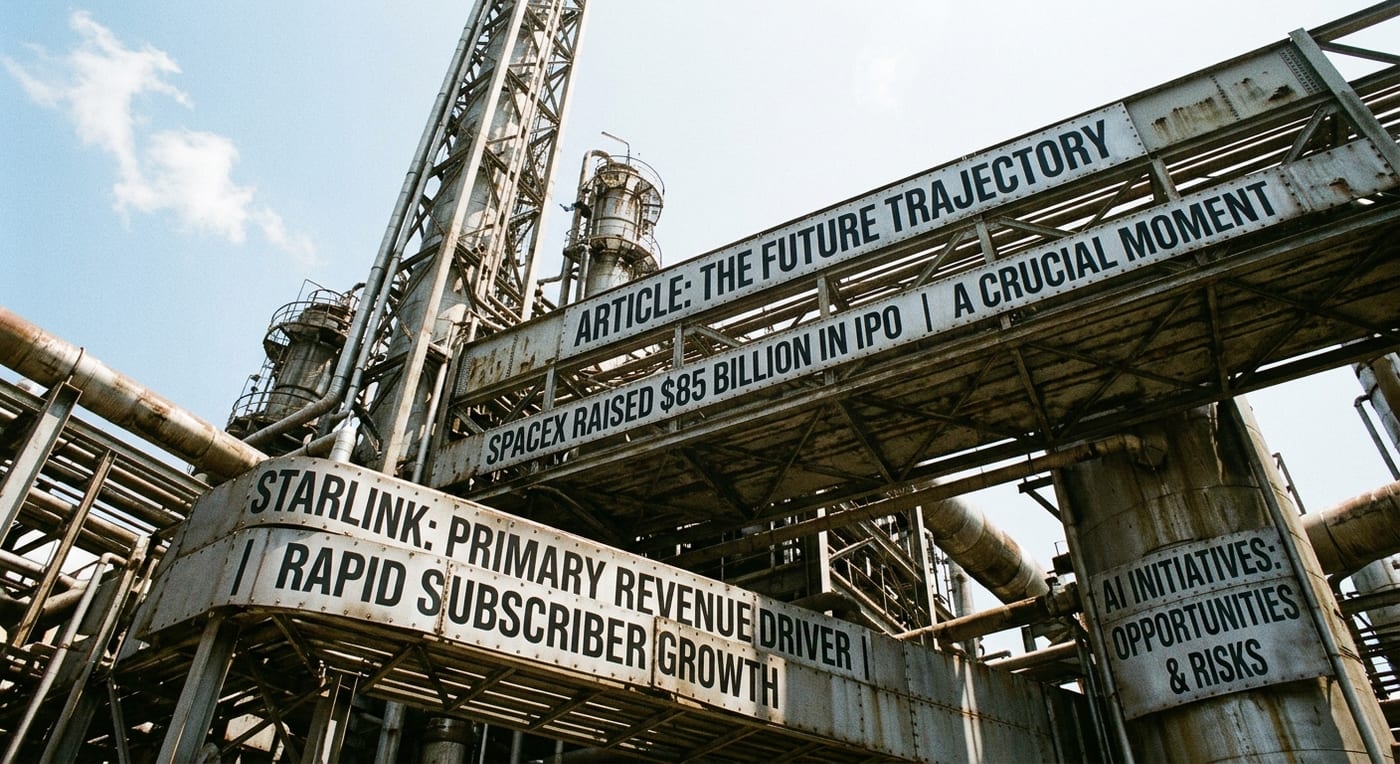
- SpaceX raised $85 billion in its IPO, marking a crucial moment for the company.
- Starlink is a primary revenue driver, with rapid subscriber growth.
- AI initiatives pose both significant opportunities and financial risks for SpaceX.
Space Exploration Technologies Corp. SPCX stands poised at a critical juncture following its momentous IPO in June 2026. Having raised an extraordinary $85 billion, the company finds itself under intense scrutiny as it navigates the complex landscape of space exploration, artificial intelligence, and satellite connectivity. With its ambitions deeply rooted in cutting-edge technology, SpaceX's evolution into a multifaceted enterprise is burgeoning, yet challenges loom large amidst fervent investor expectation and market volatility.
The IPO marked a thrilling start, with shares initially soaring from $150 to a peak of around $226, before experiencing typical volatility associated with high-profile technology stocks. As the dust settles, investors are left to contemplate the sustainability of this iconic aerospace venture amid mounting operational challenges.
SpaceX's Three Pillars of Growth
SpaceX's business is structured around three core segments: the launch services provided by its rocket division, the burgeoning connectivity unit known as Starlink, and its ambitious artificial intelligence (AI) infrastructure initiatives. Collectively, these divisions are poised to drive the company's growth trajectory in the coming years.
Launch Services: Space Exploration
Although rockets were what launched SpaceX into the spotlight, their direct contribution to the company’s valuation is surprisingly modest. Recent analyses indicate that less than 3% of the stock's value correlates with its external launch business. Notably, the majority of SpaceX's 38 launches from Q2 2026 were internal missions aimed at supporting Starlink's expansion and its research initiatives related to the next-generation Starship rocket, which is pivotal for reducing launch costs.
Starlink: The Revenue Engine
Starlink's trajectory is a bright spot in SpaceX's portfolio, generating revenues that dwarf those from its rocket services. By Q2 2026, Starlink revenues reached approximately $4.29 billion, significantly buoyed by a subscriber base that doubled year-over-year to 12 million. Despite a drop in average monthly revenue per subscriber, the strong operational margin and rapid growth illustrate the service's potential as a pillar of profitability for SpaceX.
Moreover, the company is now venturing into mobile connectivity, with strategic acquisitions like the $8 billion deal for Grain Management's spectrum portfolio, aimed at establishing itself as a formidable player in the telecom sector alongside established giants like Verizon and AT&T.
The risks tied to Starlink, however, are notable. Regulatory hurdles and competitive pressures in various markets could create barriers to success. Recent market fluctuations and the competition policy changes could affect growth, especially in regions with high regulatory scrutiny, such as India, where expansion efforts face significant delays.
AI Ambitions: A Double-Edged Sword
On the other side of SpaceX’s ventures lies its AI segment, which has presented both opportunities and potential pitfalls. Although AI-related revenues surged nearly 247% year-over-year to about $2.56 billion, this sector also reported substantial operational losses, showcasing a disconnect between revenue generation and profitability.
Analysts anticipate that the AI market could ultimately yield significant returns; however, the reliance on a few key clients raises concerns about the sustainability of revenues in the longer term. Additionally, the forecasts suggest that the company will require continued external financing to support its ambitious AI investments, a precarious position for any publicly traded entity.
Musk’s outlook on the vast potential of AI integration into SpaceX's existing business model underlines the intricate balance the company must maintain between rapid expansion and fiscal responsibility. Recent forecasts have indicated a projected $26.5 trillion market in AI, an enticing frontier for SpaceX, yet fraught with financial and operational risk.
The Implications of Neocloud Market Dynamics
The looming uncertainties in the tech landscape become even more relevant with Gartner's prediction that up to 80% of neocloud companies may cease to exist by 2030. This potential collapse could yield significant opportunities for SpaceX to capitalize on distressed assets, as it has the financial strength and strategic partnerships, especially with its existing commitments with major players like Anthropic and Alphabet.
The ability to leverage low-cost capital as a strong investment-grade entity places SpaceX in a unique position to absorb competitors’ resources and shape a robust AI cloud network. Such strategic positioning may indeed define SpaceX's place among industry leaders in AI infrastructure, potentially positioning the company as the largest beneficiary of turmoil in the neocloud sector.
Investor Outlook: Navigating Volatility
Despite facing headwinds, the long-term prospects of SpaceX remain largely promising. Analysts are divided, with price targets for SPCX varying immensely—from a conservative low of $75 to an optimistic high of $450 based on the company's integration of AI capabilities and successful rollouts of its Starlink services.
The implications of these forecasts reflect a market that is beginning to comprehend the broader impact of SpaceX's various arms on its overall value. Furthermore, as SpaceX operates within a realm dominated by volatile market sentiments, investor confidence will ultimately hinge on its ability to demonstrate profitable growth across all segments.
The adoption of AI technologies in customer service, exemplified by the introduction of the Grok voice model for Starlink, provides a case study in operational efficiencies that highlight the company's potential to enhance margins and streamline processes. Each decision in this multifaceted approach significantly affects its market perception and the capital influx required for sustained growth.
In conclusion, while SpaceX navigates the post-IPO landscape, its journey is emblematic of the challenges and rewards synonymous with revolutionary technology companies. The combination of historic financial backing, ambitious technology initiatives, and an evolving business model positions SpaceX in a unique place within the aerospace and technology markets.
Investors are eager to see if the company will sustain its meteoric rise or confront the realities of a challenging market environment, making it a focal point in the investment narrative of the coming years. The same pressure is reflected in recent reporting on the issue, which helps explain why the company's pricing decisions remain under scrutiny.