

Tesla's Cybercab: Navigating Challenges Ahead
ED
Editorial
Cashu Finance·4 min read
TL;DR
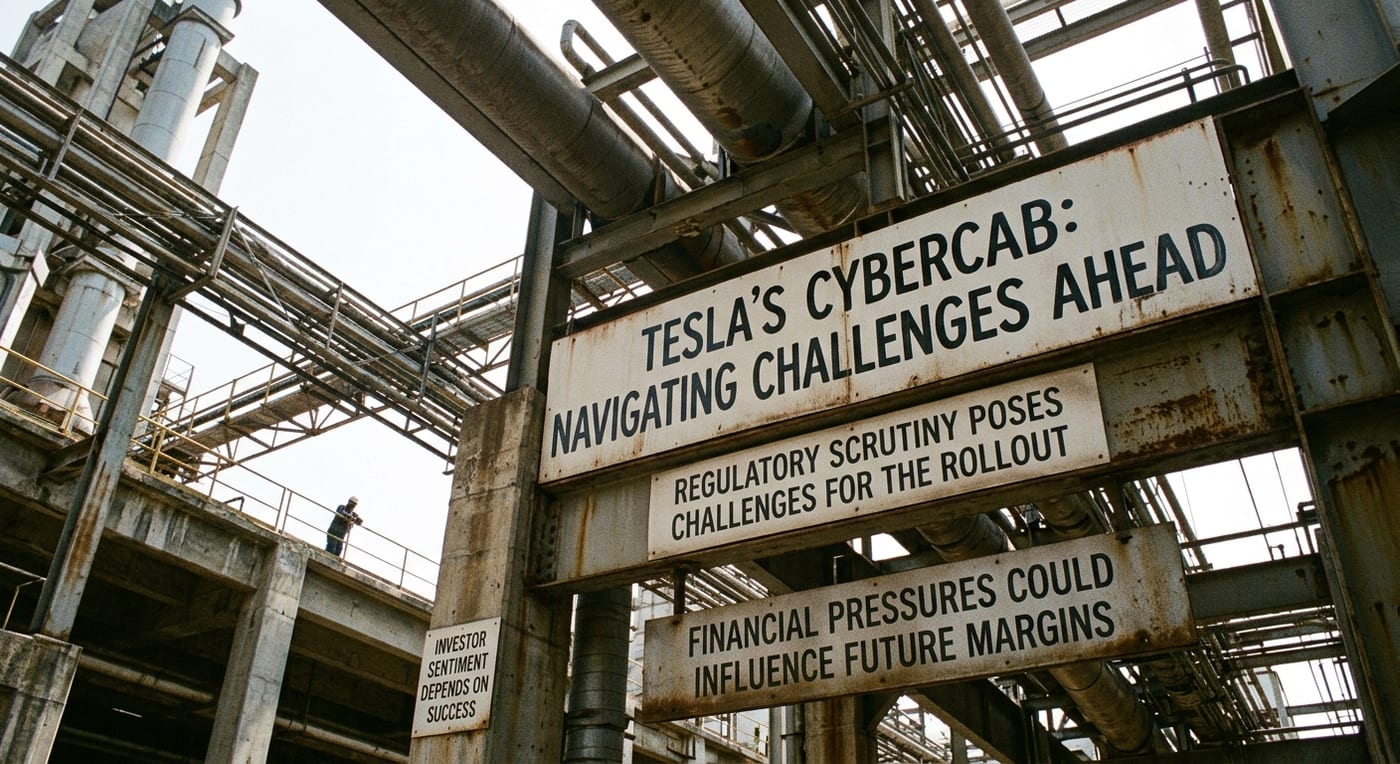
- Tesla's Cybercab is at the forefront of autonomous transport.
- Regulatory scrutiny poses challenges for the rollout of the Cybercab.
- Financial pressures could influence Tesla's future margins and investor sentiment.
Tesla, Inc. ( TSLA) is forging a trail into the autonomous transport sector with its innovative Cybercab initiative, yet it faces significant hurdles that could impact its growth trajectory. With the National Highway Traffic Safety Administration (NHTSA) currently investigating claims that Tesla's self-driving Cybercabs are involved in speeding incidents within school zones, the company is under scrutiny. This situation presents a complex challenge amidst Tesla's ambitious push into the robotaxi market. Furthermore, while Tesla reported a delivery record that surpassed expectations, concerns surrounding gross margins loom over the company's financial outlook. The emerging interplay between delivery numbers and profitability will be crucial in assessing investor sentiment as the industry evolves. That backdrop echoes earlier coverage of the issue, especially around how pricing, strategy, and demand feed into the current story.
The Cybercab's Promising Launch
The Cybercab initiative signifies Tesla's commitment to revolutionizing urban mobility through advanced technologies in autonomous vehicles. Designed without conventional driving controls—like steering wheels and pedals—the Cybercab aims to facilitate a new class of ride-sharing services. This aligns with Tesla's vision of redefining personal transportation by emphasizing convenience and safety.
However, the recent investigation by the NHTSA underscores growing regulatory pressures on Tesla as it attempts to assert its dominance in the autonomous vehicle space. The agency's preliminary probe concerns several allegations that these vehicles have been speeding in school zones. This investigation is particularly significant as it could impede further rollout plans and increase scrutiny on Tesla's autonomous technology, as they try to compete with well-established entities like Waymo that have also faced regulatory challenges. The evolving autonomous landscape is watching closely as the outcomes of these investigations could set precedents for future operations not only for Tesla but for the entire sector.
Competition and Market Dynamics
As Tesla dives deeper into the autonomous transport domain, competition poses another substantial threat. Other players in the electric vehicle market, particularly those positioned in the robotaxi niche, are ramping up efforts to challenge Tesla's innovations. The rivalry intensifies particularly with established companies, including Waymo, further pressuring Tesla to advance rapidly while maintaining safety and compliance with regulations. As Tesla executes its strategy, understanding how it maneuvers through this competitive terrain will be fundamental for its market positioning.
Tesla's Cybercab, while attractive in its design and capabilities, faces the formidable task of overcoming not just technological hurdles but also the reputational risk stemming from regulatory investigations. Establishing a reliable and safe autonomous service is essential for building consumer trust and achieving profitability in this segment.
Financial Outlook Amidst Delivery Records
In parallel with the Cybercab's announcement, Tesla recently reported its highest vehicle deliveries to date, totaling 486,532 units for the third quarter, which pleasantly surprised market analysts. However, market enthusiasm is tempered by a critical factor: profit margins. As previously discussed, concerns linger regarding Tesla's gross margins, which have shown signs of decline. Factors affecting margins include rising commodity costs, decreasing demand dynamics due to economic pressures, and an increase in the cost associated with promotional financing for buyers. Excluding regulatory credits from profit calculations presents a stark reality for investors as they gauge the company's long-term viability given that higher sales did not automatically translate to improved profitability.
The feedback from investors regarding Tesla’s upcoming earnings release focuses on the crucial metrics surrounding gross margins. Historical patterns suggest that despite exceeding delivery expectations, poorer margin performance could temper responses from the investment community significantly. If Tesla can enhance efficiencies and realize lower costs per unit through the successful scaling of production, particularly as it expands the rollout of the Cybercab and other models, margins could stabilize.
Conclusion: Navigating Forward
In summary, while Tesla, Inc. ( TSLA) is poised at a significant inflection point with its Cybercab initiative and strong delivery numbers, the company faces a trifecta of challenges: regulatory scrutiny, intensifying competition, and pressures on profit margins. The balance between delivering innovative transportation solutions and ensuring compliance with safety regulations will be critical as Tesla continues its journey towards shaping the future of mobility. Investors and market analysts will be closely monitoring not only revenue performance but also margin stability, which will serve as indicators of Tesla’s overall health in this rapidly evolving landscape. Understanding these dynamics will be key as the automotive industry transitions towards more integrated and autonomous systems. The same pressure is reflected in recent reporting on the issue, which helps explain why the company's pricing decisions remain under scrutiny.