

Tesla's Bold Shift Towards Autonomous Transport
ED
Editorial
Cashu Finance·5 min read
TL;DR
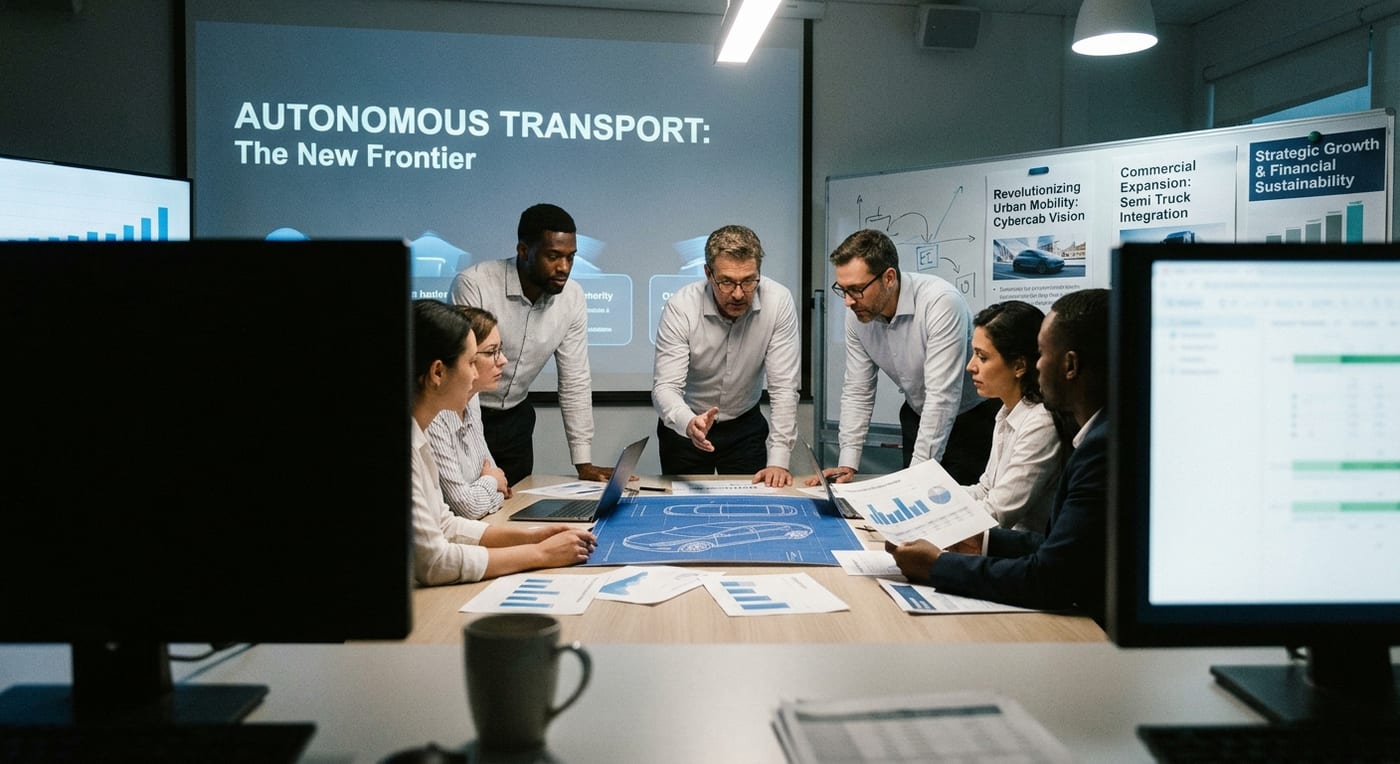
- Tesla's Cybercab aims to revolutionize urban transport.
- The Semi truck rollout signals an expansion into commercial sectors.
- Ongoing financial pressures highlight the need for sustainable growth.
Tesla, Inc. (TSLA) is at a crucial juncture as it embraces a transformative approach in the automotive landscape, particularly through its groundbreaking Cybercab initiative and the rollout of its innovative Semi trucks. Each of these strides not only emphasizes Tesla's commitment to electric and autonomous technology but also places it directly in the crosshairs of competitive challenges within the marketplace. As external pressures mount, understanding Tesla's recent maneuvers and the implications for its future growth becomes imperative for investors and stakeholders alike.
The Cybercab Initiative: A New Era of Autonomous Vehicles
The launch of the Cybercab, Tesla's autonomous robotaxi, signifies a bold leap into the future of transportation. Designed without traditional steering wheels or pedals, the Cybercab promises a radical user experience driven by advanced artificial intelligence. This initiative not only seeks to capture market share in the burgeoning robotaxi sector but also aims to challenge existing players, such as Waymo, which has more experience in autonomous operations. Indeed, Tesla's Cybercab has already launched in Austin, Texas, where it quickly expanded its fleet from 45 to 169 units in just a month.
Despite the ambitious rollout, Tesla faces significant challenges. Early reports indicate mixed customer feedback with regards to service reliability and technology performance. Criticisms include lengthy wait times and glitches in vehicle operations, particularly with the Cybercab's unique butterfly doors. Addressing these concerns is pivotal for Tesla to build credibility in the autonomous taxi service market, where competitors like Waymo have established themselves with greater operational maturity. As highlighted in a recent report, Tesla's autonomous vehicles still require improvement to fully compete with established services that offer 24/7 support.
The Pressure to Expand and Improve
As Tesla's Cybercab initiative progresses, it must overcome technical and regulatory challenges before scaling operations beyond Texas. The National Highway Traffic Safety Administration (NHTSA) has initiated a safety audit into the Cybercab operations to ensure compliance with federal standards. Furthermore, incidents involving pets—such as instances where Cybercabs have struck animals in the street—complicate the development of safe autonomous navigation systems, as CEO Elon Musk has noted the need for heightened attention to avoid such occurrences in the future, ultimately aiming to navigate safely through various environmental challenges.
With a marketplace that is quickly maturing in autonomous transport, the pressure is on Tesla not just to fix these issues but to expand rapidly to retain its competitive edge. The push to replicate the success beyond Austin is not merely strategic; it is essential for Tesla to signal confidence to its investors after a year marked by financial volatility. Investors are understandably concerned about waning sales, notably when compared to Chinese competitors which have been gaining market share through their more affordable electric vehicle offerings.
Tesla's Semi Truck Rollout: Transforming Transportation
In addition to the Cybercab, Tesla's new Semi trucks are being touted as a game-changer for the commercial transport sector. After years of development delays, the company has begun deliveries to major clients, marking an important expansion of its portfolio. With diesel prices escalating and environmental concerns at the forefront, the Semi aims to deliver an eco-friendly alternative to traditional freight transport.
This strategic pivot toward commercial vehicles aligns with the growing demands for sustainability, particularly in Europe, where regulations increasingly favor electric solutions. As Tesla begins to make inroads with major companies like PepsiCo and DHL, there’s potential for disruption within the trucking industry. However, this new venture also exposes Tesla to the challenges of scaling operations and managing production costs while navigating a fierce competitive landscape. That backdrop echoes earlier coverage of the issue, especially around how pricing, strategy, and demand feed into the current story.
Financial Implications and Investor Outlook
Tesla's recent financial performance paints a complex picture—while vehicle deliveries showed a recovery in Europe, overall sales have experienced a slight downturn in key markets, including the U.S. and China. Analysts noted that the brand’s shares have reached a concerning low among the Magnificent Seven, being the only one to decline throughout 2026. Although the rebound in deliveries has sparked some uptick in stock valuation, investors remain wary over declining operating margins that significantly impact profitability.
With rising operational expenses in conjunction with capital spending surging due to AI initiatives, Tesla is faced with the difficult challenge of restoring investor confidence amidst tightening margins. For Tesla's operational strategy to yield dividends, clear, consistent delivery performance must be achieved and sustained.
Navigating Challenges Ahead
As Tesla continues to advance its Cybercab and Semi truck initiatives, it will need to harmonize ambitious growth strategies with a need for financial sustainability. While testing the limits of technological innovation, maintaining a balance between expenditures and revenues will be crucial in mitigating risks related to operational and regulatory setbacks. The recent discourse surrounding the Cybercab and Semi trucks creates a narrative filled with potential, yet it is equally rife with challenges that could dictate the company's trajectory going forward.
Ultimately, Tesla's aligned path toward autonomous and electric transportation could either set it apart as a trailblazer or lead to pitfalls in a highly competitive environment dominated by increasing regulatory scrutiny and fast-evolving consumer preferences. Tesla's journey showcases the complexity of innovation in an industry at the precipice of profound transformation. The same pressure is reflected in recent reporting on the issue, which helps explain why the company's pricing decisions remain under scrutiny.