

Tesla's Bold Move into Autonomous Markets
ED
Editorial
Cashu Finance·5 min read
TL;DR
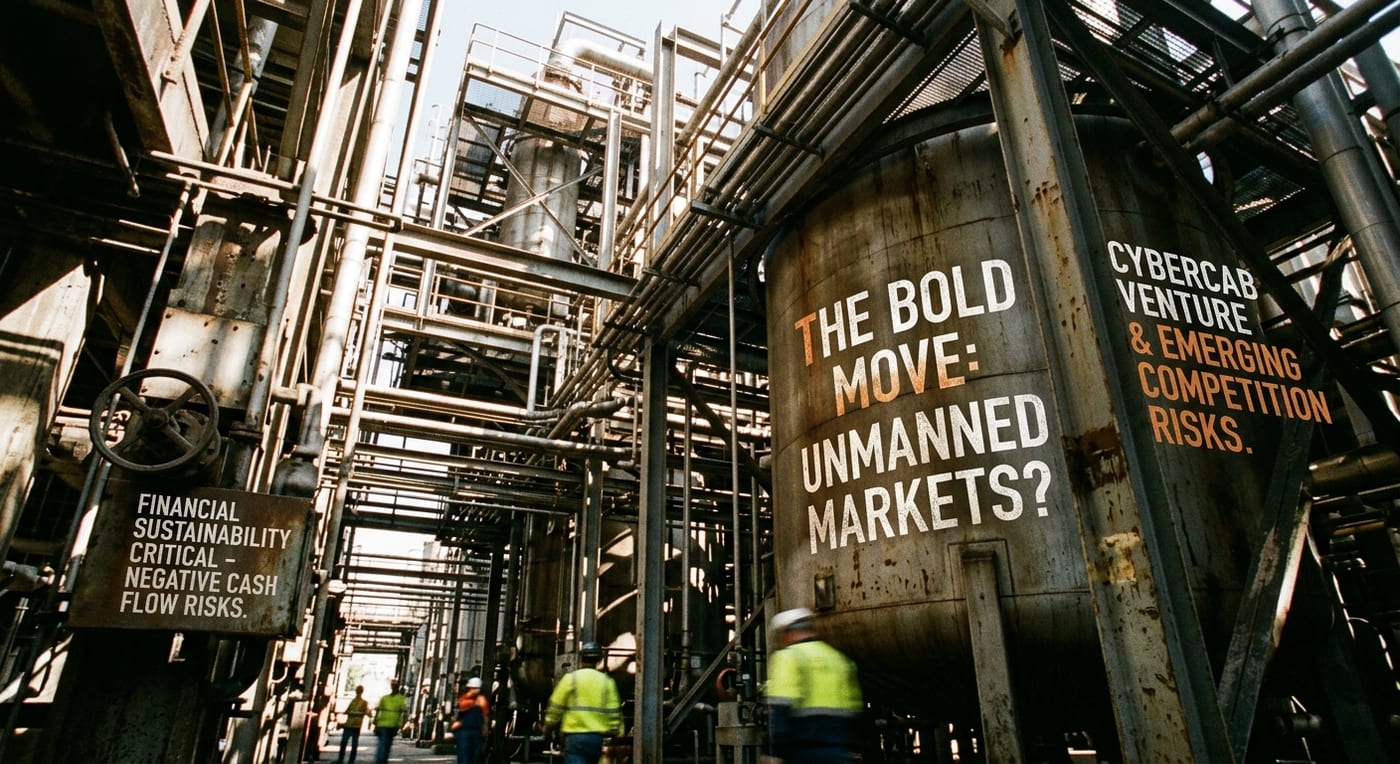
- Tesla's Cybercab initiative signifies its entry into the autonomous market.
- Competition from VinFast poses significant challenges in emerging markets.
- Financial sustainability is critical as Tesla navigates negative cash flow risks.
Tesla, Inc. (TSLA) is making significant strides as it positions itself for a transformative future in the electric vehicle (EV) landscape, particularly through its ambitious Cybercab initiative. This strategic pivot into the realm of autonomous ride-sharing not only symbolizes Tesla's commitment to innovation but also introduces a complex set of challenges that could significantly impact its operational and financial landscape. With the growing competition from established players and emerging markets, understanding the nuances of these developments is crucial for investors and stakeholders alike.
The Cybercab Initiative
At the forefront of Tesla's innovation efforts is its recent unveiling of the Cybercab, a fully autonomous vehicle set to redefine the transportation industry. This model, characterized by the absence of traditional driving elements, is indicative of Tesla's long-term vision in the robotaxi sector. The Cybercab is designed to leverage cutting-edge artificial intelligence, offering a groundbreaking user experience. However, as noted in an earlier article, Tesla faces significant hurdles, including regulatory scrutiny and competition with established companies like VinFast in emerging markets. The market entry into regions such as Vietnam is crucial, as the local EV manufacturer has already captured a dominant position within its home market. Tesla's success will hinge on its ability to prove that its advanced technology and brand prestige can justify a premium price tag in a competitive landscape.
Tackling Competitive Pressures
VinFast, backing a robust ecosystem for EV adoption in Vietnam, poses a formidable challenge for Tesla’s ambitions in the region. Despite registering Tesla Motors Vietnam to facilitate entry, the advantages held by VinFast in local brand recognition, service networks, and pricing strategies create substantial barriers to market penetration. Analysts emphasize that Tesla must differentiate itself not only through superior technology but also through competitive pricing to attract the growing pool of wealthier consumers seeking premium electric vehicles. The upcoming Model 3 and Model Y could serve as the main offerings targeting this demographic, raising the importance of understanding local consumer preferences while maintaining Tesla's brand positioning. For more insight into how Tesla's pricing strategies will need to adapt in dynamic markets, see the previous article detailing the competitive landscape.
Financial Considerations and Cash Flow Dynamics
Financially, Tesla is navigating a turbulent period, as its free cash flow turned negative in the recent quarter. This negative cash flow has raised questions about the long-term viability of its aggressive investment strategies, specifically its pivot toward self-driving technology and robotics, including the Cybercab initiative. While Tesla currently holds a substantial cash buffer, reported at $43.5 billion, the prolonged negative cash flow raises concerns about sustainability, particularly as the company continues to invest heavily in expansion and innovation. Despite these challenges, the anticipated future revenues from the robotaxi segment could provide a corrective evolution in cash flows over the longer term. Analysts suggest that steady cash flows generated from the Cybercab could ultimately bolster Tesla's financial stability, provided that the rollout occurs as planned. However, there is skepticism regarding the timelines and assumptions made by Wall Street analysts regarding revenue predictions from the robotaxi market by 2030. The delivery of the full self-driving software necessary for the operation of Cybercab vehicles remains an outstanding hurdle that could delay financial returns, making it essential for investors to remain cautious.
Technological Innovations and Future Outlook
Tesla's dedication to technological superiority is not limited to autonomous driving alone. The upcoming reveal of the next-generation Roadster further exemplifies the company's commitment to innovation. With significant design changes and advanced features expected, the Roadster could significantly influence Tesla's branding as a leader in high-performance electric vehicles. The re-opening of reservations for the Roadster, however, places additional scrutiny on how Tesla manages customer expectations, especially after years of delays. The consumer response to the updated vehicle could serve as a barometer for Tesla's overall market viability, particularly within the luxury segment, where demand for innovative and high-performance EVs remains robust. While the Roadster's anticipation builds, it is essential for the company to balance between engaging premium consumers and addressing the growing appetite for more accessible models in a world progressively aware of electric alternatives. Finding this balance will be vital in sustaining growth amidst an evolving global landscape and increasing competition from both legacy automakers and new entrants.
Conclusion
In conclusion, Tesla, Inc. (TSLA) stands at a pivotal junction. The company's multifaceted approach, marked by its Cybercab initiative and notable product launches, showcases its ambition and adaptability in a rapidly changing market. Yet, the financial implications of its current strategies and market competition, particularly from VinFast in Southeast Asia, could significantly affect its trajectory. As investors watch the unfolding developments closely, Tesla's ability to innovate while addressing financial sustainability challenges will ultimately dictate its success in the autonomous driving landscape. The interplay between technological advancements and market competition will be crucial for future growth as Tesla navigates these transformative times. The same pressure is reflected in recent reporting on the issue, which helps explain why the company's pricing decisions remain under scrutiny.