

Tesla's Autonomous Vision Takes Shape
ED
Editorial
Cashu Finance·5 min read
TL;DR
- Tesla launches the Cybercab, targeting the robotaxi market.
- Q3 deliveries exceed expectations but raise concerns over margins.
- Competition intensifies as market dynamics shift in the EV landscape.
Tesla, Inc. ( TSLA) is boldly carving its future in the world of autonomous transportation, particularly with the rollout of its innovative Cybercab initiative. This venture not only exemplifies Tesla’s commitment to redefining urban mobility but also highlights its strategies to maintain market leadership amidst increasing competition and evolving technology. Tesla's decision to venture deeper into the autonomous vehicle sector comes at a time when the automotive landscape is under pressure from both legacy automakers and emerging players in electric vehicles (EVs).
Cybercab: Pioneering the Future of Mobility
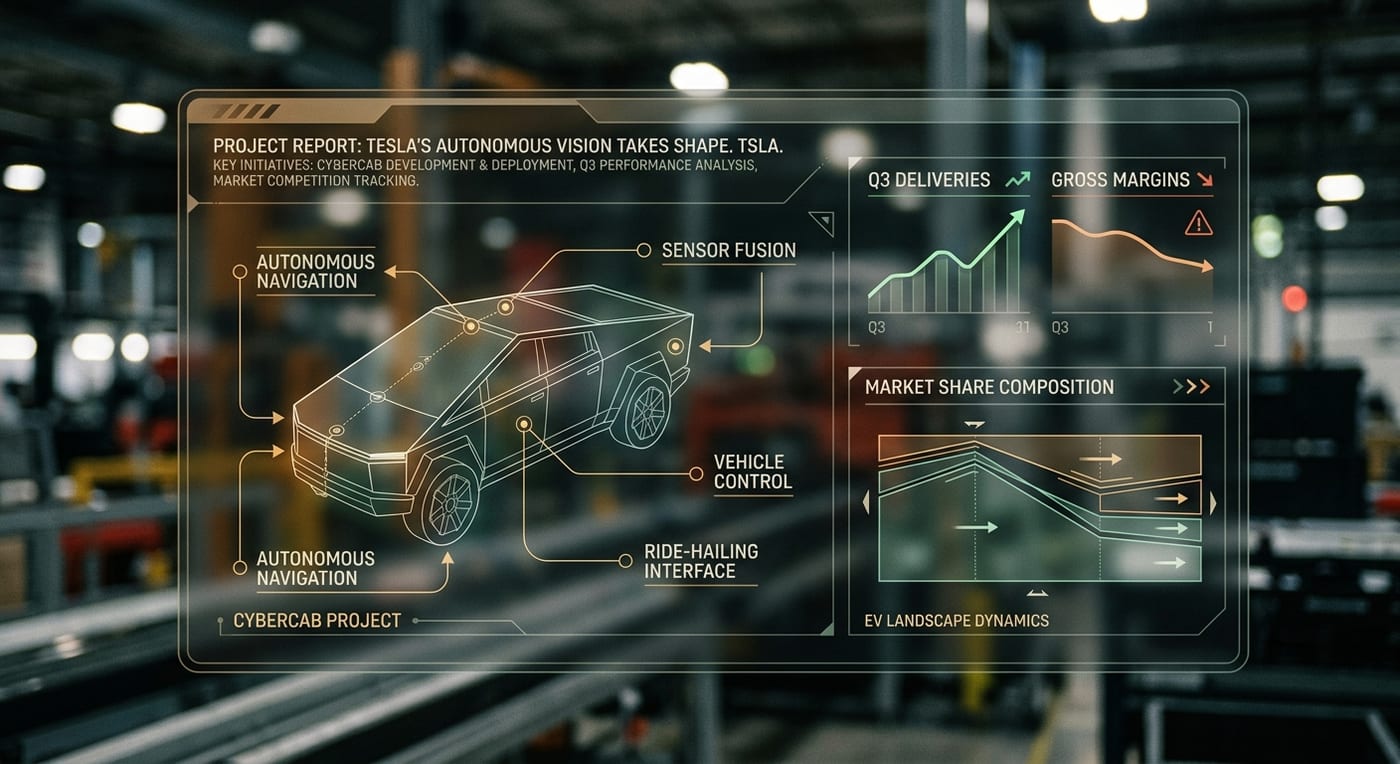
The Cybercab is Tesla’s flagship project aimed at revolutionizing the ride-sharing experience. By integrating advanced artificial intelligence and omitting traditional controls such as steering wheels and pedals, Tesla aims to capitalize on the growing demand for robotaxis. This ambitious move is part of a larger strategy that positions Tesla not only as an automaker but as a forward-thinking tech company at the intersection of robotics and transportation. The vehicle is designed to utilize sophisticated algorithms to navigate complex urban environments, representing a major step toward full autonomy.
Tesla's strategic pivot towards autonomous transport aligns with trends in the EV market, where innovation can dramatically alter consumer expectations and industry standards. As various companies race to capture market share in the robotaxi sector, Tesla's substantial investments in AI technology could set it apart from competitors like Waymo, who have been at this longer but still face uncertainties in scaling operations commercially.
The latest delivery figures underscore Tesla's growth potential. In the third quarter, Tesla reported 486,532 vehicle deliveries, exceeding Wall Street's expectations. However, while the headline numbers are encouraging, investors are eagerly scrutinizing the underlying metrics, particularly gross margins. Analyzing margin performance will be crucial as Tesla positions itself for the long-term success of the Cybercab and other autonomous initiatives. source
Demand Dynamics Amidst Competition
As Tesla embarks on this new venture, the competitive landscape presents both opportunities and challenges. The demand for autonomous vehicles is on the rise, driven by the increasing consumer acceptance of ride-sharing services and the advancements in technology. However, Tesla faces price-sensitive competition, particularly from Chinese EV manufacturers who have been aggressive in their pricing strategies. This can inadvertently dilute margins as Tesla must remain competitive while ensuring it doesn't compromise on its premium branding.
The ongoing pricing wars within the EV sector, exacerbated by fluctuating commodity prices and rising interest rates, have created a complex environment that Tesla must navigate. While the company has reduced vehicle prices to stimulate demand, this could put further pressure on already slim margins if costs continue to rise and inventory management becomes an issue.
Despite these challenges, Tesla's robust delivery figures and optimistic sales forecasts hint at a rebound from the so-called "EV winter" that has plagued the industry. Reports indicate a potential turning point, with an expectation of continued growth in deliveries as the company scales production and expands into new markets. source
Financial Performance: A Closer Look
Recent financial reports will be pivotal for gauging how well Tesla is managing these transitions. With an automotive gross margin that currently sits at 18.85%, analysts have raised eyebrows regarding its sustainability in the face of rising production costs. The pressure is twofold: Tesla must increase production efficiency while minimizing costs to protect its profit margins against a backdrop of rising rates and an intensifying competitive landscape.
Tesla’s third-quarter margin performance will be closely watched, especially in light of previous disappointments. The company’s CFO has pointed to pressures from an unfavorable sales mix and foreign currency fluctuations as primary factors impacting profitability. Investors are keen to understand whether the positive delivery numbers will translate into satisfactory margin performance. Concerns have been raised that sequential declines in gross margins could signify a broader, more systemic issue affecting Tesla’s financial health going forward. source
Future Prospects: The Road Ahead
Looking ahead, the strategic vision of Tesla rests heavily on the successful integration of its autonomous technology across its vehicle lineup. The anticipation surrounding the Cybercab and its implications for the future of urban transportation holds substantial promise if Tesla can successfully navigate the myriad challenges ahead.
The expectations are high as industry analyses predict robust growth in the robotaxi market—one that could see valuations soar into the hundreds of billions over the next decade. The real question remains: will Tesla's current stock valuation reflect this potential, or has the market already priced in the anticipated success? As a reflection of this complexity, Tesla shares struggle to maintain momentum despite positive delivery announcements, indicating a wait-and-see approach from investors. source
In summary, Tesla, Inc. ( TSLA) is at a crucial juncture, positioning itself at the forefront of technological advancement in transportation while grappling with the need for sustainable growth amidst fierce competition. Investors and stakeholders alike will be monitoring how effectively the company can manage costs, maintain demand, and ultimately, deliver on its bold vision for the future.