

Tesla's Ambitious Roadmap Ahead
ED
Editorial
Cashu Finance·5 min read
TL;DR
- Tesla unveils innovative Cybercab for autonomous transport.
- Company begins deliveries of Semi trucks with major clients.
- Financial challenges and competition loom as Tesla navigates growth prospects.
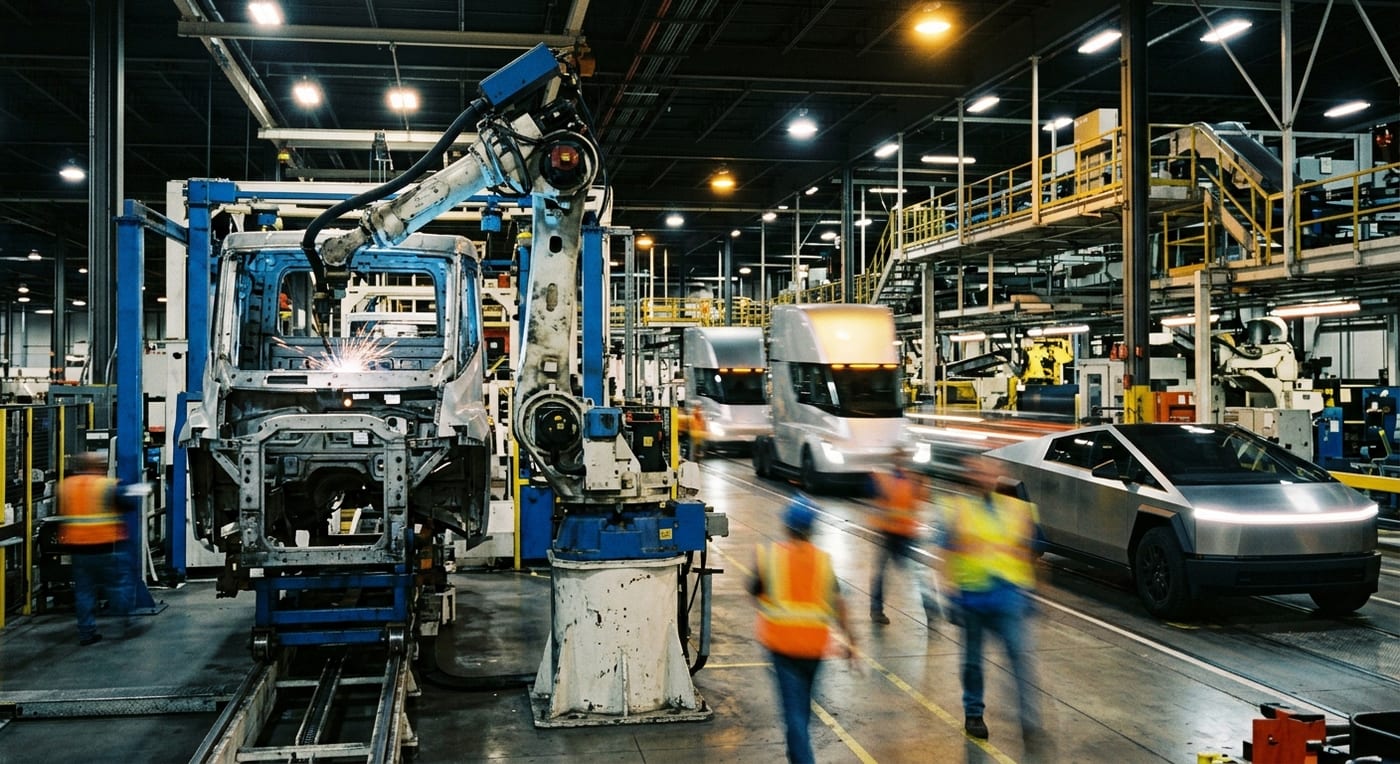
Tesla, Inc. (TSLA) is at a pivotal crossroads in its journey, emphasizing innovation while navigating an increasingly competitive landscape as it explores autonomous transport and continues to deliver electric vehicles. With the recent unveiling of its Cybercab initiative and the anticipated rollout of the Semi trucks, the company is making bold moves that could reshape not only its business model but also the transportation ecosystem at large.
In this article, we dive deep into several key developments regarding Tesla's strategic initiatives, financial outlook, and the challenges it faces as it strives to stay ahead of the curve in the growing electric vehicle (EV) market.
The Cybercab Initiative: Redefining Transportation
Tesla's foray into autonomous transport is exemplified by the launch of the Cybercab—an ambitious and innovative undertaking aimed at establishing a presence in the evolving robotaxi market. This electric vehicle features no steering wheel or pedals, designed for a ride-sharing experience grounded in artificial intelligence and advanced technology. The Cybercab operates under a vision of transforming mobility by making rides safer and ultimately more efficient.
However, the road to a successful launch is rife with potential hurdles. Recent comments from CEO Elon Musk hinted that while the Cybercab would begin commercial operations in states like Florida and Nevada soon, Californians may need to wait until 2027 for their turn. This timeline reflects the complexities of meeting regulatory standards along with ongoing safety audits by the National Highway Traffic Safety Administration (NHTSA), which adds layers to the operational timeline as Tesla looks to validate the Cybercab's safety credentials further.
As previously discussed, the financial sustainability of Tesla's projects remains crucial as the company navigates the margin pressures and investment needs associated with such innovative products. The Cybercab symbolizes Tesla's long-term ambitions within the autonomous vehicle segment, an area where competition is heating up as more players elbow their way into the market, making it a pivotal battleground for share.Read more.
Tesla Semi: Delivering on Promises
In tandem with its Cybercab ambitions, Tesla has also begun deliveries of its highly anticipated Semi trucks, a product designed to revolutionize the trucking industry by providing a sustainable alternative to traditional fossil fuel-powered vehicles. The company recently reported first deliveries to significant clients such as PepsiCo, which not only promises a significant business relationship but also potential influence on Amazon's supply chain and fuel costs amid rising fossil fuel prices.
This timely entrance into the market highlights Tesla's strong positioning while also pointing to a broader trend as businesses increasingly seek greener alternatives. However, the acceptance of these trucks raises questions about their cost compared to diesel trucks and whether operational efficiency and environmental benefits can justify higher upfront investments. As operations scale, investor confidence in the profitability of these moves will hinge on the net margins and the overall performance in an increasingly volatile market environment.
Tesla's Superior EV Technology coupled with its Semi trucks aims to deliver exceptional customer value while potentially reshaping freight management practices as industries shift toward sustainability. Explore further.
Financial Performance: A Mixed Picture
Notably, Tesla's recent financial performance reveals some concerning trends that investors are keenly observing. The company has reported a decline in net income over the past few years as it grapples with various operational challenges. For instance, despite a market cap exceeding $1.4 trillion, Tesla's profits remain significantly behind those of competitor Micron Technology, which recently reported net earnings illustrating the profitability gap that exists within technology and auto segments.According to reports, Micron's recent quarter earnings eclipsed Tesla's total profit from the past three years.
Insights from the latest quarterly results warn of a reducing profit margin for Tesla, indicating that as operational challenges persist, stock valuations may come under scrutiny unless new, tangible revenue streams emerge from innovation initiatives like the Cybercab or enhanced vehicle deliveries by the Semi.
The Competitive Landscape Ahead
In terms of competition, Tesla faces significant challenges. Companies like Rivian and emerging players in the EV sector continue to develop their products while battling for market share. As Tesla seeks to cement itself as a leader in the autonomous vehicle market, challenges from other traditional automotive brands transitioning to electric models make it imperative for Tesla to innovate consistently to maintain its edge.
Furthermore, as various competitors enter the market with innovative propositions, Tesla's ability to efficiently produce its offerings while maintaining quality will be crucial to its strategy to fend off competition amid market dynamism. Growing concerns about market saturation and the scalability of EV operations add pressure on the company to deliver increasingly productive and consumer-aligned products
and its delivery timelines.
Conclusion: Looking Forward
As Tesla, Inc. continues on its journey, the focal points of its strategy center around the successful implementation of innovations like the Cybercab and the sustainable offerings of its Semi trucks. These initiatives symbolize Tesla's commitment to leading the shift toward autonomous transport while navigating a labyrinth of regulatory and competitive challenges.
Investors and stakeholders alike will be drawn to how the company can stabilize its financial trajectory in the face of escalating competition and fluctuating market dynamics. Navigating this transformative phase will not only set the pace for Tesla’s future growth but also shape the larger narrative of the electric vehicle revolution.
In summary, the ambitious roadmap Tesla has laid out—while still fraught with challenges—seeks to harness market opportunities that could redefine transportation for the future. The same pressure is reflected in recent reporting on the issue, which helps explain why the company's pricing decisions remain under scrutiny.