

Taiwan Semiconductor's Strategic Growth Amid AI Surge
Cashu Finance·4 min read
TL;DR
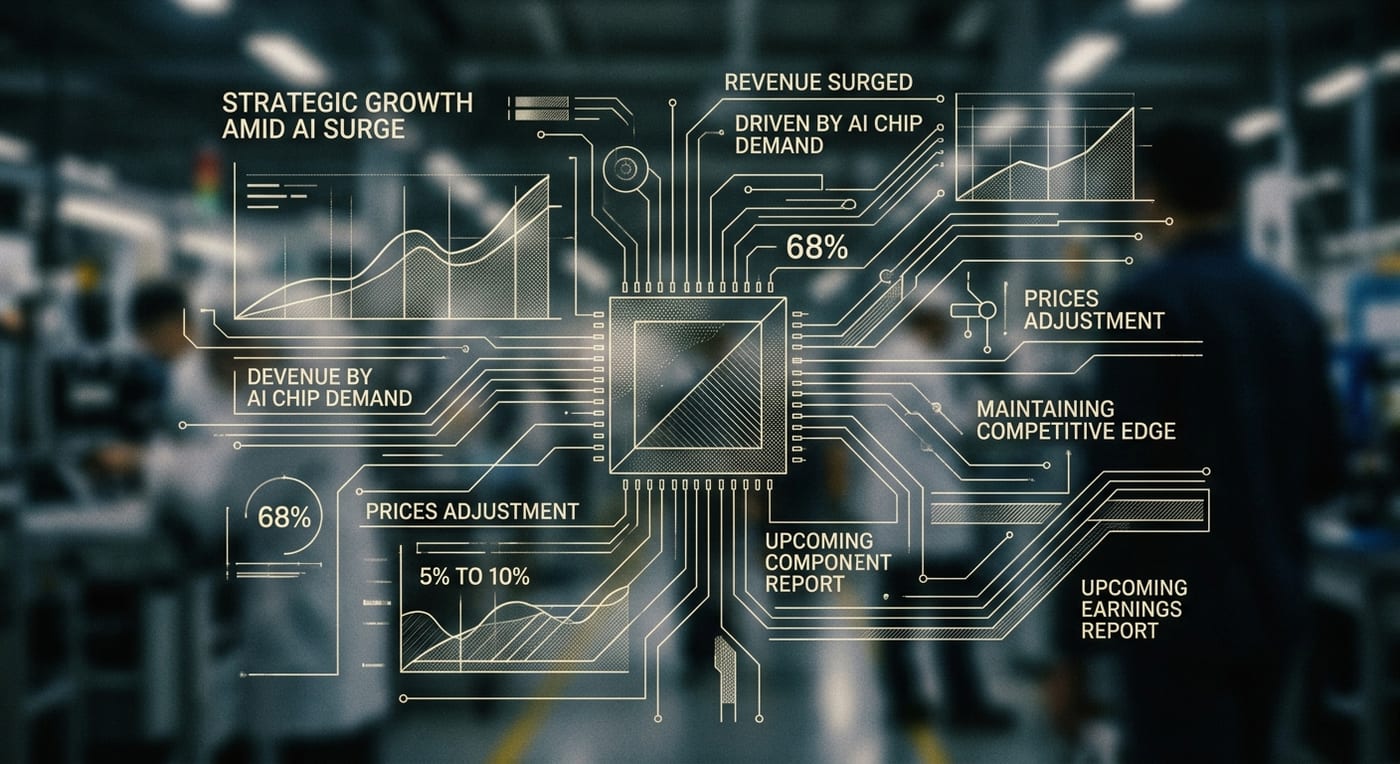
- TSMC's revenue surged 68% in June, driven by AI chip demand.
- The company is raising prices by 5% to 10% to maintain competitive edge.
- Upcoming earnings report is anticipated to bolster investor confidence amid market fluctuations.
Taiwan Semiconductor Manufacturing Company Limited (TSM) stands at the forefront of the semiconductor industry, navigating an exciting yet challenging landscape marked by unprecedented demand for advanced chips, particularly in the realms of artificial intelligence (AI) and high-performance computing. As the world’s largest contract chipmaker, TSM has reported significant growth metrics, driven in large part by its strategic adjustments amidst evolving market conditions.
Strong Revenue Growth Indicators
The company recently announced a remarkable 68% year-on-year surge in revenue for June, with total revenue for the first half of 2026 reaching approximately NT$2.4 trillion ($74.99 billion). This growth, a 35.6% increase compared to the same period last year, highlights the company’s robust positioning within the semiconductor market. The driving force behind this surge is attributed primarily to rising demand for AI chips and investments in semiconductor infrastructure. Key clients such as Nvidia, Apple, and Advanced Micro Devices showcase TSM's critical role in the chip supply chain, particularly as technologies continue evolving.
Strategic Pricing Adjustments
In response to burgeoning demand, TSM has decided to implement price increases of between 5% to 10% for its advanced semiconductor processes. This adjustment is anticipated to impact not only TSM’s immediate revenue streams but also the broader semiconductor supply chain that heavily relies on its technology. Many sectors, from automotive to consumer electronics, depend on TSM's chips, making this decision especially significant. As noted, this price hike aligns with global trends of increased investment in AI-related technologies, highlighting that TSM’s offerings have become increasingly valuable in a competitive landscape.