

Starbucks Navigates Transformation Amid Store Closures
ED
Editorial
Cashu Finance·4 min read
TL;DR
- Starbucks closes 250 underperforming stores to enhance profitability.
- New product launches aim to rekindle consumer interest and sales.
- $1 billion investment focuses on enhancing customer experience and operational efficiency.
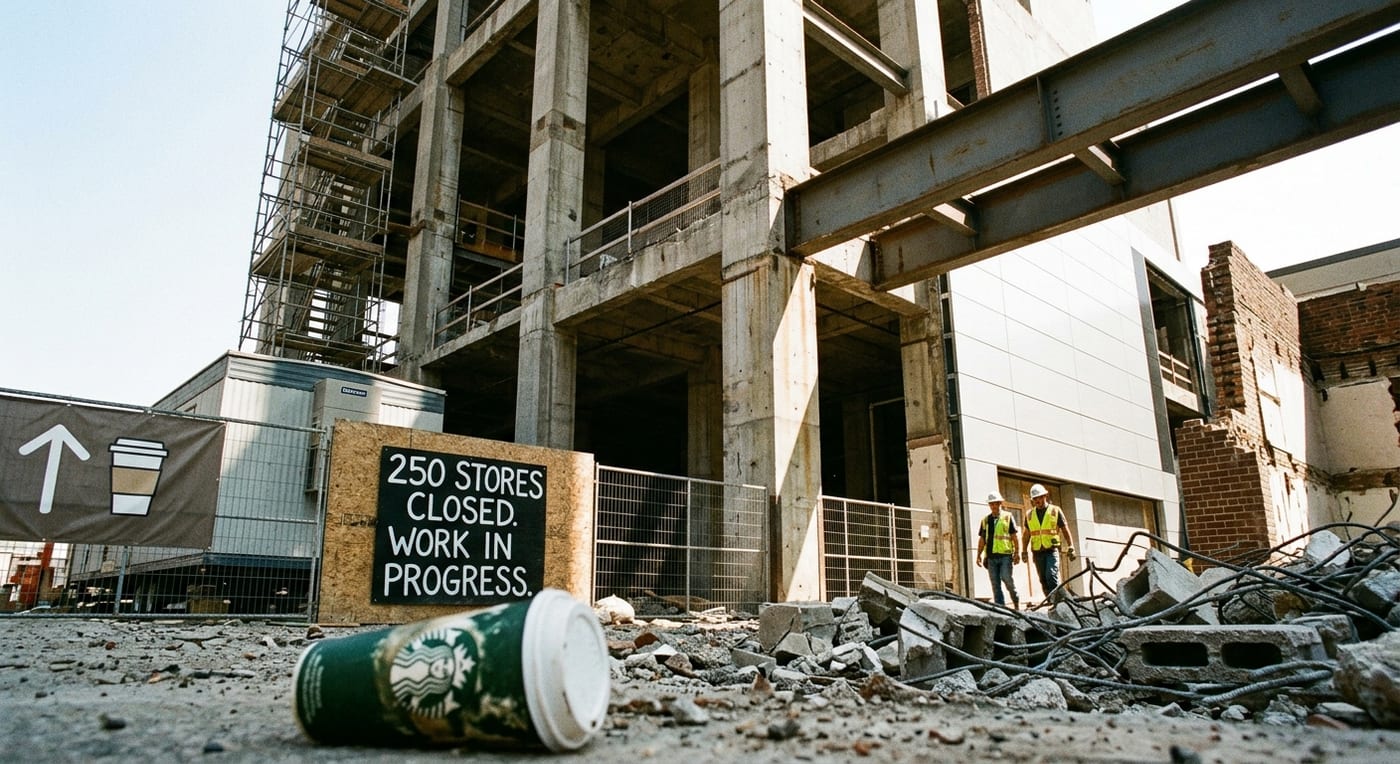
Starbucks Corporation ( SBUX) is embarking on a strategic transformation that encompasses significant operational changes, including the closure of around 250 underperforming stores across North America. This pivotal shift is designed to enhance profitability and reshape the customer experience, rejuvenating the brand in response to evolving market dynamics and financial constraints.
Assessing the Impact of Store Closures
The closures will affect nearly 1% of Starbucks’ extensive footprint of over 18,000 stores in North America, which Sangam Iyer, a Starbucks analyst, notes will allow the company to readjust its focus on higher-performing outlets. Approximately 64 of these closures will occur in California alone, where the company has identified several locations that failed to meet its standards for customer satisfaction and financial performance. This initiative reflects Starbucks’ commitment to invest in only the most viable locations that align with its broader strategic goals.
Starbucks’ restructuring also entails considerable investments, with around $1 billion earmarked to enhance customer experiences across its remaining stores. This investment will be critical in improving the ambiance of its cafes and optimizing service quality, particularly as the company navigates the challenging terrain of competitive pressure and changing consumer preferences. A previous report outlined the extensive efforts being made to adapt to market challenges, reinforcing this strategic direction.
Product Innovation and Customer Experience
In conjunction with the closures, Starbucks is launching a series of new products aimed at rekindling consumer interest. The introduction of smaller-format stores is an innovative response to changing customer habits and preferences, designed to enhance community ties and increase accessibility for urban dwellers. The brand's latest fall menu launch, marked by the return of seasonal favorites like the Pumpkin Spice Latte, has already begun to yield positive customer engagement indicators, signifying a rekindling of brand loyalty in a competitive landscape. Previous analyses indicate that Starbucks is actively seeking to enhance customer experiences through innovative product launches and community engagement initiatives.
Union Negotiations and Market Pressures
As Starbucks continues to implement its transformation strategy, it faces external pressures including ongoing union negotiations. The brand's proactive stance on store closures, while viewed as a necessary step for enhancing efficiency, complicates the company’s relationship with its workforce. The company has made it clear that it intends to offer affected employees transfers or severance packages, emphasizing its commitment to its employees even in the face of operational reductions. Balancing these complex dynamics will be crucial for maintaining employee morale and operational continuity going forward.
Starbucks must navigate these labor relations carefully as employee satisfaction is paramount for delivering the high customer experience it seeks to achieve. Recent reports indicate that external market conditions, combined with internal workforce dynamics, require a delicate approach to maintain business stability and customer loyalty. The union negotiations will play a significant role in shaping the company's future operations, particularly as external pressures continue to influence its business strategy.
Investor Outlook and Future Strategy
Looking ahead, Starbucks’ investors should watch the efficacy of the restructuring initiatives and their impact on financial performance. The closures, while painful in the short term, are seen as investments in the longevity of the company’s market position. The strategic focus on enhancing customer experience through capital investment should attract more patrons while maintaining operational efficiency, providing a pathway for revenue growth.
Starbucks' performance in navigating these challenges will likely influence investor sentiment as the company works through its transformation. Analyst perspectives suggest that while the immediate term may present hurdles, the long-term outlook hinges on the successful execution of Starbucks' strategic plans, emphasizing resilience against market pressures and evolving customer needs. As Starbucks continues to refine its business model, its approach to managing store closures, employee relations, and product innovation will remain pivotal in steering the company towards a robust recovery.
In summary, Starbucks Corporation is taking bold steps to ensure its relevance and profitability in a challenging economic climate. Through store closures, an enhanced focus on product offerings, and a commitment to customer experience, the company is redefining its operational strategy for a successful future. The same pressure is reflected in recent reporting on the issue, which helps explain why the company's pricing decisions remain under scrutiny.