

Starbucks Implements Major Store Closures
ED
Editorial
Cashu Finance·4 min read
TL;DR
- Starbucks to close 250 underperforming stores in North America.
- Focus on enhancing customer experience amid operational changes.
- Union negotiations complicate the company's future outlook.
Starbucks Corporation (SBUX) is currently navigating a significant transformation as it implements a new strategy under the leadership of CEO Brian Niccol.
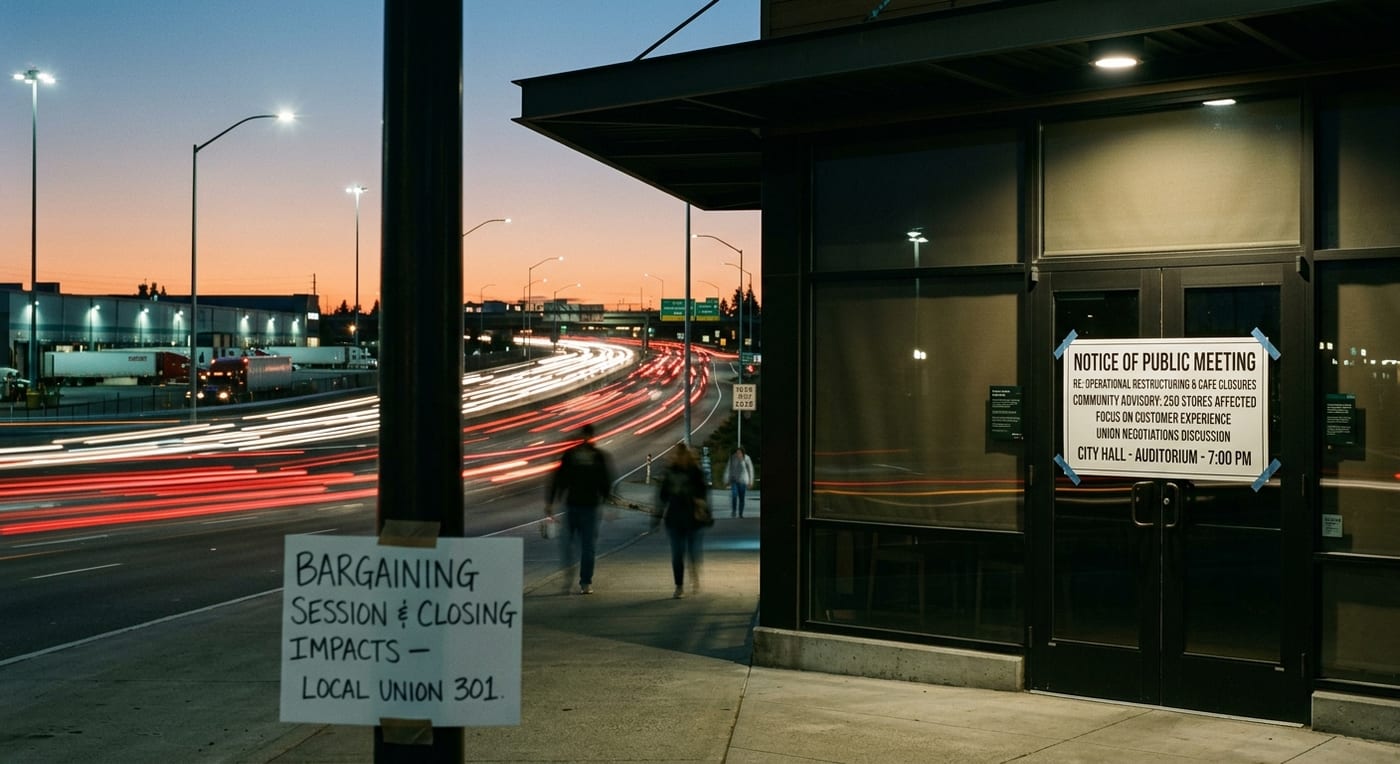
This phase marked a decisive shift with the company announcing plans to close around 250 underperforming stores throughout North America.
This move coincides with the company's efforts to refine its operations and enhance overall customer experience in response to evolving market dynamics and financial pressures, including ongoing issues with union negotiations and the aftermath of earlier store closures.
Store Closures in Focus
As part of the company’s strategy, a significant portion of the store closures will occur in California, affecting 64 locations spread across various cities from Santa Rosa to San Diego.
These extensive cuts highlight the company’s commitment to ensuring that its service locations meet established standards for customer experience and financial viability.
COO Mike Grams noted that Starbucks had identified that certain cafes were not delivering the desired customer experience or meeting financial expectations.
This recognition prompted the latest store closures under their broader “Back to Starbucks” strategy, introduced in 2024.
This approach has drawn parallels to previous rounds of closures, where over 600 stores were initiated last year as part of an operational reset aimed at revitalizing the brand.
The recent store closures echo similar sentiments of adaptation and responsiveness in a challenging retail environment.
The community response to these closures has been mixed, reflecting a notable attachment to some of the older, traditional Starbucks locations which have served their neighborhoods for decades.
For example, an iconic Starbucks in Burbank, which had been operational for nearly 30 years, will cease operations, leaving a poignant void for many local customers who relished its unique atmosphere.
In a letter to employees, Starbucks shared insight into their strategic decision-making, emphasizing the importance of locations that can consistently meet customer service standards.
Locations that fall short are deemed unsuitable for the company's long-term vision.
Emphasis on Customer Experience
Starbucks' strategy does not end with store closures; it is also significantly investing in enhancing customer interactions and overall cafe experience.
This is achievable through retrofitting existing stores to create a more inviting atmosphere.
Furthermore, the company is focusing on opening new cafes designed to improve customer engagement.
Despite tightening growth projections, which now estimate 440 new openings as opposed to previous expectations of 600 to 650, there remains a clear vision for future store experience improvements.
These new stores, primarily in international markets, are anticipated to adopt innovative design elements aimed at deepening community connections, further enhancing Starbucks' positioning as a 'third place' for consumers.
This reflects a strategic pivot towards smaller, community-centric store formats that foster more personalized customer experiences.
Starbucks has witnessed notable growth from its seasonal beverages, with the return of favorites like the Pumpkin Spice Latte generating significant sales spikes during its launch.
The successful North American fall menu launch represents a renewed enthusiasm among consumers, suggesting that while the closures might seem detrimental in the short term, there remains substantial opportunity within the core product line.
This dual approach of closing underperforming stores while actively promoting new products illustrates the company’s agile nature in responding to market demands, driving both customer engagement and sales.
Navigating Union Pressures and Financial Challenges
The environment surrounding Starbucks is complicated not just by market competition but also by ongoing labor negotiations across many of its locations.
More than 700 U.S. stores have voted to unionize yet have yet to reach an accord with the company concerning terms of employment and wages.
The union negotiations represent significant undercurrents affecting Starbucks' operational framework, as the company seeks to balance employee relations with financial performance objectives.
While restructuring and store closures are occurring, workforce stability and morale will be pivotal for Starbucks to execute its strategic initiatives successfully.
In sum, Starbucks Corporation is demonstrating resilience and adaptability in response to multiple challenges faced within the cafe sector.
Through a strategic combination of operational adjustments, community engagement, and a revitalized customer focus, Starbucks is laying the groundwork for a promising future.
With anticipated changes designed to reaffirm its position in the coffeehouse market, it is clear that the company will continue to evolve in accordance with consumer expectations and the competitive landscape.
As Starbucks enhances its focus on customer experience and operational efficiency, investors remain watchful of the company’s trajectory.
The upcoming fiscal year holds the potential for growth as Starbucks not only retrofits existing stores but also adapts to changing market landscapes while navigating the complexities of union negotiations. The same pressure is reflected in recent reporting on the issue, which helps explain why the company's pricing decisions remain under scrutiny.