

SpaceX's Ambitious Journey Ahead
ED
Editorial
Cashu Finance·5 min read
TL;DR
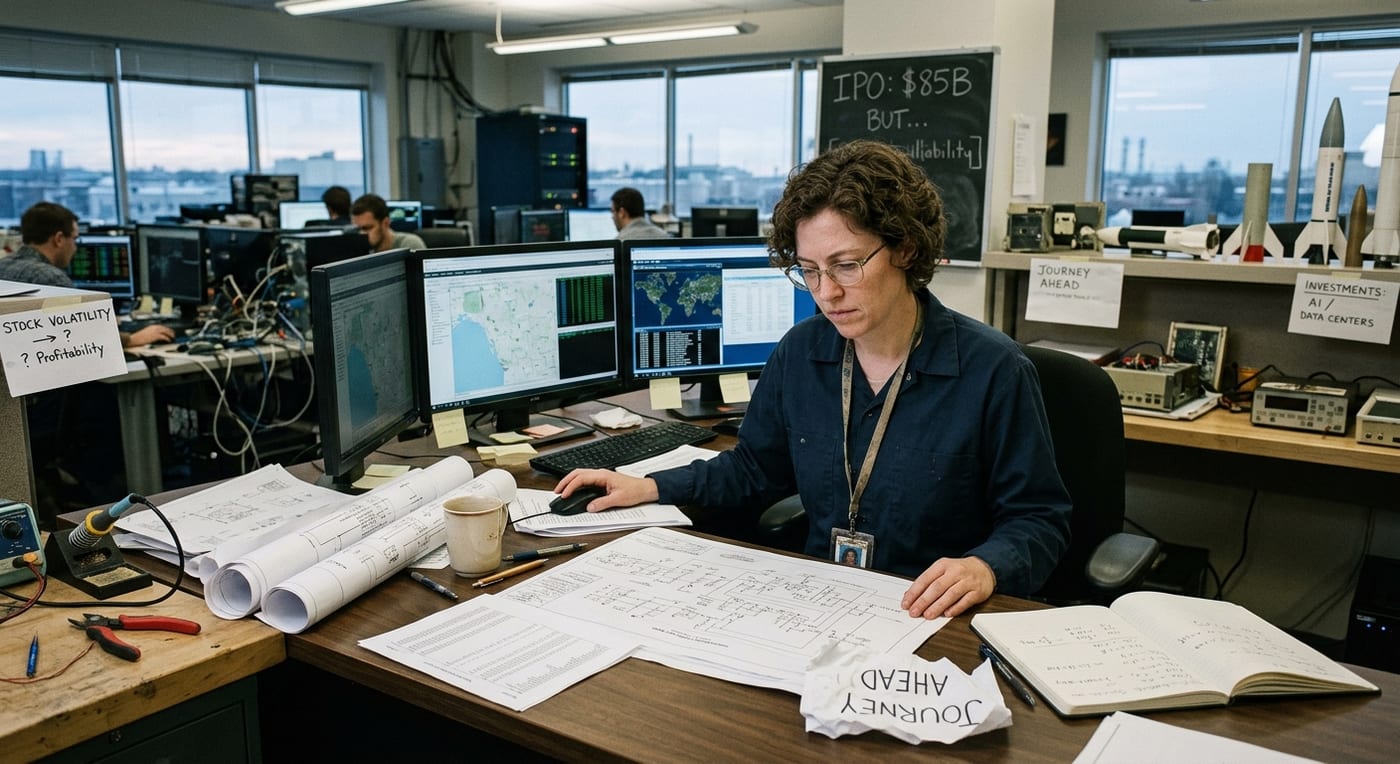
- SpaceX's IPO raised $85 billion, but stock volatility persists.
- Ongoing operational challenges could threaten profitability.
- Strategic investments in AI and data centers aim to revolutionize revenue streams.
Space Exploration Technologies Corp. (SPCX) is at a turning point as it navigates post-IPO challenges while simultaneously focusing on its grand vision of making life multiplanetary.
Following its record-setting IPO in June 2026 that raised approximately $85 billion, SpaceX's market valuation peaked at about $2.1 trillion. However, the journey hasn’t been without turbulence—significant stock volatility and operational hurdles are raising questions regarding the company's long-term profitability.
Initial Surge and Immediate Market Reaction
The excitement surrounding SpaceX's IPO was extraordinary; shares surged to an intraday high of about $226 shortly after debuting on the market. Yet, mere days following the initial trading frenzy, concerns surrounding the company’s heavy capital expenditures and potential post-IPO lockup expirations led to a rapid decline in stock value. The stock eventually settled down to trading under $150 per share, representing a stark reminder of the volatility and challenges that accompany ambitious, high-profile IPOs in the tech sector.
As noted in a recent analysis, stock performance post-IPO can frequently be tumultuous, with average declines seen among other mega IPOs giving investors a reason to proceed cautiously with an investment in SPCX. The median decline for similar IPOs has been reported at approximately 53%, setting a precedent for SpaceX to navigate a potentially rocky road ahead.
Navigating Profitability Concerns
Despite its soaring revenue—evidenced by a remarkable 92% year-over-year growth to $7.8 billion in its latest earnings report—SpaceX is still grappling with net losses. In the second quarter, the company posted a net loss of $541 million, an improvement from previous losses. Starlink, SpaceX’s satellite internet service, has emerged as a crucial segment for profitability, generating operational profits that could help offset ongoing significant investments in R&D and infrastructure.
Analysts forecast that if Starlink could continue to expand its subscriber base and revenue, it might significantly bolster SpaceX's bottom line in the foreseeable future.
Moreover, analysts predict a potential upswing in SPCX's market price, with median price targets suggesting a range upward of $216 by September 2027. This projection hinges not only on Starlink's growth but also on SpaceX's continuing investment in AI and potential new revenue streams from its orbital data center ambitions.
Strategic Investments in AI and Infrastructure
SpaceX's expansive vision is not solely focused on launches and space travel. The company aims to establish a prominent presence in the AI infrastructure market, which it predicts could represent a $26.5 trillion total addressable market.
By partnering with tech giants like Alphabet and Anthropic for data center operations, SpaceX is positioning itself to tap into significant revenue streams that can fuel its space ambitions. The company's strategy emphasizes integrating cutting-edge AI capabilities into its systems, potentially yielding substantial returns in the highly lucrative data services market.
However, the path to operationalizing orbital data centers is fraught with challenges. Observers note that while the ambition is indeed significant, practical hurdles in cooling systems, rapid technological obsolescence, and efficient communication back to Earth must be overcome before such initiatives can achieve hyperscale.
Elon Musk’s timeline for launching these data centers is ambitious, aiming for a potential rollout by late 2027, though experts suggest a more realistic timeline may stretch into the 2030s.
Nevertheless, the technological advances SpaceX has achieved thus far serve as a testament to its capabilities, defying earlier skepticism regarding the feasibility of mass satellite launches.
Competitive Landscape and Future Outlook
As SpaceX seeks to solidify its market dominance, it faces intensifying competition. Other aerospace and tech companies are investing heavily to replicate its success, particularly in the realm of satellite communications and AI.
These competitive dynamics underscore the importance of SpaceX maintaining its lead in rocket technology and launch frequency while scaling its other business ventures effectively.
The company’s ambitious plans to continuously innovate in satellite technology, paired with its unique applications for AI, will likely keep it in contention for industry leadership even as challengers emerge.
Elon Musk's strategy to leverage the profitability of Starlink and the future potential of AI-enhanced space operations interlinks these ambitions, creating a multifaceted growth narrative for SPCX.
This interconnected approach not only attracts investor interest but also provides the necessary funding for pioneering new ventures, including the prospect of sustainable and profitable space exploration efforts.
Conclusion
As SpaceX stands on the threshold of transformative technological advancements, its trajectory remains uncertain yet filled with potential.
The immediate challenges after the IPO reflect the volatile nature of high-stakes ventures in emerging markets, compounded by ongoing operational hurdles and competitive threats.
Still, the company continues to showcase its adaptability and forward-thinking approach through significant investments in AI and satellite technology.
Investors and market observers alike will keenly watch how SpaceX maneuvers through this turbulent phase as it strives towards ambitious milestones on its quest to revolutionize space exploration.
With an eye on both profitability and sustainable growth, SpaceX’s journey epitomizes the complexities of a groundbreaking enterprise in the aerospace sector. The same pressure is reflected in recent reporting on the issue, which helps explain why the company's pricing decisions remain under scrutiny.