

SpaceX: The Journey After IPO
ED
Editorial
Cashu Finance·5 min read
TL;DR
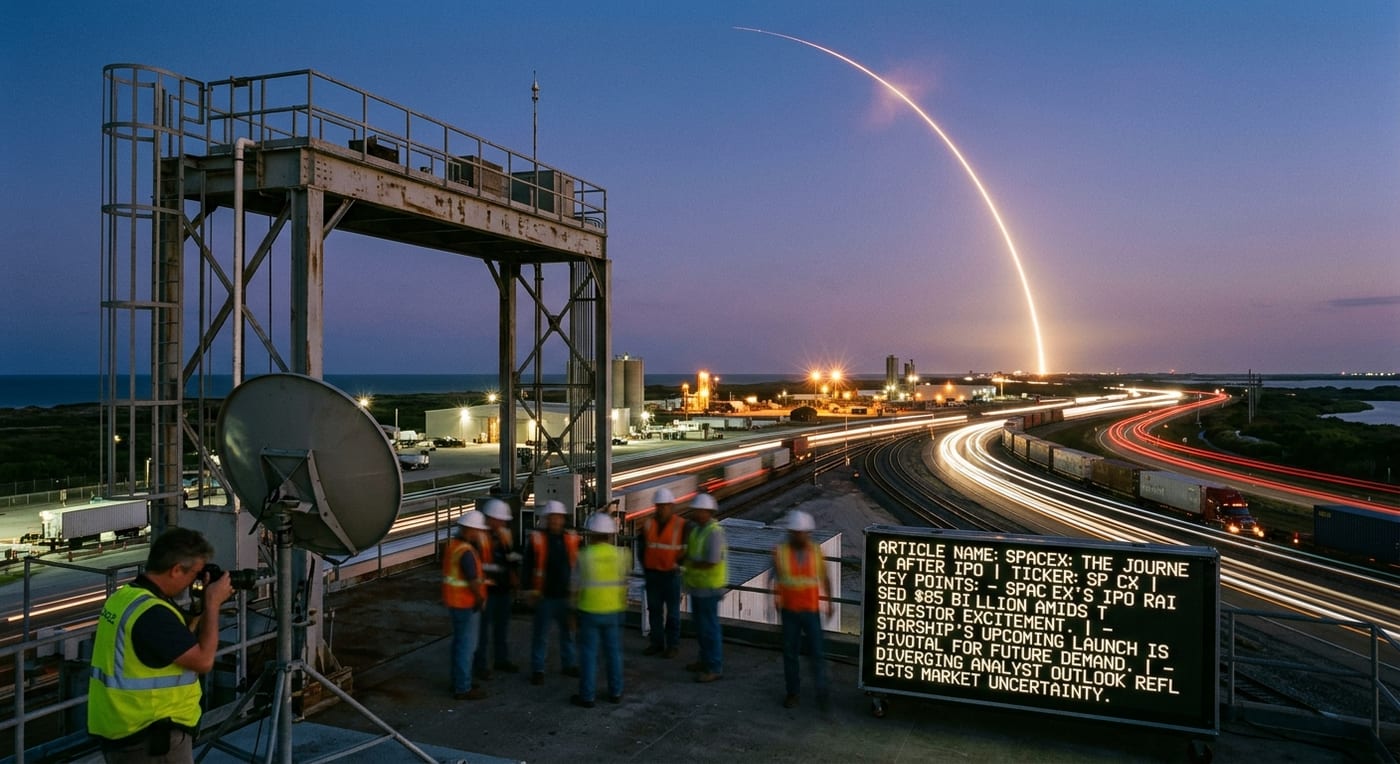
- SpaceX's IPO raised $85 billion amidst investor excitement.
- Starship's upcoming launch is pivotal for future demand.
- Diverging analyst outlook reflects market uncertainty.
Space Exploration Technologies Corp. (SPCX) has entered a transformative period in its history following a groundbreaking IPO that raised approximately $85 billion in June 2026. With a valuation briefly reaching $2.1 trillion, SpaceX has a foothold in both aerospace and artificial intelligence (AI) markets, but the path ahead remains riddled with challenges and opportunities that are critical to its long-term strategy and profitability. This article delves deep into the post-IPO landscape of SpaceX, examining the implications of its strategic maneuvers, upcoming milestones such as the Starship flights, and the market's fluctuating perceptions of its growth potential.
The IPO and Initial Market Reactions
Initial excitement surrounded SpaceX's IPO, which opened at $150 per share and peaked at about $226 shortly after. This initial surge captured widespread investor attention, representing a significant milestone for the aerospace industry. However, the excitement was quickly tempered by volatility in the stock price, which caused many investors to question the sustainability of growth portrayed in forecasts. Following the IPO, stock values saw dramatic fluctuations, leading to concerns over excessive cash burn associated with its growth strategies and significant investments in AI technology.
As highlighted in various financial discussions, the current market valuation continues to exceed the original IPO valuation, which points to the company’s robust growth potential despite uncertainties. While many analysts remain bullish on SPCX, with 26 recommending buying while only a handful have issued sell ratings, the true feasibility of predicted economic outcomes tends to hinge critically on the success of its ambitious initiatives, particularly in AI and space exploration.
Aerospace and AI: A Dual Focus
SpaceX's investments in both the aerospace sector and AI are designed to create synergies that capitalize on two of the most significant growth areas in the technology landscape. One pivotal element of this strategy includes the development and launch of Starship, a fully reusable rocket aimed at dramatically lowering the cost of deploying payloads to orbit.
The company plans to leverage Starship as the backbone for its satellite delivery system, focusing primarily on its Starlink project, which has already garnered impressive demand with over 12 million subscribers globally. According to a recent analysis, successful deployment of Starlink's next-generation V3 satellites via Starship could replicate existing capacity in a much more efficient manner, fundamentally altering the economic outlook for SpaceX. While Starlink has demonstrated a substantial revenue-generating capability, its integration with the Starship program could drive significant additional profitability.
Yet, even with a robust operational infrastructure, Street analysts hold differing opinions on SPCX's financial trajectory. The dip in stock following disclosures of extraordinary AI spending amidst concerns regarding an AI bubble brings skepticism into discussions surrounding valuations. For instance, some market analysts fear that massive investments in developing AI technology could draw attention away from core aerospace operations, exposing the company to both regulatory scrutiny and operational distractions.
Impending Milestone: Starship Launch
A highly anticipated event on this journey is the upcoming launch of the Starship, marked as the 14th test flight scheduled for September 22. This flight is unique as it is aimed to deploy the next generation of Starlink satellites, which will not only enhance the service's portfolio but also mark the beginning of monetization for Starship missions.
Analysts believe that a successful testing phase could catalyze investor confidence and stabilize market perception.
Investing in Starship has been underscored by high capital expenditure, with the company reportedly allocating significant portions of its budget towards R&D. Research and development expenditures within the SpaceX rocket segment surged to nearly $1.1 billion in recent quarters, escalating concerns about the financial viability of the Starship project. Nevertheless, proponents argue that upon successful test flights, the long-term viability of Starship's introduction to commercial use will significantly impact SpaceX’s operational metrics and could redefine its valuation.
Investor Sentiment and Market Outlook
The divergence in analyst outlook is primarily influenced by expectations related to the success of the Starship program and its ability to drive revenue through launching Starlink satellites. As seen recently, investor sentiment fluctuates in response to projected outcomes of such critical projects. Particularly of interest is how the stock responds to both successes and setbacks, as any operational failure could further exacerbate investor anxieties related to cash flow and valuation sustainability. As the upcoming launch date approaches, all eyes will be on how well SpaceX executes this mission—and its implications for SPCX's long-term strategy and market position. Analysts remain divided, with contrasting projections highlighting an underlying complexity in understanding SpaceX's expansive operational scope and its approach to navigating market uncertainties.
In conclusion, Space Exploration Technologies Corp. (SPCX) embodies a unique blend of opportunity and risk in today's tech landscape. The volatility following its IPO, coupled with mixed sentiments surrounding its AI investments and Starship developments, compels investors and analysts alike to keenly assess the institutions’ responses. Maintaining its growth trajectory will depend on the success of core projects like Starlink and Starship, which must ultimately deliver on their promises without succumbing to the pitfalls of ambition. The same pressure is reflected in recent reporting on the issue, which helps explain why the company's pricing decisions remain under scrutiny.