

Service Corporation International Faces Earnings Pressure
Cashu Finance·5 min read
TL;DR
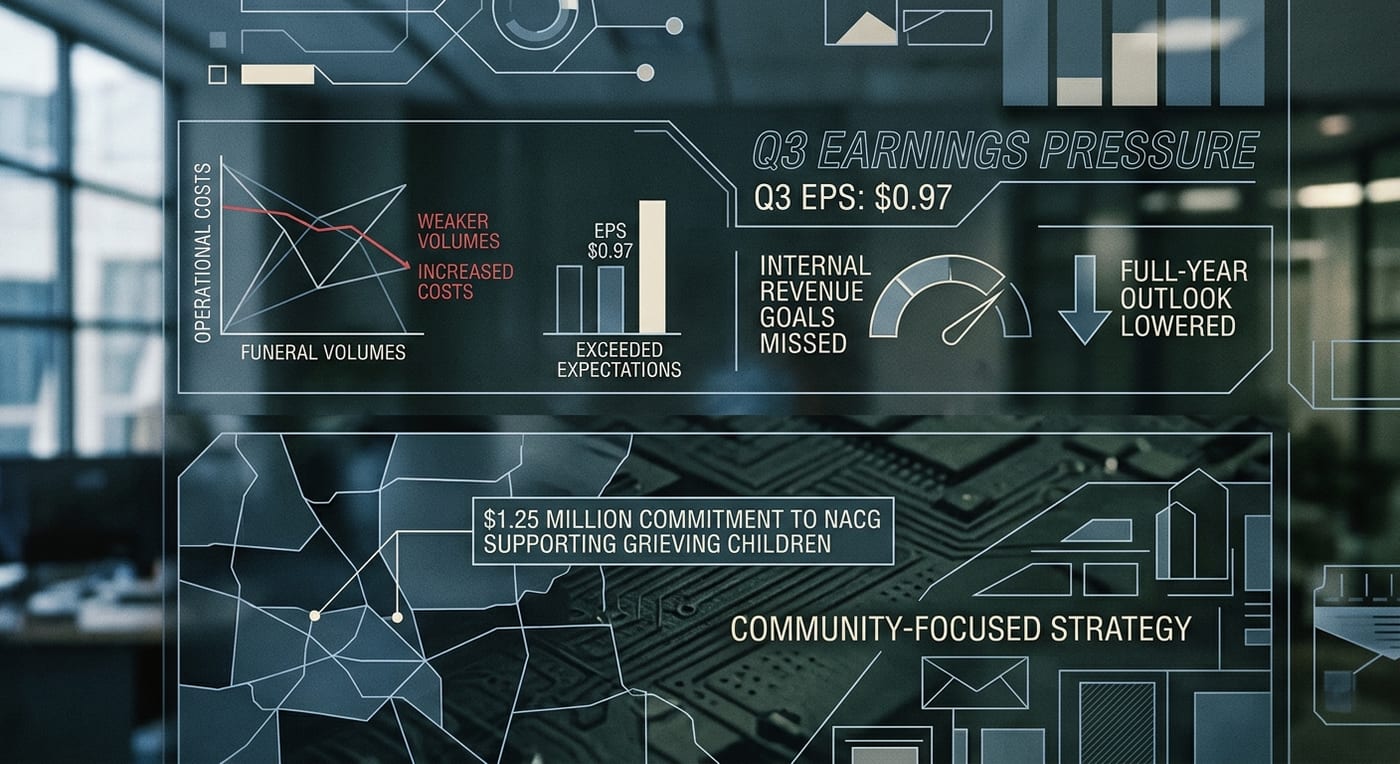
- Service Corporation International reports Q3 EPS of $0.97, exceeding expectations but missing internal revenue goals.
- The company lowers its full-year earnings outlook on weaker funeral volumes and increased operational costs.
- SCI commits $1.25 million to support grieving children through NACG, reflecting its community-focused strategy.
Service Corporation International Faces Earnings Pressure
Service Corporation International (SCI) is navigating through a challenging financial landscape as it adjusts its earnings outlook for the year. The company's recent third-quarter performance revealed both strengths and weaknesses, highlighting the complexities of the deathcare market amidst rising operational costs and fluctuating demand.
In its latest earnings call, SCI reported a third-quarter adjusted earnings per share (EPS) of $0.97, representing an increase of over 11% from $0.87 a year earlier. However, this growth was overshadowed by revenue and earnings that fell short of internal expectations. Chairman and CEO Tom Ryan attributed the disappointing results to various factors including lower funeral volumes, increased fixed costs, and a shift in commission structures, which dampened profit margins. While the company managed to increase revenue in its Funeral and Cemetery segments, it also acknowledged that the performance was below its initial projections, leading to a reduction in its full-year earnings guidance.
Challenges in Funeral Volumes
The heart of SCI's revenue struggles lies in its funeral business, which saw comparable core Funeral revenue increase by just over 2% year-over-year. The growth, while modest, masks a concerning trend: a comparable core Funeral volume decline of 0.5%, continuing a year-long struggle and contributing to a 3.1% year-to-date decline. This drop has prompted SCI to reevaluate its expectations, forecasting that full-year Funeral volumes will be approximately 200 basis points below its original estimates. Ryan indicated that these challenges primarily stem from softer demand, potentially influenced by broader economic factors and shifts in consumer behavior.