

Rocket Lab's Roadmap: Delays and Contracts Ahead
ED
Editorial
Cashu Finance·5 min read
TL;DR
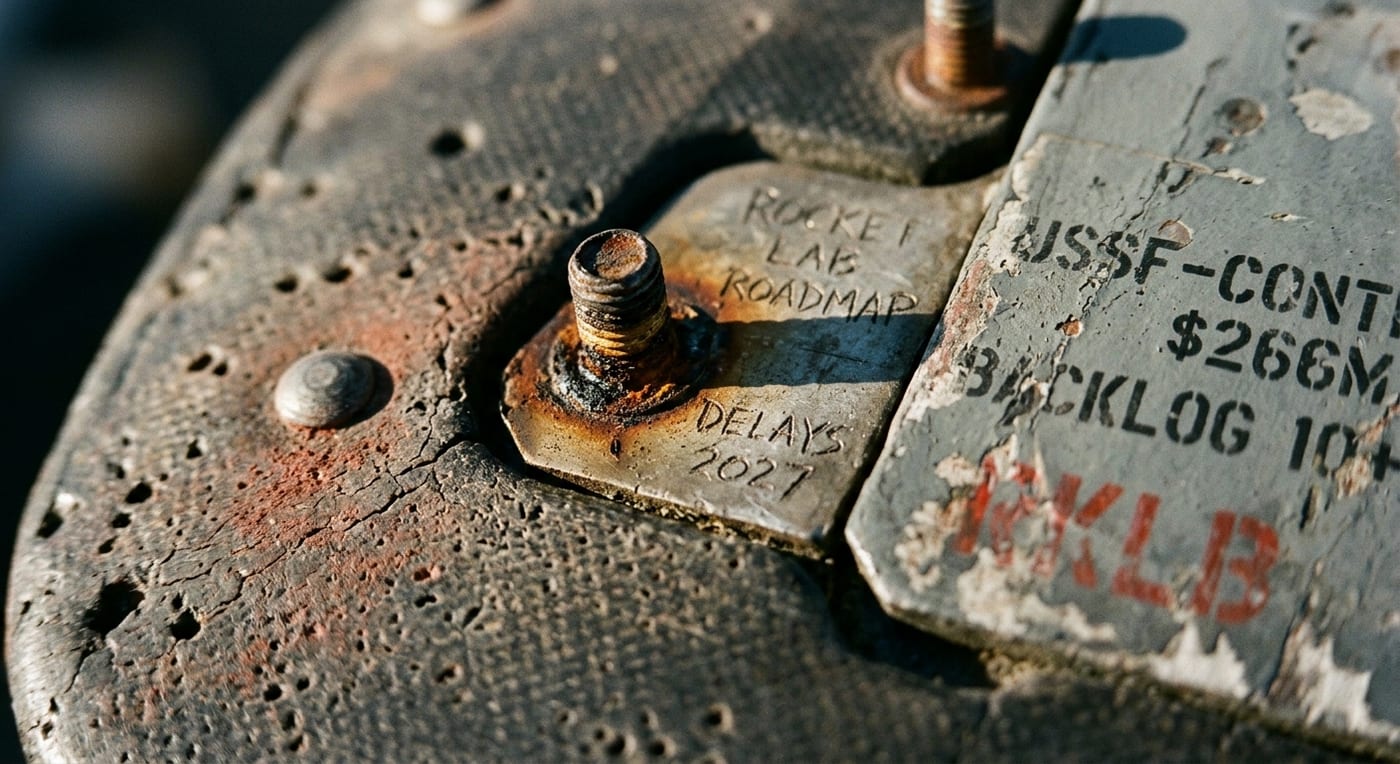
- Rocket Lab secures a significant $266 million contract with the U.S. Space Force.
- Neutron rocket launch delayed to 2027, raising concerns among investors.
- Strong backlog of contracts provides financial stability amid operational challenges.
In recent months,
Rocket Lab USA, Inc. (RKLB) has made headlines for a giant $266 million multi-launch contract with the U.S. Space Force. This contract reflects the increasing demand for reliable space launch services, especially in the defense sector, and positions Rocket Lab favorably within the aerospace landscape.
However, juxtaposed against this significant contract win are ongoing challenges surrounding the development of Rocket Lab's Neutron rocket, which initially intended to make its debut in late 2026 but has now been postponed to 2027 due to manufacturing issues. Such delays have not only generated frustration among stakeholders but also call into question the broader financial outlook of the company.
The Implications of Delays in Neutron's Development
The Neutron rocket is hailed as a pivotal component of Rocket Lab's future strategy, designed to significantly enhance its launch capabilities by carrying payloads up to 40 times larger than those of its current Electron rocket. Unfortunately, a manufacturing defect concerning air voids in the propellant dome has derailed its timeline. While CEO Sir Peter Beck assures stakeholders that a solution has been identified, the acknowledgment that 2027 might not be a guaranteed target has only added to investors' concerns about the company's trajectory.
This aligns with the previous challenges discussed in the article Rocket Lab: Delays and Developments Ahead, detailing how operational setbacks could reshape investor sentiment and operational projections.
Despite these setbacks, Rocket Lab's recent contract win places it in a strong position to capitalize on the burgeoning demand for defense-related launches. This growing interest aligns with Rocket Lab's noted abilities as a dependable launch service provider, setting the stage for potential revenue growth amid challenging market dynamics.
Strategic Partnerships: A Beacon Amidst Delays
The recently acquired contract from the U.S. Space Force represents not only a financial milestone but also a strategic partnership that enables Rocket Lab to enhance its operational capabilities. The increasing defense budget dedicated to space exploration and satellite deployment beckons a lucrative market for Rocket Lab. The company has already carved out a niche, serving as the second most used launch provider in the U.S. with its Electron rocket, making it especially competitive in the small-lift segment.
Also important is its rapidly developing space systems segment, which includes offering specialized aerospace components, such as rovers and star trackers, that are contributing to its substantial backlog of nearly $2.4 billion across both its launch and space systems businesses. This strong pipeline of orders significantly alleviates concerns amid Neutron's delays, providing a buffer of financial security.
As Rocket Lab progresses, operational excellence in servicing defense contracts might indeed pave the way for profitability, independent of the Neutron's timeline.
Examining Competitive Pressures from Industry Giants
In the backdrop of Rocket Lab’s developments loom competitors like SpaceX, which has been dominating the commercial launch market with its own innovative endeavors and rapid production schedules. SpaceX's recently reported revenue underscores its dominance, with its upcoming ambitions of weekly launches signaling an aggressive market approach.
However, unlike SpaceX, which incorporates a variety of business lines including satellite internet communications, Rocket Lab remains focused primarily on aerospace services, making it a purer play for investors looking at the space economy. This singular focus could reassure stakeholders who prefer to invest without the complexities of diversified technology sectors. An analysis suggested that "Rocket Lab provides pure-play exposure to the space economy, focusing solely on launch services, space equipment, and related infrastructure".
This sentiment is echoed in another article discussing how Rocket Lab contrasts with SpaceX's broad operational framework while highlighting its specialized offerings and the potential for substantial market penetration once the Neutron is operational.
As discussed in the article Should You Ignore the SpaceX Hype and Buy Rocket Lab Instead?, Rocket Lab’s focus on launch services could provide value for investors looking for targeted exposure to the aerospace sector amidst wider market fluctuations.
Outlook and Future Potential
Ultimately, Rocket Lab's future appears to be a balancing act between the momentum generated by contract wins and the headwinds posed by developmental delays. The assurance from management regarding their commitment to safety and reliability is commendable while the move to ensure that all operational aspects are meticulously addressed bodes well for the longer term.
Investors may need to exercise patience as the company transitions through these phases, but the sheer number of contracts and the growing backlog indicate a robust pipeline that stands to benefit significantly once operational capabilities are enhanced with the Neutron launch. Until then, Rocket Lab will likely reflect the broader fluctuations of the aerospace market, needing to navigate the dual challenges of maintaining investor confidence while fulfilling its ambitious goals. The same pressure is reflected in recent reporting on the issue, which helps explain why the company's pricing decisions remain under scrutiny.