

Rocket Lab's Launch into New Frontiers
ED
Editorial
Cashu Finance·5 min read
TL;DR
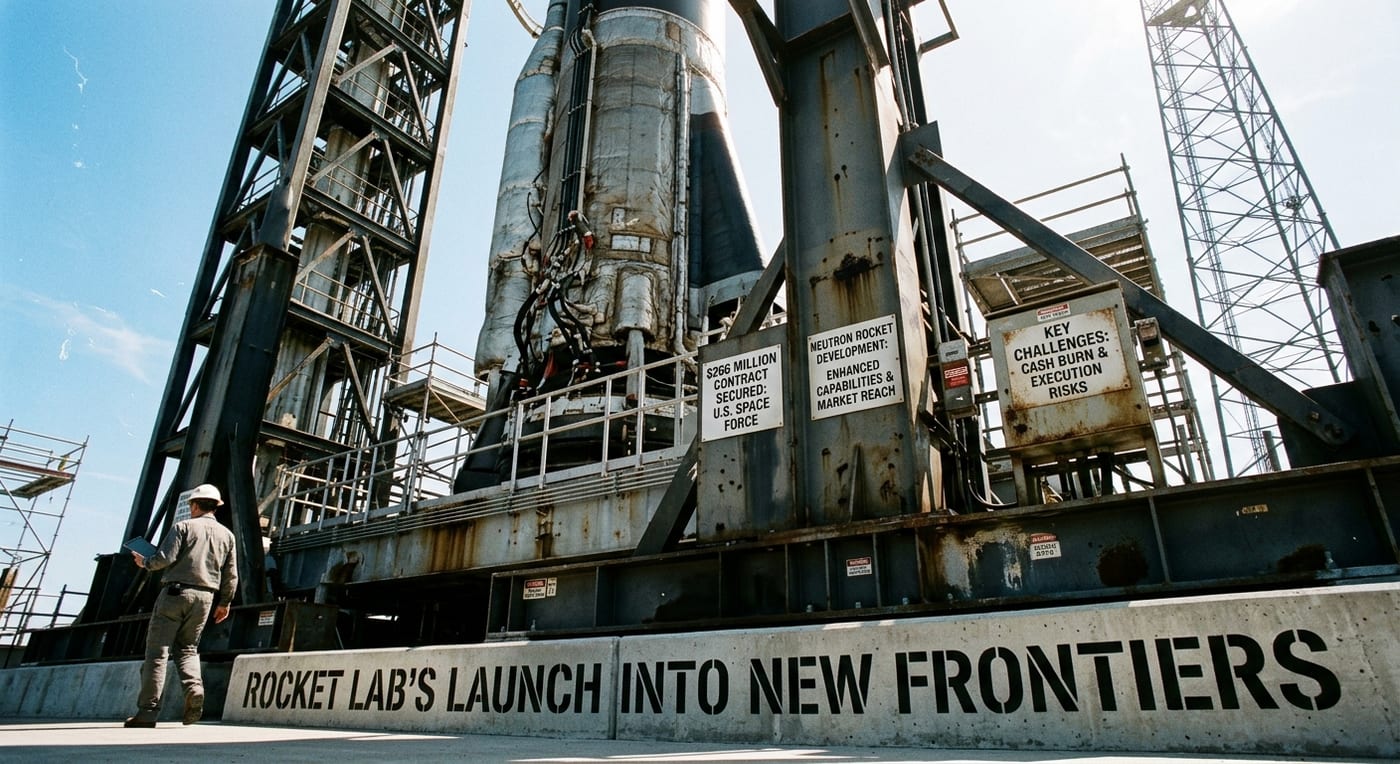
- Rocket Lab secures a significant $266 million contract with the U.S. Space Force.
- Development of the Neutron rocket aims to enhance launch capabilities and market reach.
- Challenges remain around cash burn and execution risks impacting the company’s growth trajectory.
Rocket Lab USA, Inc. (https://cashumarkets.com/stock/rklb) is at a pivotal moment in its trajectory within the aerospace industry, driven by substantial contracts and innovative technology developments. With a backdrop of increasing demand for commercial and defense launches, Rocket Lab is not only solidifying its position but is also poised to tap into new markets thanks to its upcoming advancements. This article explores Rocket Lab's major contracts, the introduction of its Neutron rocket, and its overall strategy in navigating the competitive aerospace landscape while addressing the potential risks and rewards ahead.
Strengthening Market Position Through Strategic Contracts
One of the primary factors contributing to Rocket Lab's promising outlook is its ability to secure significant contracts that bolster its market prominence. The recent announcement of a historic $266 million multi-launch agreement with the U.S. Space Force marks a critical milestone in the company's mission to establish itself as a leading player in the aerospace sector. This contract not only highlights Rocket Lab's reliability as a launch service provider but also reflects the growing demand for defense-oriented launches that cater to national security. In alignment with the increasing focus on defense-related projects, Rocket Lab is well-positioned to capitalize on this trend, thereby enhancing its operational capabilities.
The Neutron Rocket: A Game-Changer for Rocket Lab
Central to Rocket Lab's growth strategy is the much-anticipated Neutron rocket, designed to significantly exceed the payload capabilities of the existing Electron rocket. While the Electron rocket has established the company’s credibility, the Neutron is set to open doors to an expanded market, particularly within the realms of larger satellite constellation launches and national security missions. Although management aims to have the Neutron operational by year-end 2026, recent updates suggest that the timeline may be pushed back due to required qualification tests. Nevertheless, the bookings for Neutron are already strong; the company has secured commitments for five launches by 2026, evidencing investor interest even before the rocket's maiden flight.
Despite the positive outlook, the Neutron's development timeline introduces a noteworthy risk. Delays in launching the Neutron could potentially impact revenue streams in the interim. With a critical eye on execution, investors eagerly await the rocket's first flight to gauge its overall viability and impact on the future of Rocket Lab.
Diversifying Revenue Streams with Defense Contracts
In addition to its capabilities in satellite launch, Rocket Lab has positioned itself to leverage the rising defense budget allocations. With over $1.3 billion worth of Space Development Agency awards, the company is crafting a significant niche in military satellite constellation operations. This vertical integration—a core aspect of Rocket Lab’s strategy—allows the company to not only facilitate launches but also provide satellite development and mission control services. Such comprehensive offerings enhance the company’s attractiveness to defense contractors, solidifying its market position in an increasingly competitive environment.
As Rocket Lab continues to diversify its portfolio, it is also exploring new avenues to participate in the hypersonic testing environment. With the introduction of their HASTE platform and the new Ghost launch system set to begin operations in Alaska by 2027, Rocket Lab is embedding itself in a myriad of defense-related projects which are crucial for national security.
Challenges Ahead: Cash Flow and Execution Risks
While the outlook for Rocket Lab appears robust, it is not devoid of challenges. The company’s recent quarterly results reported a significant acceleration in cash burn, with free cash flow dropping to negative $110 million in the second quarter. This raises concerns about liquidity, despite Rocket Lab holding substantial cash reserves of around $2.1 billion as of mid-2026. Furthermore, as management continues to invest in growth and innovation, the reliance on shareholder funding through stock sales could dilute existing shares, potentially affecting investor confidence.
Navigating these financial pressures while pursuing aggressive expansion will be essential for Rocket Lab. The interplay between fruitful contract acquisitions and the timely execution of launch operations is critical as the company seeks to balance growth with operational stability.
Investor Outlook: Balancing Potential and Risks
In the context of these developments, investor sentiments toward Rocket Lab have remained cautiously optimistic. Significant investment by major players, including Cathie Wood’s ARK Invest, underscores the confidence in Rocket Lab’s long-term potential, as evidenced by their acquisition of nearly 1.3 million shares worth over $85 million despite the stock trading at less than half its record highs from earlier this year. According to analysts, should Rocket Lab deliver on its transformative ambitions, particularly with the Neutron rocket, the potential for upside remains substantial, aimed at doubling stock value by 2027, hinged on execution and successful operational outcomes.
In summary, Rocket Lab USA, Inc. is navigating a complex landscape marked by significant opportunities and challenges. The trajectory of the Neutron rocket, bolstered by robust defense contracts and a record launch backlog, positions Rocket Lab uniquely in the aerospace industry. Investors will need to weigh the risks associated with execution timelines against the backdrop of growth potential as the company strives to achieve its ambitious goals. The same pressure is reflected in recent reporting on the issue, which helps explain why the company's pricing decisions remain under scrutiny.