

Rivian's Path Forward in the EV Market
ED
Editorial
Cashu Finance·4 min read
TL;DR
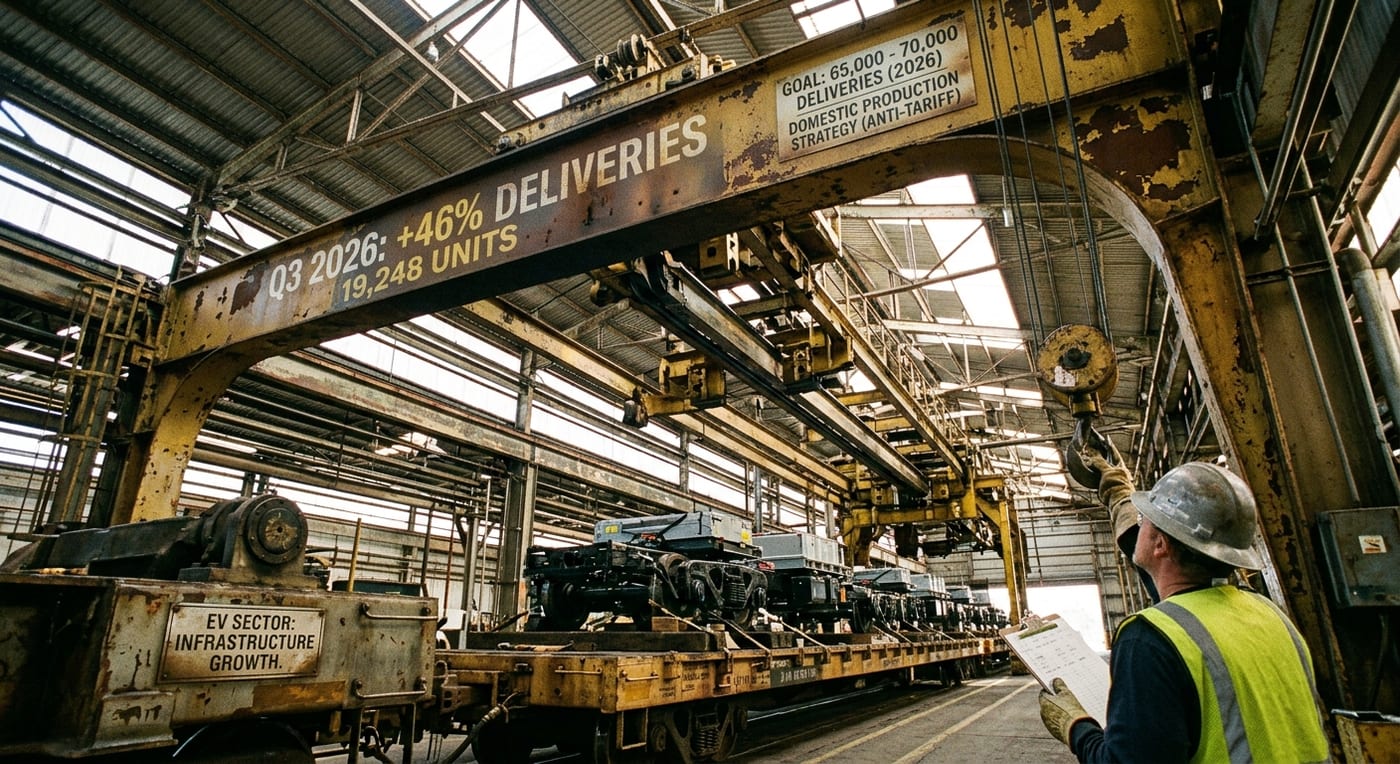
- Rivian delivered 19,248 vehicles in Q3 2026, a 46% increase - The company aims for 65,000 to 70,000 deliveries by 2026 - Rivian's domestic production strategy boosts competitive edge against tariffs
Rivian Automotive, Inc. (RIVN) is drawing attention as the latest developments come into focus. Rivian Automotive, Inc. (RIVN) has recently positioned itself as a notable player in the electric vehicle (EV) market, showcasing resilience amid a turbulent financial landscape. The company has rolled out impressive delivery figures and strategic plans that may solidify its standing against competitors while simultaneously addressing its financial challenges. As Rivian navigates these complexities, a close examination of its recent performance, production strategies, and market conditions is essential to understand its trajectory in the evolving automotive sector.
Recent Performance and Production Milestones
Rivian's most recent quarterly results indicate a promising uptick in production and deliveries, aligning with its strategic objectives. In Q3 2026, Rivian delivered 19,248 vehicles, marking a remarkable 46% increase compared to the same period last year, as noted in a recent report by CNBC.
This surge surpassed Wall Street's expectations of 18,000 units, signaling a robust production capability. The company’s ability to exceed these projections reflects its ongoing efforts to ramp up production, specifically of the newly launched Rivian R2 midsize SUV.
The R2 SUV is critical to Rivian's strategy for reaching its ambitious delivery targets of 65,000 to 70,000 vehicles by 2026. To meet this goal, Rivian aims to increase deliveries in Q4 2026 by at least 20.5%, translating to approximately 23,193 vehicles shipped. This target underscores the urgency and focus Rivian must maintain as it looks to capitalize on this momentum while managing production costs effectively.
Navigating Financial Challenges
While Rivian's production figures may paint a picture of growth, the company continues to confront significant financial challenges that could impact its long-term prospects. Rivian's financial maneuvers, including a recent $1.4 billion capital raise, have raised concerns among investors, particularly regarding potential dilution of shares. As detailed in its previous reports, Rivian is recalibrating its financial strategy in response to evolving market dynamics while continuing to drive innovation in its vehicle development.
In July 2026, Rivian initiated a capital raise involving the sale of around 75 million shares, demonstrating its approach to securing necessary funding amidst scrutiny over its financial sustainability. Investors are wary due to Rivian's negative Altman Z-score, which suggests an increased risk of bankruptcy within two years. This context frames Rivian’s operational outlook as it seeks to balance growth ambitions with financial stability.
Competitive Landscape and Tariff Advantages
Amidst these challenges, Rivian's domestic production strategy offers a competitive edge over its rivals, particularly as the U.S. government imposes a 25% tariff on imported vehicles. This situation could lead to significant cost increases for competitors like General Motors and Ford, who are more reliant on overseas production. Rivian's focus on producing vehicles domestically at its Illinois facility could allow it to maintain competitive pricing, thereby attracting consumers increasingly interested in supporting local manufacturing.
This tariff context could potentially elevate Rivian's market presence, as outlined in a Cashu article
discussing the implications of domestic production amid tariff pressures. Rivian's ability to navigate these challenges successfully hinges on its strategic focus on technology, efficiency, and meeting customer demand without the added burden of tariffs that impact its competitors.
Looking Ahead: Strategic Outlook
As Rivian Automotive looks to the future, the company faces the dual task of scaling operations to meet ambitious vehicle delivery goals while ensuring financial prudence. The anticipated record production pace, combined with an ongoing commitment to domestic manufacturing amid tariff challenges, positions Rivian uniquely within the EV landscape. However, the path forward will demand constant vigilance over production efficiency and cost management, particularly in light of market volatility.
Analysts remain watchful of Rivian's upcoming financial results on October 29, 2026, when the company is expected to report its fourth-quarter outcomes. Given the outlined target of shipping over 28,000 units in this period, successful execution could reaffirm investor confidence and potentially lead to a stabilization or resurgence in RIVN stock prices, which have seen significant fluctuations since its IPO.
In summary, Rivian Automotive, Inc. is making significant strides in the electric vehicle space, navigating a landscape defined by challenges and opportunities. Their commitment to domestic production not only provides a competitive advantage but also aligns with broader trends favoring sustainability and local manufacturing. As they work towards meeting their ambitious delivery goals, Rivian's ability to adapt and innovate while managing financial risks will be pivotal in determining their success in the increasingly competitive EV market. The same pressure is reflected in recent reporting on the issue, which helps explain why the company's pricing decisions remain under scrutiny.