

Revitalizing QSR: The Future of Restaurant Brands
Cashu Finance·5 min read
TL;DR
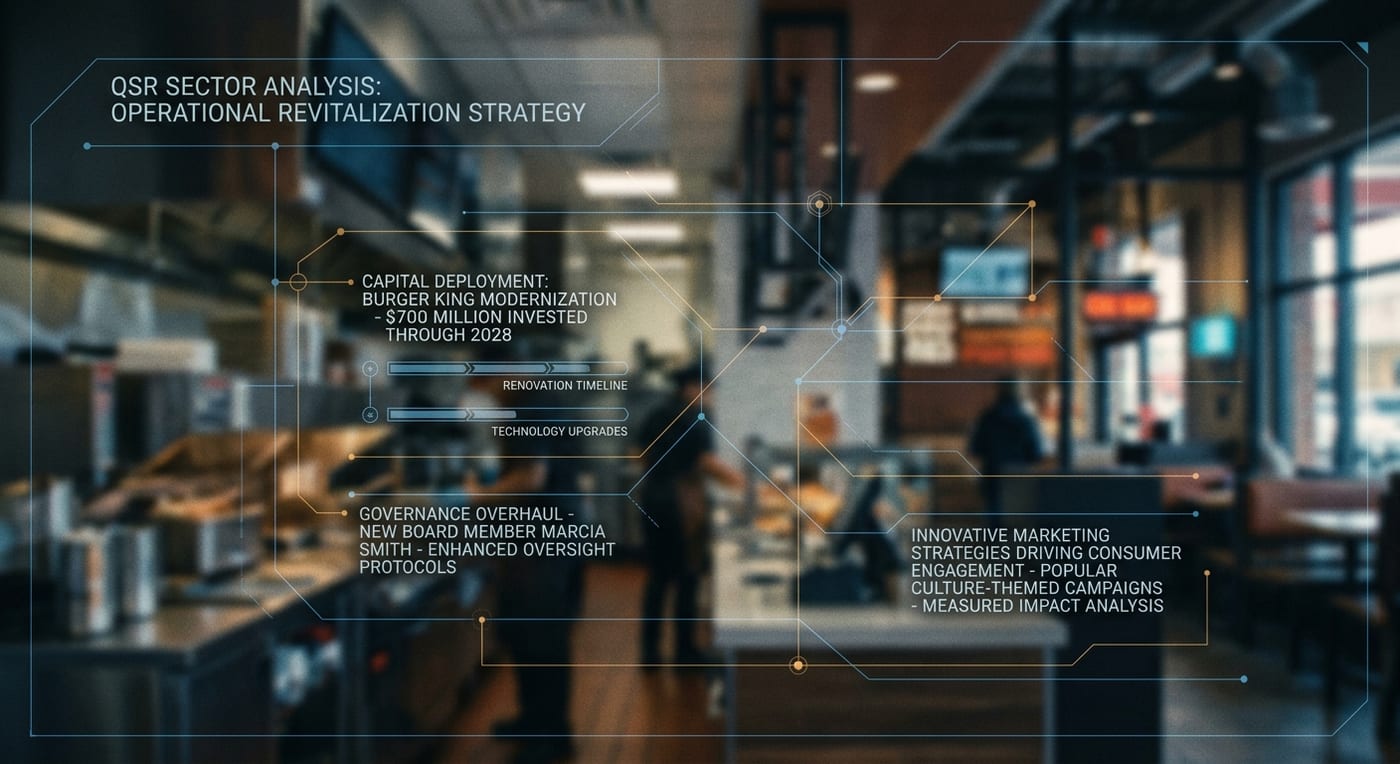
- Major investment in Burger King's modernization set for $700 million through 2028.
- Governance overhaul featuring new board member Marcia Smith to strengthen oversight.
- Innovative marketing strategies driving engagement, including popular culture-themed campaigns.
Restaurant Brands International Inc. (QSR) is embarking on a strategic transformation amid a rapidly evolving landscape in the quick-service restaurant industry. At the heart of this transformation is the company's commitment to revitalizing its flagship brand, Burger King, and enhancing its overall governance practices. This article explores how these initiatives are poised to influence both operational performance and investor confidence in the company moving forward.
The Competitive Landscape
In the highly competitive quick-service restaurant (QSR) sector, brands like McDonald's and Wendy's present formidable challenges to Restaurant Brands International. The flagship brand, Burger King, faces the pressure of adapting to changing consumer preferences and intensifying market competition. The company has recognized that simply holding a diverse portfolio of brands is insufficient for long-term success. This realization has prompted a shift towards a more dynamic approach to brand management, which includes significant investments in modernization and marketing.
Reclaiming the Flame
To fortify its market position, Restaurant Brands has launched the 'Reclaim the Flame' program, aiming to enhance Burger King's overall experience and offering. With a planned investment of up to $700 million through 2028, the initiative focuses on upgrading restaurant infrastructure, enhancing kitchen technology, and driving innovative marketing efforts. By modernizing its locations and improving operational efficiency, the brand aspires to rejuvenate its appeal to consumers while also increasing the profitability of its franchises. This massive commitment underscores the company's intent to not only improve operational efficiency but also to cultivate a more inviting customer experience, which is crucial for attracting younger demographics.