

Rackspace Technology's Legal and Financial Struggles
ED
Editorial
Cashu Finance·5 min read
TL;DR
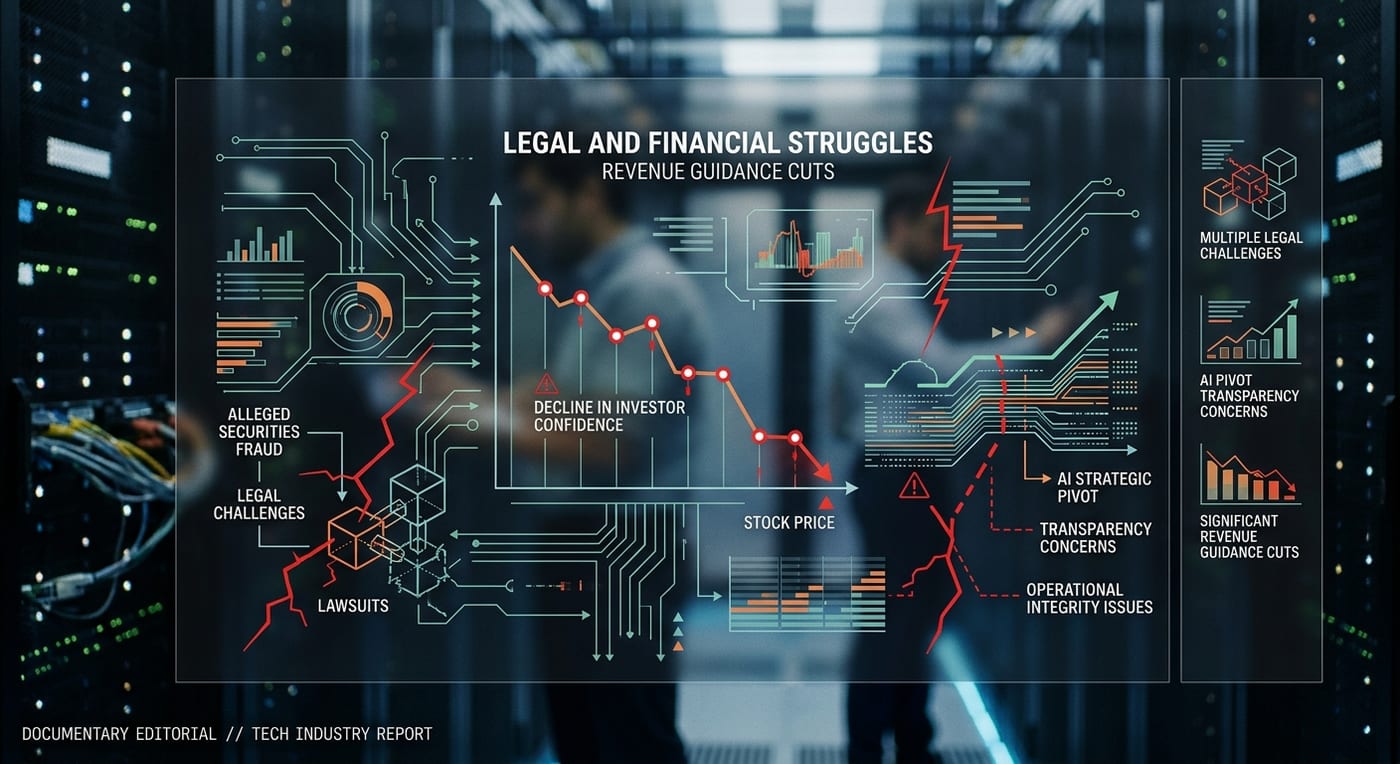
- Rackspace Technology faces multiple legal challenges related to alleged securities fraud.
- The company's strategic pivot towards AI raises concerns about transparency and operational integrity.
- Significant revenue guidance cuts have led to a steep decline in investor confidence and stock price.
Rackspace Technology, Inc. ( RXT) is currently facing significant legal and financial hurdles as it attempts to pivot towards a more AI-driven future. The company, long recognized for its offerings in cloud computing, has recently found itself under scrutiny due to a series of developments that raise questions about its operational transparency and overall business strategy. This article delves into the unfolding challenges and implications for Rackspace's market position as it seeks to reinvent itself amidst turbulent waters.
Legal Challenges Mount
The complexities surrounding Rackspace are primarily linked to a series of class action lawsuits alleging securities fraud. These lawsuits assert that the company misled investors about its financial health during a critical transition period. Between May 7 and July 8, 2026, Rackspace is accused of having reaffirmed its revenue guidance while failing to disclose the adverse effects of its strategic shift towards AI on its more lucrative segments, particularly in Public Cloud operations. Investors were alarmed when the company subsequently announced a significant downward revision of its revenue forecasts shortly after these reassurances, attributing the downturn to a decline in customer demand for its Public Cloud services as users increasingly turned to hyperscalers.
The implication of these legal troubles cannot be overstated. The stock price fell nearly 34% following the July announcement, highlighting the fragile state of investor confidence. This legal turmoil is compounded by the ongoing shift in strategy, which appears to divert critical resources from well-performing segments to support AI initiatives. The alleged misleading nature of communications regarding these shifts has intensified scrutiny and legal challenges, as shareholders seek clarity and accountability from Rackspace executives.
A Shift in Strategy
Rackspace's pivot toward artificial intelligence represents a strategic gamble intended to keep pace with industry demands. However, this transition has raised significant concerns among stakeholders regarding operational transparency. In the context of declining Public Cloud revenues, the company has attempted to assure investors of its robust business model, claiming that its new focus on AI would yield better long-term results. Despite these assurances, the legal landscape suggests a different narrative.
The restructuring appears to have led to concerning resource allocations, pulling staffing and capital from the historically profitable Private Cloud business. Analysts are questioning whether such a radical re-direction of resources could jeopardize Rackspace's existing revenue streams while failing to fruition in the competitive landscape of AI. The alleged misleading nature of communications regarding these shifts has intensified scrutiny and legal challenges, as shareholders seek clarity and accountability from Rackspace executives.
Financial Guidance and Revenue Implications
On the financial front, the company recently issued a substantial cut to its revenue guidance, citing a shift away from low-margin resale operations in favor of direct engagements with hyperscalers. This move has sent shockwaves throughout the investor community, drawing attention to Rackspace's precarious financial health and raising questions about its projections for operational profitability moving forward.
The company initially projected full-year revenues that later had to be revised downward by a staggering $150 million. This announcement not only showcased a significant operational miscalculation but also contributed to an atmosphere of distrust among investors. The immediate impact was evident—a loss of approximately $250 million in market capitalization following the revised projections.
Investors would be keen to monitor the full impact of these financial shifts on Rackspace’s stock and ultimately its market position. If the legal challenges escalate, compounded by dwindling revenues, the future viability of the company could come into question amid an increasingly crowded AI marketplace.
The Investor Outlook
Given the current trajectory of legal issues and financial strains, investor sentiment towards Rackspace is likely to remain precarious in the near term. Stakeholders are compelled to weigh the long-term benefits of the AI shift against the immediate challenges posed by both legal entanglements and operational transparency deficits.
As reported recently, investors are actively seeking avenues for potential recovery from their losses associated with Rackspace, leading to heightened discussions around class action litigation. Legal groups are spotlighting the importance of holding the company accountable for alleged misleading statements and operational mismanagement that have ultimately led to significant financial losses for many shareholders. For instance, it's imperative for shareholders who acquired securities during the class period to consider their options carefully, reevaluating their positions in light of the current legal landscape.
The role of investor advocacy becomes crucial as Rackspace navigates these multifaceted challenges. Legal actions are emerging as shareholders respond to perceived injustices, prompting discussions surrounding the company's responsibility to maintain transparency and accuracy when communicating financial health and strategic directions.
Conclusion
As Rackspace Technology, Inc. endeavors to forge a new path in the AI realm, it faces formidable challenges that need addressing to secure investor trust and stabilize its market position. The company's ongoing legal issues serve as a stark reminder of the need for transparency amid transformative changes. While the ambition to embrace AI may position Rackspace favorably in the long run, the current obstacles raise legitimate concerns regarding operational integrity and financial viability. Investors and analysts alike are left to watch closely, questioning whether Rackspace can maintain its footing in such a rapidly evolving landscape fraught with competition and legal scrutiny. The same pressure is reflected in recent reporting on the issue, which helps explain why the company's pricing decisions remain under scrutiny.