

Quality Concerns at Simply Good Foods
ED
Editorial
Cashu Finance·5 min read
TL;DR
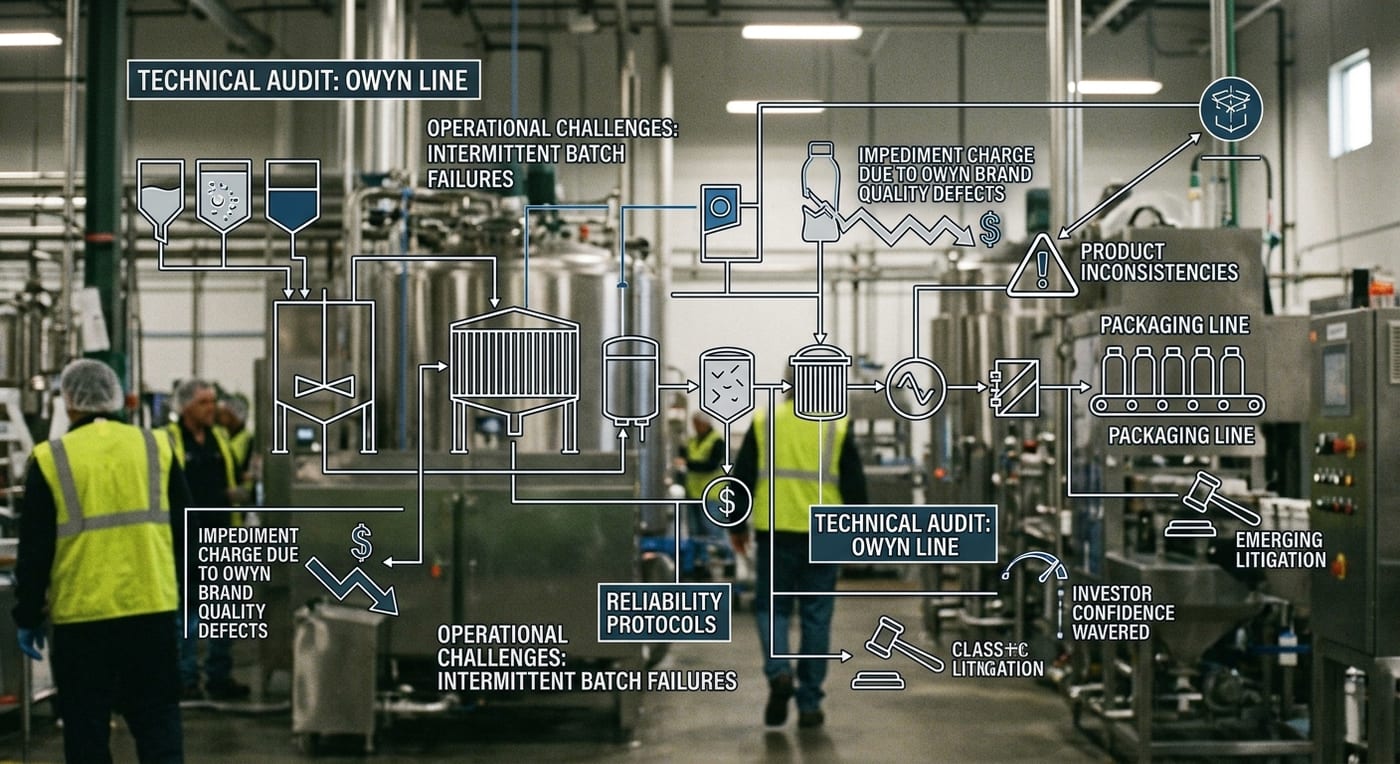
- The Simply Good Foods Company faces major operational challenges.
- Quality issues with the OWYN brand have driven a $187 million impairment charge.
- Class-action lawsuits are emerging as investor confidence wavers.
The Simply Good Foods Company ( SMPL) is facing substantial operational challenges that have raised alarms among investors and consumers alike. The root of these issues can be traced back to complications surrounding its OWYN brand, which was acquired to capitalize on the growing demand for health-oriented food products. However, the anticipated success of this acquisition has quickly transformed into a struggle for the company, illuminating significant quality concerns that could hinder its market position and stock performance moving forward.
The Ambitious Acquisition of OWYN
In mid-2024, The Simply Good Foods Company made headlines by acquiring the OWYN brand for $280 million, a strategic move designed to enhance its portfolio of health-conscious offerings. OWYN, an acronym for "Only What You Need," was poised to leverage the burgeoning demand for nutritious snacks and meal replacements. At the heart of this acquisition was a belief in the growing consumer shift towards healthier food options, which promised to provide a lucrative opportunity for revenue growth. However, the actual integration of OWYN into Simply Good Foods’ broader product portfolio has proven to be much more challenging than anticipated. Initial hopes of expanding consumer interest quickly met with serious quality issues within the brand, ultimately jeopardizing its expected contribution to Simply Good’s financial growth and market share.
The Birth of Quality Concerns
Recent reports have revealed that OWYN products have suffered from significant quality problems primarily due to the sourcing of pea protein, a key ingredient in its offerings. This misstep has led to unfavorable changes in the taste, texture, and shelf-life of OWYN products, thereby eroding consumer confidence. These issues have been compounded by a substantial $187 million impairment charge linked to the brand, raising red flags about Simply Good Foods' operational effectiveness and strategic direction. A prior article highlighted these challenges, noting that the company's struggles with the OWYN brand focus predominantly on the ramifications of quality concerns and their impact on the product's overall market acceptance. The decline in consumer trust has been alarming, forcing Simply Good to navigate a landscape of negative product reviews and weakened distributor relationships, directly impacting sales.
The Financial Impact of Operational Struggles
The repercussions of OWYN's quality concerns have been deeply felt across The Simply Good Foods Company's financial landscape. The impairment charge indicated a recognition of dwindling sales projections, and upon the announcement, investors reacted negatively, driving down the stock price significantly. It became evident that the anticipated growth from the OWYN acquisition was not materializing as the company had hoped, prompting a reevaluation of Simply Good Foods' overall financial health. As reports surfaced regarding declining consumer consumption and impacts across all brands, the future viability of the OWYN segment was brought into question.
The legal landscape has also begun to shift in response to these issues, with class-action lawsuits forming against the company. Investors who had amassed losses exceeding $100,000 established that there had been misleading information circulated concerning the quality of OWYN products and the company's future prospects. Assertions were made that Simply Good Foods had failed to adequately disclose the depth of quality issues, leading to an environment where confidence in the company’s management and strategic direction may be irrevocably shaken.
The Road Ahead: Challenges and Opportunities
Despite the challenges facing Simply Good Foods, the market for health-oriented food products continues to grow, presenting both challenges and opportunities for the company. The struggling OWYN brand remains positioned within a consumer sector that is largely trending towards healthier options, which could yield potential recovery pathways if the company can effectively address its quality issues. The demand for nutritious food products does provide a foundational base upon which Simply Good Foods could rebuild its reputation when it resolves these operational difficulties.
Challenges, however, remain paramount. Investors will be closely monitoring management strategies aimed at restoring the concept of quality for the OWYN brand. Any missteps could result in further erosion of consumer trust and investor confidence. Previous analyses have pointed to the significance of this sector's potential but emphasize that Simply Good Foods must shift focus back towards ensuring quality, strengthening its brand reputation, and re-establishing strong distributor partnerships. The company has also signaled the need for effective marketing and brand support to revitalize its struggling segment, indicating awareness of the steps required to restore both sales and consumer trust.
Conclusion: A Critical Crossroads
In summary, The Simply Good Foods Company stands at a critical crossroads as it navigates ongoing operational challenges, particularly within its OWYN brand. The implications of the quality issues have far-reaching consequences, compelling management to audit their business practices while managing investor expectations closely. The legal landscape introduces additional layers of scrutiny, emphasizing the need for transparency and effective communication moving forward. While the health-food sector remains rife with potential, the execution of Simply Good's strategic vision hinges fundamentally on its ability to turn around the current crises and demonstrate its commitment to quality. Successfully addressing these quality concerns will not only stabilize the brand but could potentially allow Simply Good Foods to capitalize on the ongoing consumer trend towards healthier food choices, thereby positioning itself for future success. The same pressure is reflected in recent reporting on the issue, which helps explain why the company's pricing decisions remain under scrutiny.