

PepsiCo's Strategic Maneuvers in Today's Market
ED
Editorial
Cashu Finance·4 min read
TL;DR
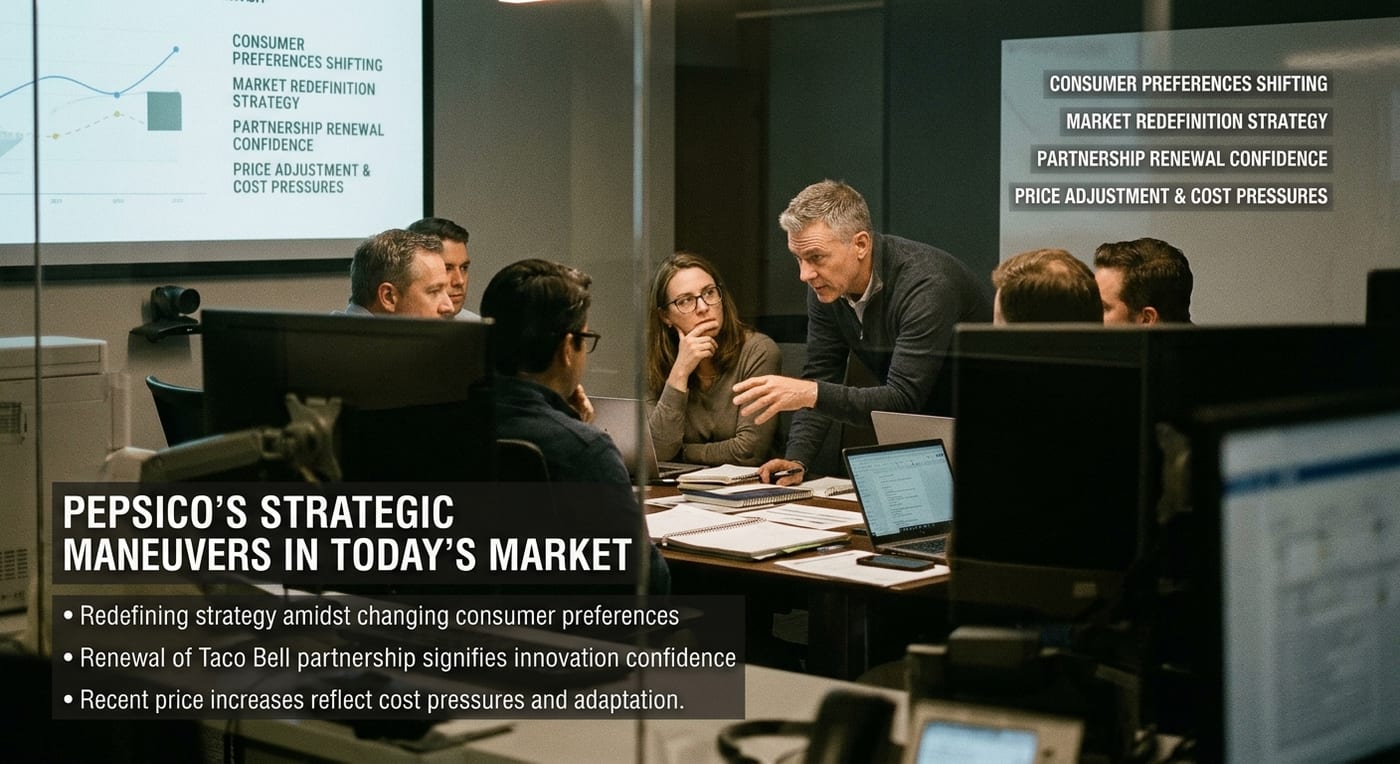
- PepsiCo is redefining its market strategy amidst changing consumer preferences.
- The renewal of the Taco Bell partnership signifies confidence in PepsiCo's innovation.
- Recent price increases reflect cost pressures and strategic adaptation to market demands.
PepsiCo, Inc. (PEP) is navigating a rapidly changing consumer landscape marked by shifting preferences, inflationary pressures, and fierce competition. The company's latest strategies, including pricing adjustments and the renewal of significant partnerships, are pivotal in redefining its market position and enhancing its resilience amidst these challenges. With these moves, PepsiCo is not just reacting to current pressures but is also proactively shaping its future trajectory.
In an era where health concerns are paramount, PepsiCo is under pressure to innovate and adapt its product offerings. The increasing consumer demand for health-conscious options has led the company to rethink its pricing and product strategies. The recent merger of health awareness with evolving consumer habits poses threats and opportunities simultaneously. With the rising popularity of weight-loss medications impacting consumer buying behavior, PepsiCo's traditional product lines are faced with new competition from healthier alternatives.
Recent Pricing Adjustments
One of the significant headline events for PepsiCo has been its recent decision to implement price hikes on key products, including staple snacks like Doritos and various beverage lines. This marks a crucial pivot from early 2023, when the company opted to reduce prices on some products by up to 15% in a bid to maintain competitiveness during economically challenging times. According to recent insights, this price increase reflects underlying cost pressures that the company can no longer absorb while attempting to stimulate demand in its North American division.
Amid these challenges, PepsiCo's renewed focus on innovation becomes apparent. The company has historically leveraged strategic partnerships to drive its growth, exemplified by its recent 11-year renewal of its partnership with Taco Bell. This pact ensures that PepsiCo remains the exclusive beverage provider for Taco Bell's U.S. outlets, along with selected international locations. The significance of this extension cannot be overstated, especially considering KFC's recent switch to Coca-Cola as its beverage supplier. The contours of competition are painted clearly here, with Taco Bell signaling confidence in PepsiCo's innovative capacity to deliver unique offerings like the much-loved Mountain Dew Baja Blast. This partnership showcases PepsiCo's strength in creating exclusive products that resonate with consumers, further differentiating Taco Bell in the competitive fast-food market.
Responding to Market Pressures
PepsiCo's resilience is underlined not simply by its partnerships but also through its responsive pricing strategies. The decision to increase prices suggests that the company believes that its consumer base can sustain some pricing pressures, reflecting on strong brand loyalty and consumer attachment. Despite facing pressure from health-conscious trends and intense competition from rivals like Coca-Cola, PepsiCo continues to adapt by diversifying its offerings to include healthier products. This evolution is essential in reclaiming market share and enhancing brand relevance.
The market's response to these changes will be critical in determining the success of PepsiCo's strategies. While flat-lining organic sales in its North American snacks and beverage operations raise concerns, the company's historical strength and adaptive strategies provide a framework within which it can work on regaining momentum. As market conditions evolve, PepsiCo's ability to align its product innovation with consumer preferences will play a key role in shaping its growth trajectory and competitiveness.
Financial Headwinds and Forward Outlook
Financial headwinds remain in the backdrop, with addressing the challenges arising from rising costs becoming a pressing matter for management. The latter focus on efficiencies amid these cost pressures forms an essential layer of PepsiCo's strategic responses. This interplay of pricing adjustments and innovation underscores a broader narrative of how PepsiCo is striving to emerge stronger amidst a turbulent market environment.
As investors and analysts assess the company's performance, they will closely monitor the effectiveness of these strategic maneuvers. The brand's continued emphasis on exclusive partnerships and innovative products suggests that PepsiCo is committed to not just weathering the storm but also positioning itself for long-term success. The Taco Bell renewal, alongside its updated pricing strategy, illustrates PepsiCo's intent to remain a dominant player in the dynamic beverage and snack sectors, even as it faces competitive challenges from Coca-Cola and shifts in consumer preferences.
In summary, PepsiCo, Inc. is poised to navigate the complexities of a fluctuating market landscape through strategic pricing adjustments, focused innovation, and pivotal partnerships. These maneuvers reflect a deep understanding of the challenges ahead and highlight the company’s commitment to being a price setter rather than merely a price taker.