

Peabody Energy's Ongoing Struggles
Cashu Finance·4 min read
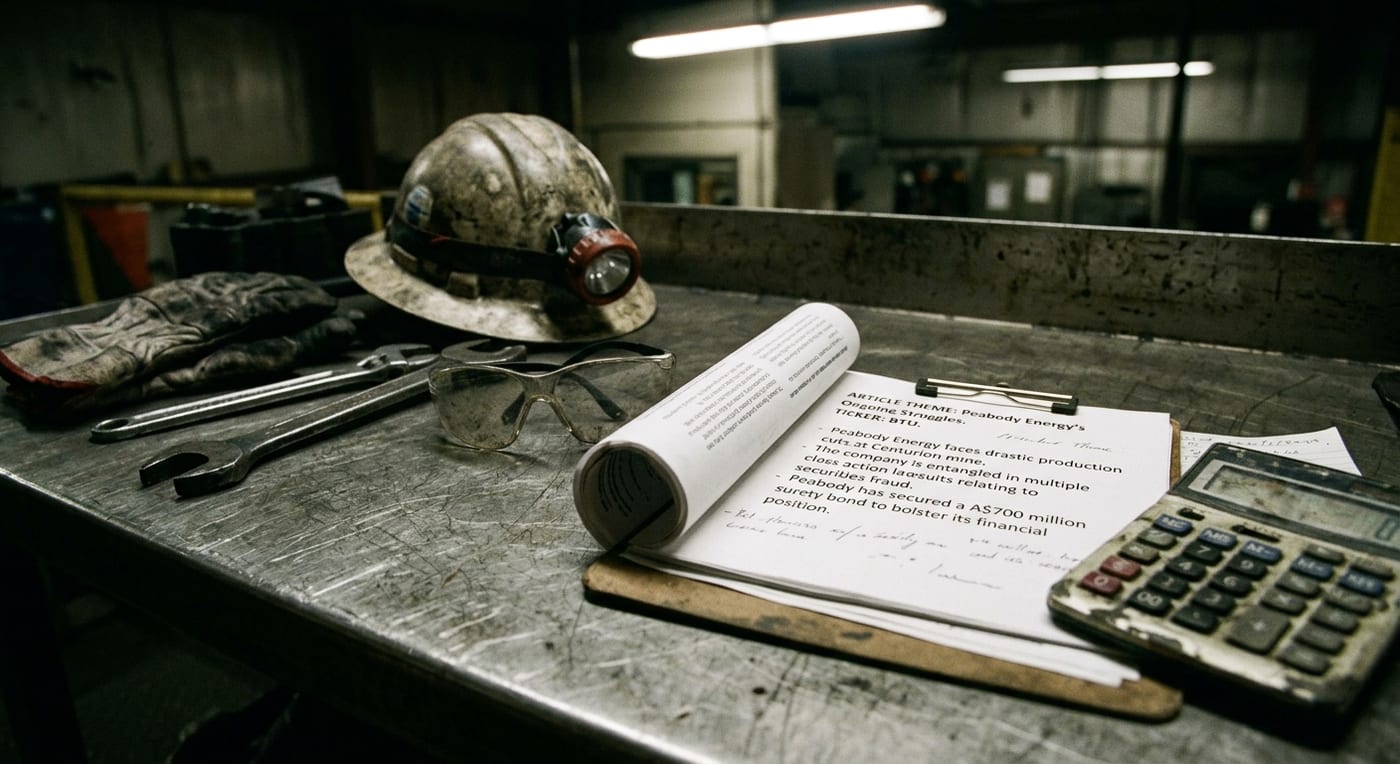
TL;DR
- Peabody Energy faces drastic production cuts at Centurion mine.
- The company is entangled in multiple class action lawsuits relating to securities fraud.
- Peabody has secured a A$700 million surety bond to bolster its financial position.
Peabody Energy Corporation (BTU) currently finds itself grappling with significant operational and legal challenges that threaten its market position and investor confidence. Central to the company's plight is its Centurion mine in Queensland, Australia, where production forecasts have been dramatically slashed due to unforeseen commissioning issues. In this article, we explore the critical aspects of Peabody's current situation, the repercussions on its financial outlook, and the broader implications for its stakeholders.
Overview of the Centurion Mine's Challenges
The Centurion mine was initially projected to produce about 700,000 tons of coal in the first quarter of 2026. However, after an announcement made on March 30, 2026, this estimate was downgraded to a mere 250,000 tons due to "greater-than-anticipated mine commissioning challenges." This significant cut resulted in an immediate negative reaction in the stock market, with Peabody's share price experiencing a sharp decline of approximately 9.7% on the day the news broke. Investor dissatisfaction is evident in the continued decline of Peabody's stock price, reflecting growing concerns about the firm's operational capabilities.
The issues at Centurion are primarily mechanical and electrical in nature, severely hindering the necessary ramp-up of operations. Such operational miscalculations reflect broader systemic issues within Peabody's management framework and operational planning. As outlined in previous reports, including the article on Peabody Energy's turmoil with production and legal battles, these challenges have called into question the company's strategic plans to assert itself as a leader in the coal sector.