

Papa John's Navigates Turbulent Waters
ED
Editorial
Cashu Finance·5 min read
TL;DR
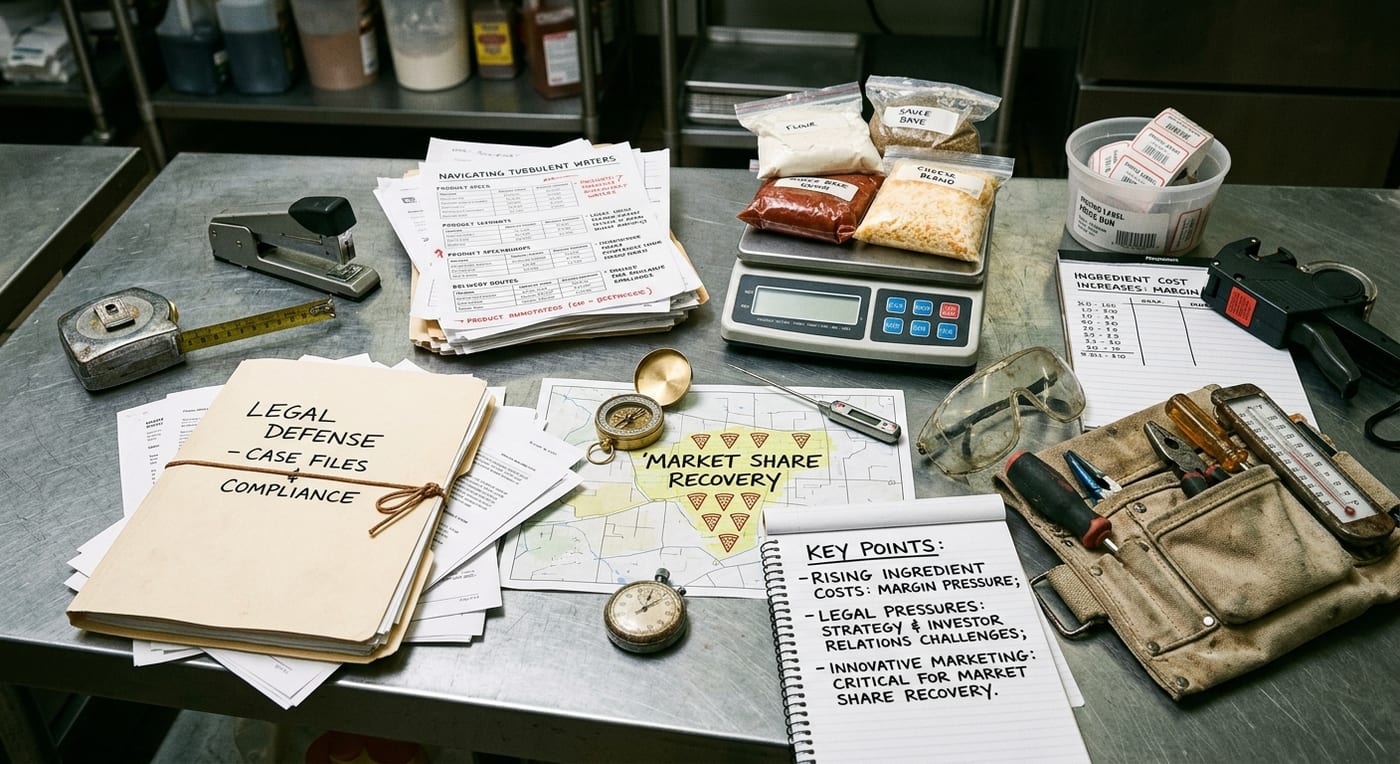
- Rising ingredient costs significantly impact profit margins.
- Legal pressures complicate operational strategy and investor relations.
- Innovative marketing efforts are critical for recovering market share.
Papa John's International, Inc. PZZA is currently facing a myriad of challenges that are reshaping its business outlook and strategic decisions. The iconic pizza chain is grappling with rising ingredient costs, legal pressures, and shifting consumer trends. These factors are placing considerable strain on its profitability and overall market position, prompting the company to recalibrate its strategies in a highly competitive food service industry. Recent trends in consumer behavior, evolving market dynamics, and operational hurdles paint a complicated picture of the company’s future prospects.
Rising Ingredient Costs: A Major Strain
One of the most pressing issues impacting Papa John's is the continuous increase in agricultural production costs. Essential ingredients such as cheese, tomatoes, and wheat have seen substantial price increases, which exert direct pressure on the company’s profit margins. The USDA forecasts indicate that these cost trends will persist, compounding the financial difficulties faced not just by Papa John's but by the entire fast-food sector. Rising ingredient prices are significant hurdles for the company, especially as it tries to maintain menu pricing that appeals to cost-conscious consumers. This inflationary trend mirrors challenges articulated in earlier articles detailing how rising ingredient costs threaten profit margins, which complicate the company’s growth trajectory. source
As discussed in these previous analyses, the soaring price of vital inputs necessitates a reevaluation of Papa John's operational strategies. The need to absorb or pass on these costs poses questions about customer retention and satisfaction. Competing chains also face similar pressures, making it vital for Papa John's to develop innovative approaches to stay appealing to its customer base. In this environment, the company's ability to negotiate favorable contracts with suppliers and find cost-effective alternatives will be critical for sustaining its margins.
Legal Pressures and Their Implications
Legal hurdles add another layer of complexity to Papa John's situation. The company is amidst a securities class action lawsuit, which has been a growing concern for investors and stakeholders. According to lawsuits filed against Papa Johns, there have been allegations of materially false and misleading statements regarding the company’s transformation strategy. Specifically, statements indicating that the company was on track to recover market share and boost sales turned out to be overly optimistic. source
The consequences of these legal troubles are profound. The announcement of an 8.3% decrease in North American comparable sales on August 6, 2026, was a stark illustration of the gap between projected growth and actual performance, leading to a sharp decline in stock prices. Strategic shifts that may involve increased promotional efforts are now being scrutinized closely, raising questions about whether they will effectively draw consumers back into stores or if they will merely increase operational challenges. Additionally, as Papa John's navigates these legal issues, transparency in communication will be essential to restore investor confidence and stabilize its stock price.
Marketing Efforts: A Path to Recovery?
In light of declining sales, Papa John's has Turned to innovative marketing campaigns as a strategy aimed at regaining lost market share. Competing effectively in the pizza segment requires a calculated blend of promotional activities designed to attract new customers while retaining loyal ones. Notably, the shift in marketing strategy seeks to counteract the downturn in sales and to combat the post-pandemic shifting trends in consumer dining preferences. source
The success of Papa John's marketing initiatives hinges not only on creativity but also on their timing and execution. Market research indicates consumers are now more health-conscious, leading to increased demand for transparency regarding ingredients and sourcing processes. As consumers become accustomed to a more quality-sensitive dining experience, Papa John's may need to reconsider its product offerings. Recent moves towards promoting specialty pizzas, healthier options, and even incorporating plant-based offerings could be pivotal in relaying a stronger narrative of adaptability.
Consumer Trends: An Evolving Landscape
Understanding changing consumer trends has never been more vital for Papa John's. The fast-food sector is experiencing shifts as more consumers move towards sustainability and healthier options. Furthermore, as dining habits evolve with increased delivery and takeout demand, the pressure to innovate in such environments intensifies. The company needs to stay aligned with current preferences while also re-engaging its core customers who may have shifted away from the brand during challenging quarters. source
The intersection of these macro trends and the company’s operational strategies offers a lens through which investors and analysts can observe Papa John's capacity to adapt and thrive. The ongoing efforts to enhance customer engagement, combined with a fresh approach that responds to changing demands, will be crucial determinants of the company’s future viability in the competitive pizza market.
Conclusion
As Papa John's International navigates these turbulent waters marked by rising ingredient costs, legal pressures, and evolving consumer demands, its ability to adapt quickly will be crucial in determining its market position and profitability. The coming quarters will be a true test for the brand as it works on re-establishing its foothold in a fiercely competitive industry. Monitoring the company’s financial health and strategic changes will be essential for stakeholders concerned about the brand's future success and stability. The same pressure is reflected in recent reporting on the issue, which helps explain why the company's pricing decisions remain under scrutiny.