

Papa John's Faces Significant Challenges
ED
Editorial
Cashu Finance·5 min read
TL;DR
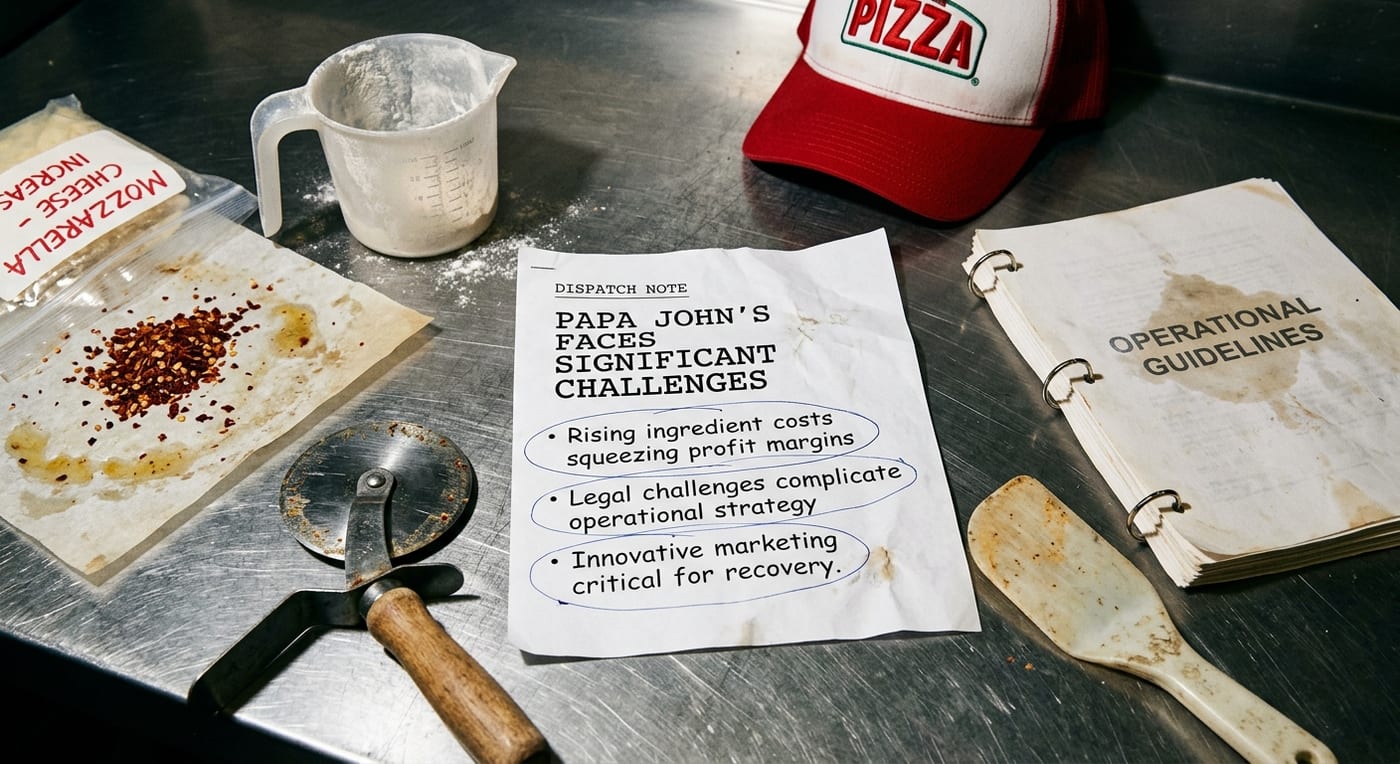
- Rising ingredient costs are squeezing profit margins.
- Legal challenges complicate operational strategy.
- Innovative marketing efforts are critical for recovery.
Papa John's International, Inc. ( PZZA) is currently undergoing a tumultuous phase as it grapples with a confluence of challenges that threaten its profitability and market position. The iconic pizza chain is dealing with the adverse effects of rising ingredient costs, legal scrutiny from recent class action lawsuits, and changes in consumer preferences that necessitate a rapid and effective strategic response. These factors are not merely abstract concerns; they are impacting Papa John's core business operations and presenting significant obstacles to its growth trajectory.
Rising Ingredient Costs and Profitability
A primary issue affecting Papa John's is the continuous increase in key ingredient costs. Essential components such as cheese, tomatoes, and wheat have experienced substantial price hikes due to broader macroeconomic pressures, including inflation and supply chain disruptions. These rising costs are squeezing profit margins and complicating pricing strategies across the fast-food industry. According to numerous reports, the United States Department of Agriculture (USDA) has indicated that these trends are likely to continue, raising concerns about profitability not only for Papa John's but for the entire sector. As noted in previous analyses, the rising ingredient costs threaten profit margins and complicate the company's growth plans. The importance of strategically navigating this challenging landscape is emphasized as competitors are facing similar pressures, further intensifying the competition for market share.
Legal Scrutiny: A Cloud Over Strategy
In addition to the financial pressures, Papa John's is currently navigating significant legal challenges. The company has been embroiled in a series of class action lawsuits which allege misrepresentation of its operational performance and strategic direction. These lawsuits center around claims that the company made materially false and misleading statements regarding its transformation strategy, indicating that the turnaround is taking longer than initially projected. Notably, the lawsuits contend that Papa John's was unable to prevent further market share losses, necessitating an urgent shift towards more aggressive promotional efforts to regain competitive ground. This legal backdrop creates an additional layer of complexity for management as they seek to stabilize the company's performance amidst a fragile recovery effort.
Consumer Behavior and Market Dynamics
The fast-food landscape is continuously evolving, and Papa John's must adapt to shifting consumer preferences that favor healthier and more diverse menu options. As consumers increasingly seek meals that align with their health-conscious lifestyles, traditional pizza offerings may not suffice to maintain broad appeal. This shift indicates that Papa John's will need to innovate its menu while also addressing the cost pressures associated with ingredient sourcing.
As highlighted in previous analyses, the rapid changes in consumer behavior necessitate a robust transformation within the company to stay relevant. Implementing innovative promotions and diversifying the menu could attract new customers and bolster sales. However, the challenges of increasing prices without sacrificing quality to maintain customer loyalty remain nagging concerns for the company as well.
Strategic Responses to Market Pressures
In light of these compounded challenges, strategic marketing efforts are crucial for recovering lost market share. Papa John's has initiated several marketing campaigns aimed at rejuvenating its brand image and attracting a new customer base. However, considerable effort will be required to regain investor confidence, which has been shaken by declining sales and poor earnings forecasts. The management's acknowledgment that the transformation process is not on track is a stark reminder to investors that further strategic clarity and execution are necessary for stabilizing the business.
The company's decreased outlook for North American comparable sales and the suspension of its dividends indicate drastic measures are being taken to shore up financial stability. For instance, recent reports indicate a significant decline of 8.3% in comparable sales, a troubling sign that points to deeper underlying issues within the operational framework of Papa John's. The CEO, Todd Allan Penegor, has made it clear that to navigate these turbulent waters successfully, the company must execute better and accelerate its response to market demands.
Conclusion and Investor Outlook
The path forward for Papa John's International, Inc. (PZZA) is filled with hurdles that require strategic foresight and operational adaptability. Rising ingredient costs are testing the company’s margin resilience, while legal and reputational challenges pose critical risks to its market standing. Furthermore, the dynamic nature of consumer preferences compels the organization to reassess and innovate its product offerings continuously.
As such, investors are advised to monitor how effectively Papa John's addresses these ongoing challenges. Until a consolidated strategy is employed, including a more aggressive response to competitive dynamics, the company may continue to face uncertainties in market performance and investor sentiment. The combination of financial pressures and legal scrutiny may weigh heavily on the stock's performance, emphasizing the need for sound strategic execution as critical for future recovery. The same pressure is reflected in recent reporting on the issue, which helps explain why the company's pricing decisions remain under scrutiny.