

NVIDIA's Unrivaled Growth in AI Market
ED
Editorial
Cashu Finance·5 min read
TL;DR
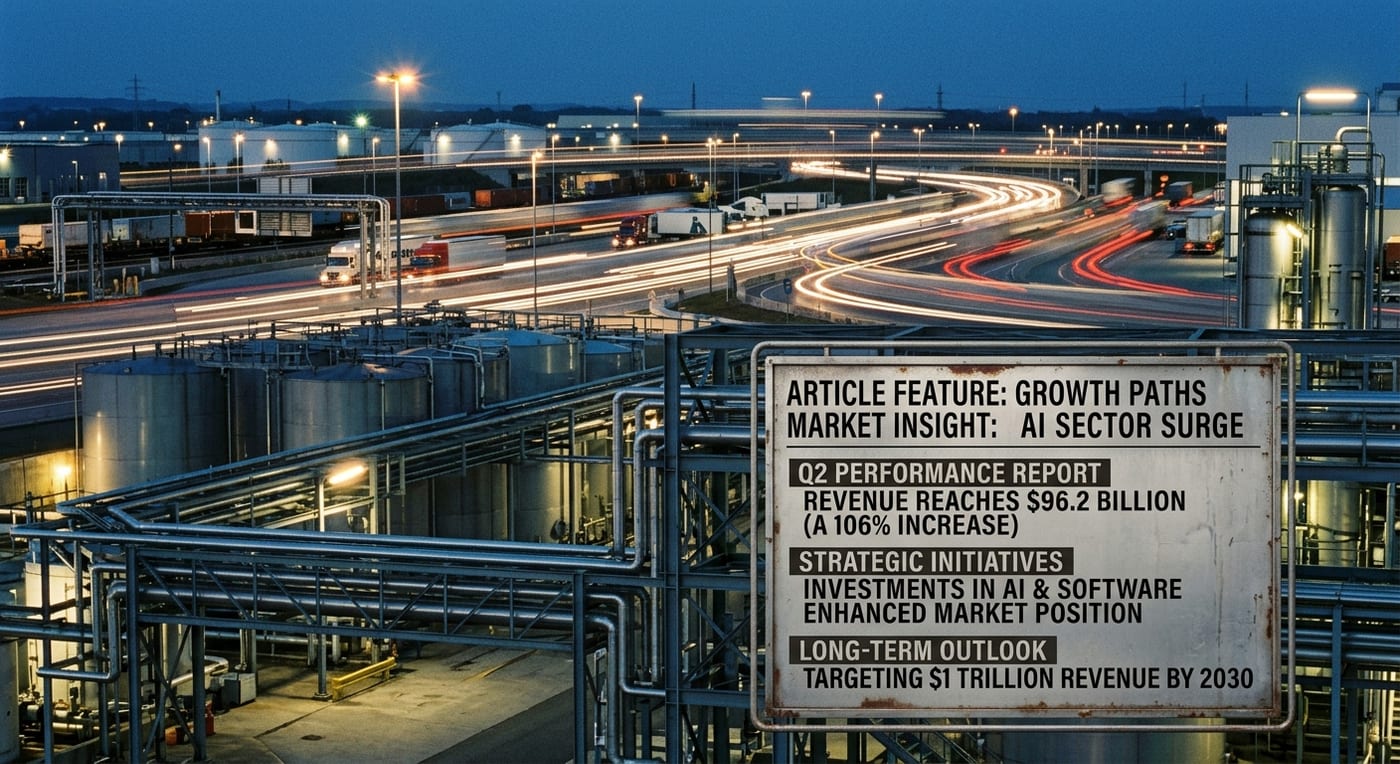
- NVIDIA's Q2 revenue surged to $96.2 billion, a 106% increase.
- Strategic investments in AI and software enhance market position.
- The company aims for $1 trillion in revenue by 2030.
NVIDIA Corporation (NVDA) is experiencing a remarkable period marked by exponential growth fueled by unprecedented demand for artificial intelligence (AI) technologies. The technological giant, renowned for its cutting-edge graphic processing units (GPUs), is not just dominating the gaming industry but has also firmly established itself as a critical player in the data center and AI infrastructure sectors. This article delves into NVIDIA's strategic initiatives, impressive financial performance, and the broader implications of its growth trajectory within the AI ecosystem.
Exceptional Financial Performance
Recently released financial metrics underscore NVIDIA's dominance in the AI landscape. The company reported staggering revenue of $96.2 billion in the second quarter of fiscal 2027, representing a remarkable 106% year-over-year increase. This exponential growth is primarily attributed to the extraordinary demand for AI infrastructure, particularly within its data center division, which alone accounted for approximately $89 billion of total revenue.
Jensen Huang, NVIDIA's co-founder and CEO, recently reaffirmed predictions that indicate continued robust growth in data center capital expenditures, projecting that these expenditures could reach $3 to $4 trillion annually by 2030. Huang’s optimism stems from insights gained during discussions with major clients who are strategizing future growth plans. Such optimism suggests a sustainable expansion path for NVIDIA as companies increasingly rely on advanced computing capabilities to support their operations. This further underscores NVIDIA's pivotal role in the ongoing digital transformation, supported by their strategic investments in AI startups, including a notable $10 billion commitment to Anthropic, which will strengthen their market position and deepen ties with vital clients.
Market Position and Strategic Investments
NVIDIA's strategic focus on AI has solidified its market position as a leader in the AI sector, and recent performance metrics reflect this. According to recent assessments, the company is likely to maintain around a 40% share in the AI-related expenditures market, potentially leading its revenue to cross the $1 trillion mark by 2030. The focus has not only been on hardware, as NVIDIA also invests heavily in AI software development to bolster its product portfolio, enhancing the functionality and ecosystem compatibility of its GPUs.
The tech company’s position is bolstered by its ability to recognize and rapidly adapt to critical emerging trends in AI, as seen with NVIDIA's timely acquisition of Hugging Face, a platform designed for AI developers. This acquisition is intended to promote the development of open AI models, countering the trend of closed systems adopted by rival developers in the AI space. Such strategic moves enhance NVIDIA’s reputation and applicability within various sectors that increasingly rely on AI technologies for operational efficiencies and innovations.
Competitive Landscape and Regulatory Challenges
Despite NVIDIA's impressive growth and strategic positioning, the company faces challenges that could impact its operational trajectory. Geopolitical tensions have resulted in U.S. export controls, restricting NVIDIA's ability to sell its advanced chips to markets like China, an essential clientele. The recent case of smuggling NVIDIA chips into China for potential AI applications illustrates the high demand for its products, emphasizing how valuable its technology is on the global stage. Such incidents, however, bring to light the vulnerabilities tied to its supply chains and the regulatory environment.
In tandem, NVIDIA confronts fierce competition from firms like Advanced Micro Devices (AMD) and others in the semiconductor market, complicating its strategic landscape. The competitive margin concerns intensified as other manufacturers also showcase rapid advancements in AI-capable products, heightening the stakes for NVIDIA to maintain its market share and technological edge.
Navigating a Shifting Landscape
As NVIDIA continues to ramp up its capabilities within the AI space, the company is aware of the shifting demands of the marketplace. It not only needs to innovate in hardware but also to enhance software capabilities that facilitate robust AI applications. The company's growth narrative is increasingly linked to its ability to service diverse sectors—gaming, automotive, and data center markets—with advanced technologies that meet rising consumer and business demands.
Furthermore, financial analysts note that NVIDIA is re-evaluating its operational strategies to cope with emerging market dynamics. This involves maintaining a focus on high-quality production while exploring avenues to augment gross margins, given the rising costs associated with materials and production in the semiconductor industry. The company’s innovative approaches toward operational efficiencies play a central role in sustaining its competitive edge as it navigates burgeoning market pressures.
Future Outlook
Looking ahead, NVIDIA's future appears to be intrinsically tied to the ongoing advancements in AI technologies. The commitments made by Huang signal that NVIDIA is not just a participant but a leader in shaping the future of how AI is integrated into everyday technology. With a solid foundation built on strategic investments and a robust pipeline of emerging technologies, NVIDIA is well-positioned to meet the anticipated growth in demand for AI infrastructures. As AI continues to proliferate through various sectors, the role of NVIDIA as a facilitator of this transformation becomes ever more critical. The company’s projections and strategic decisions reflect deep market insights, ensuring that it remains ahead of the curve in both technology and financial performance, cementing its status as a leader in this rapidly evolving landscape. Overall, NVIDIA Corporation's resilience and adaptability in the face of evolving challenges signify its capacity for sustaining growth while capitalizing on opportunities in the burgeoning AI market. The same pressure is reflected in recent reporting on the issue, which helps explain why the company's pricing decisions remain under scrutiny.