

NVIDIA's Dominance in AI Growth
ED
Editorial
Cashu Finance·5 min read
TL;DR
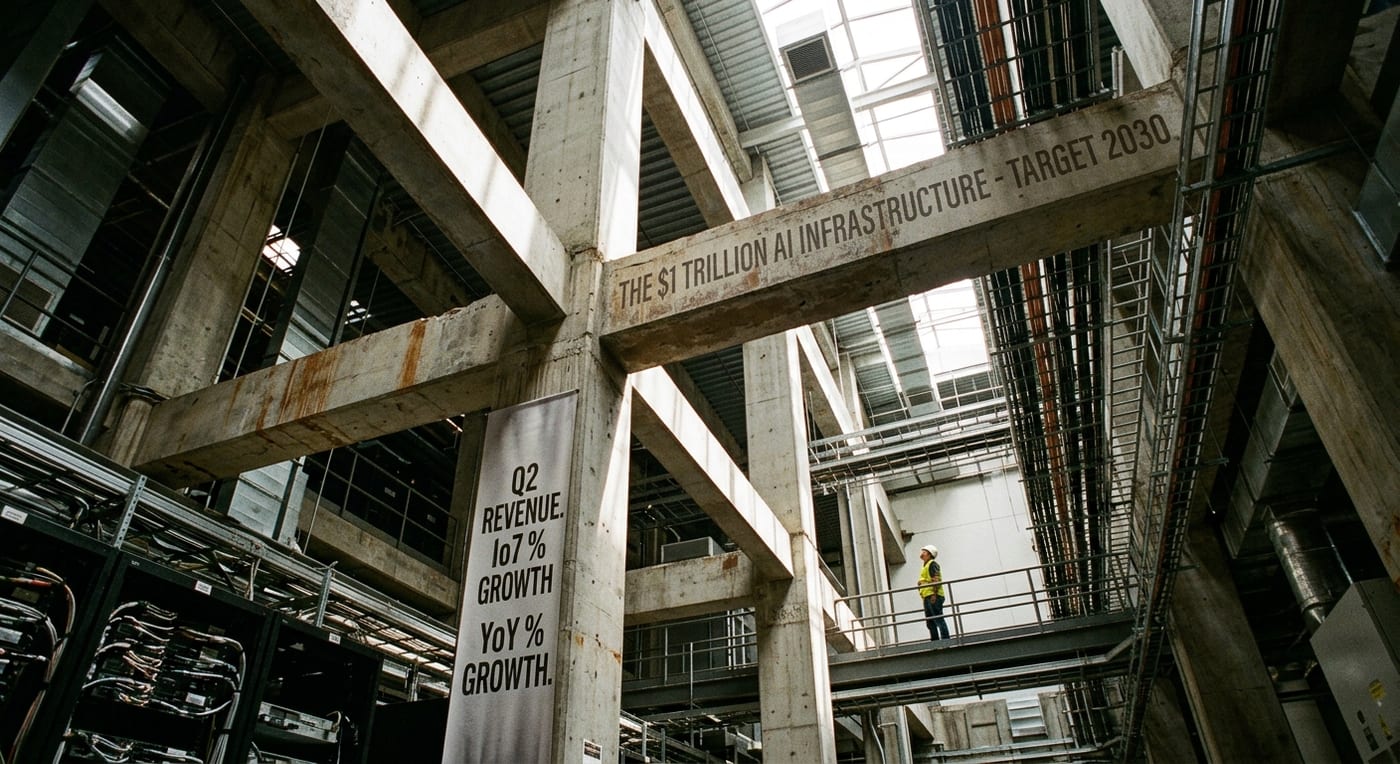
- NVIDIA reports Q2 revenue of $96.2 billion, up 106% YoY.
- Strategic investments and acquisitions bolster market position.
- CEO projects AI infrastructure spending to soar, targeting $1 trillion by 2030.
NVIDIA Corporation (NVDA) continues to demonstrate unparalleled growth in the artificial intelligence (AI) sector, consolidating its status as the leading provider of AI infrastructure. The company not only excels in producing advanced graphics processing units (GPUs) but also in expanding its reach through strategic investments in AI technologies. With recently reported revenue of $96.2 billion for Q2 2027, marking a significant 106% increase year-over-year, NVIDIA is well-positioned to capture the growing demand for AI solutions. This article will delve into NVIDIA's exceptional financial performance, strategic initiatives, and future projections in the rapidly evolving AI landscape.
Exceptional Financial Performance
NVIDIA's remarkable Q2 performance has cemented its role as a powerhouse in the tech industry, driven primarily by the demand for AI infrastructure and services. Revenue from the data center division alone accounted for approximately $89 billion out of the total $96.2 billion in Q2, underscoring the importance of this segment in NVIDIA's overall growth strategy. The company’s robust positioning within this space stems from its ability to provide essential technologies that power crucial AI applications across various industries. This growth trend aligns with NVIDIA's ambitions as highlighted in previous reports, where the company aims for revenue to reach $1 trillion by 2030, fueled by sustained investments in AI development and strategic acquisitions like Hugging Face to enhance its product offerings. For reference, an earlier discussion on NVIDIA’s growth outlined how the company's continuous innovation supports its market dominance and contributes to its ambitious revenue targets.
Strategic Investments Bolstering Growth
NVIDIA has not only focused on organic growth but also leveraged strategic investments to deepen its market presence. The venture into partnerships with AI startups, particularly Anthropic, represents a significant step in fortifying its competitive edge in the AI sector. As these strategic moves gain traction, NVIDIA expects to expand its technological capabilities, thereby enhancing its revenue streams and solidifying long-term relationships with key players in the AI ecosystem. NVIDIA’s concentrated spending approach delivers stable returns, particularly as the global demand for AI solutions escalates across different sectors such as healthcare, automotive, and cloud technologies. Beyond investments, NVIDIA’s acquisition strategies bolster its already extensive intellectual property portfolio, positioning the company to respond adeptly to AI's rapid evolution.
Technology and Market Leadership
In the realm of AI infrastructure, NVIDIA's position is fortified by its technology leadership and innovative products. Its CUDA platform, which enables developers to harness the power of GPUs for complex computations, serves as a cornerstone of NVIDIA's business model. This technology allows not just for superior computing capabilities but also ensures that NVIDIA stays ahead in a competitive market where new entrants continue to emerge. The company's efforts to secure high-bandwidth memory (HBM) and collaborate with leading cloud service providers further complement its market strategy, guaranteeing that NVIDIA meets the increasing performance threshold set by its customers. As competition grows, NVIDIA’s agility and dedication to refining its technology will be critical for sustaining its dominant market share, especially as rivals such as AMD and custom silicon solutions from major cloud providers pose challenges.
CEO’s Vision for 2030
Jensen Huang’s visionary projections reflect an optimistic and data-driven approach to NVIDIA's growth trajectory. His assertion that annual data center capital expenditures could reach between $3 trillion to $4 trillion by 2030 aligns with broader market growth patterns and validates NVIDIA's strategic foresight. This prediction is not merely speculative; it is rooted in credible insights and conversations with industry leaders about future demands for computing power. Huang projects that NVIDIA could capture around 40% of total AI infrastructure spending, implying a direct path to achieving their ambitious revenue goals. Huang's commitment to these projections fosters confidence among investors, especially given the explosive growth anticipated in global AI expenditures from giants like Amazon, Microsoft, and Google.
Challenges and Risks Ahead
While NVIDIA's outlook is robust, acknowledging potential risks is crucial. Geopolitical tensions, particularly those linked to US-China relations and considerations regarding export restrictions on AI technologies, pose significant risks that could impact NVIDIA's supply chain and revenue. The concentrate dependency on specific customers for a notable portion of their revenue also presents risks, necessitating a diversification strategy to mitigate possible fluctuations in demand. Furthermore, the threat of increased competition, especially from major tech companies developing in-house AI solutions, may pressure NVIDIA's market position and margins. As such, maintaining agility to adapt to competitive pressures will be vital for NVIDIA to sustain its impressive growth trajectory.
Conclusion: A New Era for NVIDIA
In conclusion, NVIDIA Corporation's (NVDA) unmatched growth in the AI sector signifies a transformative era for both the company and the broader tech landscape. By continuing to capitalize on the surging demand for AI technologies, pursuing strategic investments, and maintaining technological leadership, NVIDIA is poised to remain at the forefront of the AI revolution. As the company strives to meet its bold revenue targets and adapt to market changes, it will be intriguing to see how the next few years unfold in this dynamic industry. The same pressure is reflected in recent reporting on the issue, which helps explain why the company's pricing decisions remain under scrutiny.