

NIKE's Strategic Turnaround in a Tough Market
ED
Editorial
Cashu Finance·4 min read
TL;DR
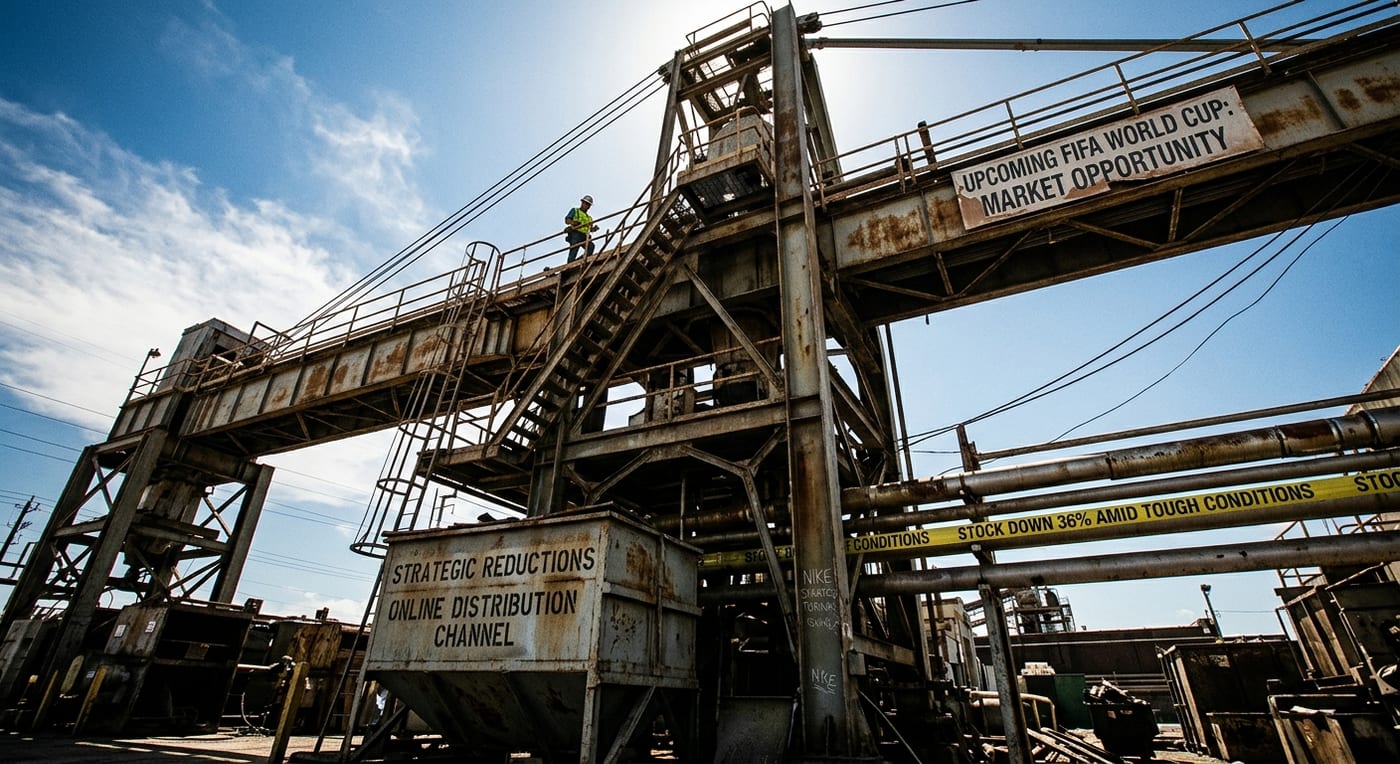
- Strategic reductions in online distribution to enhance loyalty.
- Upcoming FIFA World Cup offers significant marketing opportunities.
- Stock has seen a 36% decline amid challenging market conditions.
NIKE, Inc. ( NKE) continues to navigate a challenging financial landscape marked by significant market pressures and a need for revival amidst declining revenues.
This article delves into NIKE's recent financial performance, strategic pivots, and how upcoming events like the FIFA World Cup could influence its recovery.
Current Market Challenges
As of 2026, NIKE's stock is facing extraordinary pressure, having experienced a staggering 36% drop year-to-date, spurred by disappointing earnings reports and weaker demand in critical markets like Greater China. The most recent quarterly earnings revealed revenues of approximately $11.2 billion for the first quarter of fiscal 2027, reflecting a 4% decline year-over-year. This financial decline has caused alarm among investors about the company's capability to make a comeback.
In this challenging environment, the performance in major markets provides a stark contrast. While North America, NIKE's largest market, saw a modest 2% sales increase, Greater China unfortunately tanked by 22% in the last fiscal quarter. This signals alarming trends that indicate a deeper issue with demand across key demographics, which directly impacts NIKE’s overall business strategy.
Strategic Adjustments
To counteract these challenges, NIKE has implemented strategic adjustments, particularly focusing on streamlining its distribution channels. The decision to reduce partnerships with various online distributors is a concerted effort to enhance brand consistency and loyalty. By managing the number of distribution points, NIKE aims to control its brand narrative better, ensuring that it resonates consistently across different platforms.
This pivot toward a more concentrated distribution strategy is particularly crucial as NIKE preps for the upcoming FIFA World Cup— a significant global event ripe with marketing opportunities. The company historically leverages such events to boost brand engagement and sales; hence, the strategic cuts are closely aligned with an effort to make NIKE’s presence memorable and impactful during this period. These tactics echo a recent article discussing NIKE's revenue declines and the need for strategic pivots. As highlighted, the upcoming World Cup offers a platform where NIKE can reconnect with consumers through meaningful brand storytelling, potentially revitalizing its appeal in both local and international markets.
Market Sentiment and Stock Performance
Despite the challenging landscape, there's a flicker of optimism as market sentiment appears to gradually shift, especially in the consumer discretionary sector. Recently, shares of NIKE gained approximately 5.3% during a market rotation from high-priced tech stocks toward value-oriented companies, indicating that investors could perceive opportunities in NIKE's current valuation.
Analysts have pointed out that investors might view this as a time to acquire NIKE at a discount, seeing potential for recovery as key metrics begin to stabilize. Currently, NIKE's consistent dividend yield of about 4.6% also provides an incentive for investors looking for returns in this rough patch.
Moreover, NIKE's leadership appears to remain cautiously optimistic about the turnaround efforts spearheaded by CEO Elliott Hill. In light of fluctuating market dynamics and revenue projections, the leadership is expected to reveal fresh long-term financial guidance that could either bolster or undermine investor sentiment. The outcome of this upcoming investor day is likely pivotal in shaping how investors perceive NIKE's path forward.
Product Performance
On the product front, NIKE's performance has been a mixed bag. While categories like performance footwear and running apparel have seen slight increases, traditional footwear lines, particularly iconic brands such as the Air Force 1 and Jordan series, have significantly dropped in sales volumes. The struggle to maintain relevance in a crowded market while adapting to shifting consumer preferences presents yet another layer of complexity for NIKE.
As NIKE works tirelessly to drum up excitement for its products, the need for innovative approaches in both marketing and product offerings is clearer than ever. Collaborations or new product launches during major sporting events like the FIFA World Cup could be essential in rebuilding the brand’s prestige and visibility.
Future Outlook
As NIKE strives for recovery, its journey illustrates the challenges faced by major established brands in a rapidly evolving landscape. The combination of recent strategic pivots and engagement during significant international events may provide the essential leverage needed to boost overall brand performance.
In conclusion, NIKE, Inc. is at a critical juncture where the interplay of market pressures, strategic pivots, and major upcoming events will define its short-term recovery trajectory. Investors and analysts alike will be closely monitoring how these factors influence NIKE's performance in the upcoming quarters as they seek clarity on whether this iconic brand can indeed reclaim its foothold as a leader in the sportswear market. The same pressure is reflected in recent reporting on the issue, which helps explain why the company's pricing decisions remain under scrutiny.