

NIKE's Journey Through Financial Turbulence
ED
Editorial
Cashu Finance·4 min read
TL;DR
- NIKE's revenue declines raise investor concerns.
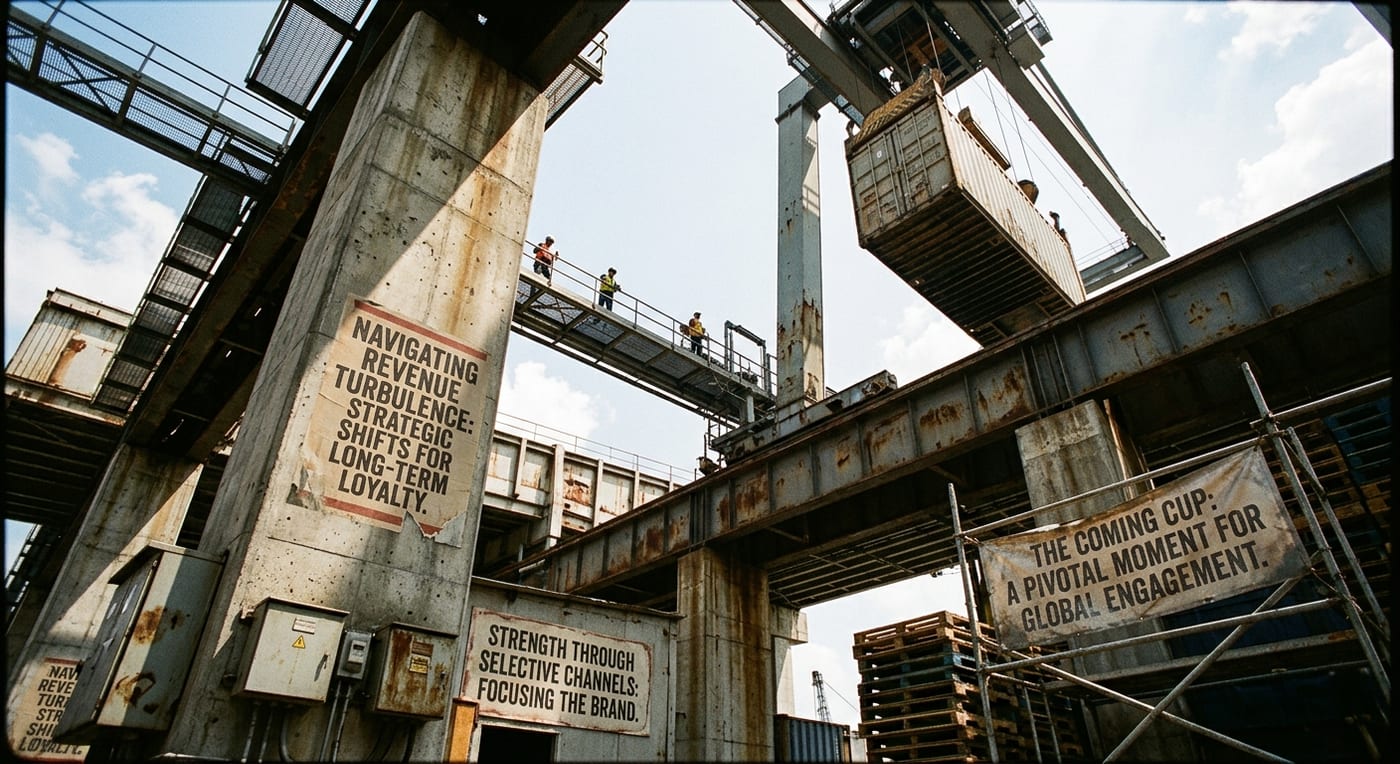
- Strategic reduction in online distribution aims to boost brand loyalty.
- Upcoming FIFA World Cup is pivotal for brand engagement.
NIKE, Inc. ( NKE) continues to navigate a challenging financial landscape as it faces declining revenues and strategic pivots designed to reclaim its competitive edge in the global sportswear market. With a staggering 36% drop in stock value over the past year, NIKE is actively implementing measures to revitalize its brand and appeal to consumers. As it works through these significant operational challenges, NIKE's focus on reducing online distributors is vital to its strategy for enhancing brand consistency. Moreover, the approach taken in light of the upcoming FIFA World Cup highlights how NIKE aims to leverage major global events to bolster its market presence. This article explores NIKE's recent performances, the strategic adjustments in its operations, and the implications of external events on its recovery trajectory.
Recent Financial Performance
Recent earnings reports have unveiled sobering figures for NIKE. For the fiscal 2027 first quarter, the company reported revenues of approximately $11.2 billion, reflecting a troubling 4% decline year-over-year. This drop has raised concerns among investors about NIKE's resilience and capacity for recovery. The most alarming aspect within these results was the 26% decrease in sales from the Greater China market, a region previously viewed as a promising growth opportunity. This trend not only affects revenue figures but also erodes confidence in NIKE's ability to rebound in this crucial market.
As highlighted in previous discussions, NIKE’s challenges are underscored by ongoing market pressures impacting its core operations. A thorough examination of NIKE's strategic turnaround reveals operational restructuring aimed at simplifying its distribution strategy, thus enhancing the customer experience and reinforcing brand loyalty. The decision to cut ties with numerous online distributors aligns with this objective, as it allows NIKE to exert greater control over its retail ecosystem.
The Impact of Key Events
The sportswear giant's plans to engage consumers through high-profile events, like the upcoming FIFA World Cup, signify its commitment to rejuvenating its brand image. Such events not only provide opportunities for extensive brand engagement but also position NIKE to strategically leverage global attention to its advantage. This marketing strategy toward major sporting events can serve as a critical mechanism to revitalize consumer interest and connect with audiences looking for premium athletic gear.
Moreover, NIKE is facing significant margin pressure across its various product lines, particularly within its Sportswear and Jordan brands, which have historically driven revenue growth. As reported, the company's gross margin now hovers around 43%, raising alarms about its long-term viability if sales continue to decline. The market's reaction to these conditions further emphasizes the need for nimble strategies to adapt to shifting consumer behaviors and preferences.
Strategic Initiatives and Investor Outlook
Looking forward, NIKE's operational shift towards restructuring is also influenced by external pressures, such as increased competition from rivals like Adidas and Under Armour. These companies are not idle; they are also optimizing their business strategies in response to market dynamics, further intensifying competition. As a result, NIKE's investors are keenly observing its strategic movements and the financial implications of these changes.
The heavy reliance on promotional strategies amid declining sales can be a double-edged sword. Although promotional campaigns can help stimulate short-term consumer interest, they may also adversely affect profit margins in the long run. Some analysts have voiced concerns over NIKE's sustainability as it navigates these changes, where the returns on promotional investments may not sufficiently recuperate losses, particularly in challenging market conditions. The outlook remains cautious yet hopeful, depending significantly on NIKE's ability to execute its strategies effectively.
Conclusion
NIKE, Inc. ( NKE) is at a pivotal crossroads in its journey towards reclaiming profitability and consumer trust. The company's ongoing efforts to streamline operations, engage with consumers through pivotal global events, and adjust pricing strategies are critical for its potential recovery. With a well-considered approach to mitigating risks associated with market fluctuations and consumer trends, NIKE holds the potential to reinvigorate its brand amidst pressures that have led to a significant stock decline. However, success hinges on executing its strategic initiatives effectively and adapting to an ever-evolving marketplace.