

Navigating Roblox's Age Verification Crisis
Cashu Finance·5 min read
TL;DR
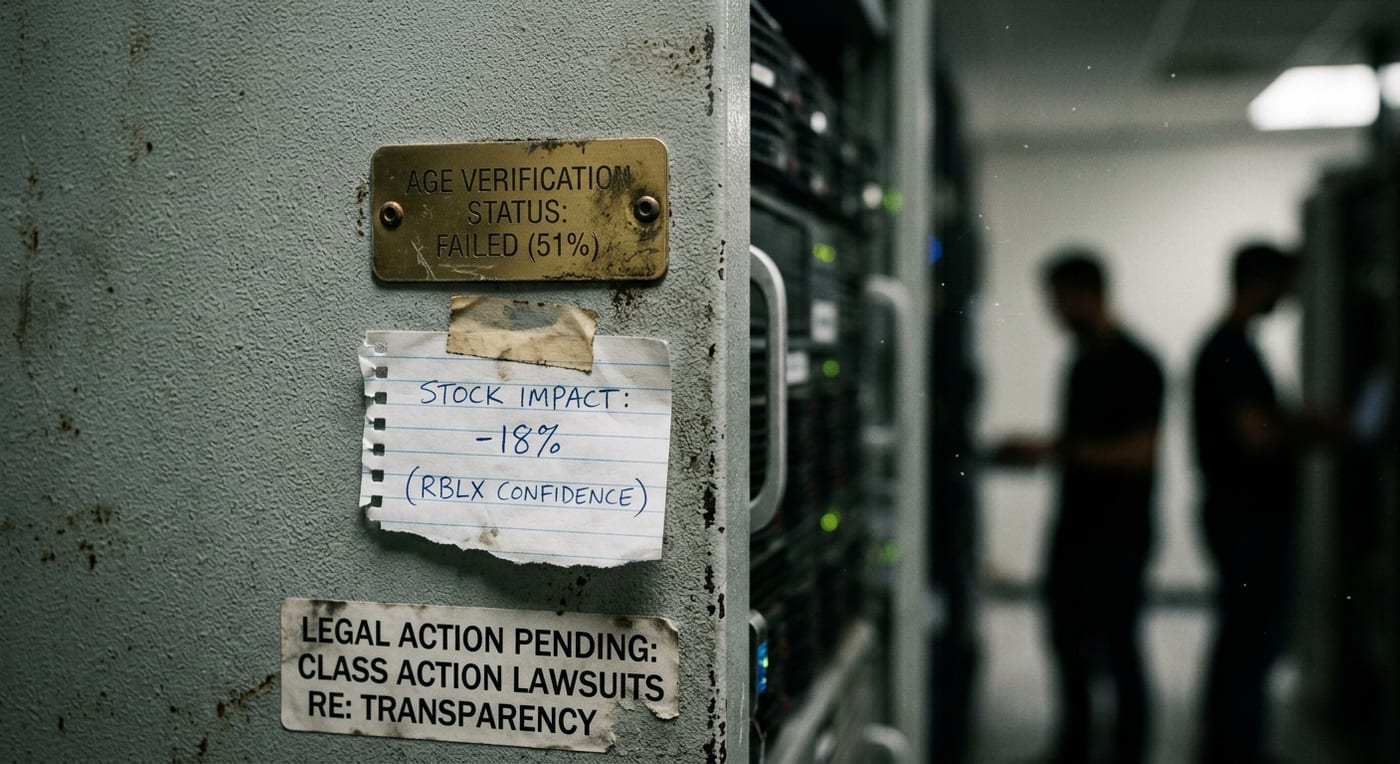
- Roblox's age verification rollout has led to a 51% user adoption rate.
- Investor confidence has plummeted, evidenced by an 18% stock price drop.
- Ongoing class action lawsuits highlight transparency issues in corporate communications.
Roblox Corporation (RBLX) is currently facing significant challenges as it grapples with the fallout from its newly implemented age verification system. Originally conceived as a safeguard for its underage users, this initiative has inadvertently led to a sharp decline in user engagement and investor confidence, thrusting the company into a precarious operational landscape.
The Ambitious Rollout of Age Verification
Roblox's journey into age verification began in early 2026 when the company launched a system intended to create a safer online environment, especially for its primary demographic of children and teenagers. Promoted as a necessary enhancement, the rollout did not meet the anticipated levels of user engagement. Reports indicated that only 51% of daily active users (DAUs) adopted the verification process shortly after its launch. This figure fell significantly short of the company's projections and highlighted the cumbersome nature of the verification process, which many users found off-putting.
As the market reacted, Roblox's stock price took a significant hit. By early May 2026, the company's shares plummeted approximately 18% in a single day, translating into a staggering loss of about $6.7 billion in market capitalization. These developments spurred a wave of class-action lawsuits, suggesting that the company's misleading communications surrounding growth prospects had severely impacted investor confidence. The lawsuit detailed allegations that Roblox failed to adequately disclose the adverse consequences of its age verification rollout, which ultimately hindered the platform's organic growth capabilities.