

Navigating Challenges at Honeywell Aerospace Inc
ED
Editorial
Cashu Finance·4 min read
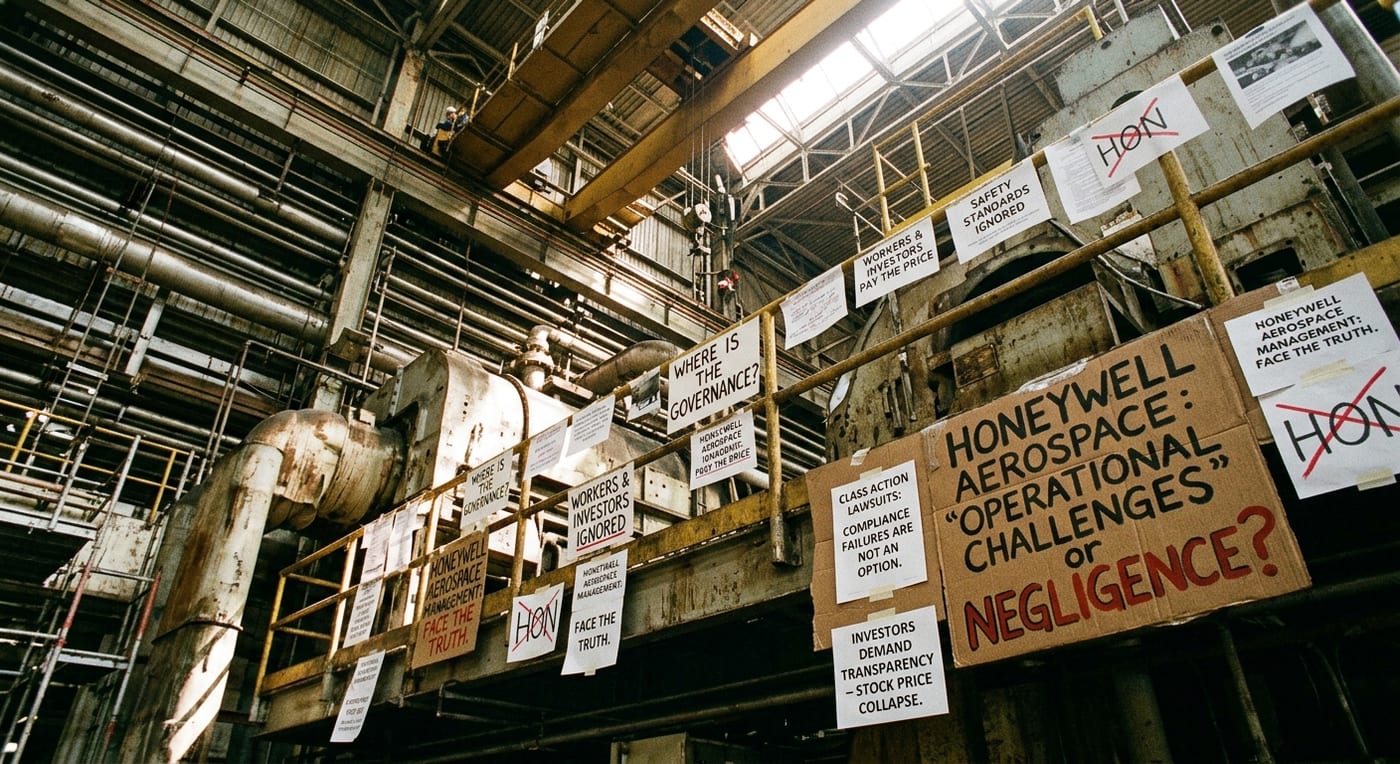
TL;DR
- Honeywell Aerospace faces major operational challenges.
- The company is dealing with class action lawsuits related to compliance issues.
- Recent stock price declines highlight investor concerns over transparency and governance.
Honeywell Aerospace Inc (HONA) is currently facing a tumultuous period marked by significant operational challenges and a sharp decline in share prices. This complexity is compounded by recent allegations of compliance failures and operational miscommunication that have put the company under scrutiny from both regulators and investors. As one of the leading names in aerospace technology, Honeywell's current predicament not only jeopardizes its financial position but also raises pressing questions about transparency and governance in corporate management. The recent class action lawsuits against the firm have elucidated critical gaps in its operational disclosures, compelling stakeholders to reassess their relationships and expectations with the company.
Key Issues and Shareholder Concerns
Honeywell Aerospace's recent operational struggles can be traced back to its reliance on a few key suppliers, whose constraints have resulted in significant production limitations. The aerospace industry is known for its intricate supply chains, and Honeywell represents a microcosm of the larger industry’s vulnerabilities.
A notable example of how these restrictions have played out can be seen through recent financial disclosures, where HONA's stock suffered steep declines after the company revealed it had not met its guidance and expectations due to constrained suppliers. According to reporting, the company’s stock fell markedly from a high of $247.15 on July 2, 2026, to just $154.24 by September 1, 2026, amounting to a staggering loss of over 24%. This decline can directly be associated with the disclosure of these operational challenges and resultant reduced forecasts, which sent ripples of concern through the investor community.
In light of these developments, Honeywell is now the subject of several securities class action lawsuits, alleging that it failed to communicate these serious risks in its previous statements. Investors argue they were not adequately informed about the heavy dependence on a limited supplier base and potential exposure to regulatory actions, particularly concerning compliance with cybersecurity requirements that are critical when dealing with government contracts. Instead, disclosures hinted that any regulatory enforcement was merely a probable event. Such allegations have prompted investors to seek clarification and accountability regarding the firm’s communications.
The Impact of Regulatory Actions
The latest challenges have been compounded by regulatory scrutiny, particularly a recent settlement regarding compliance with the False Claims Act, which Honeywell agreed to pay over $2 million to resolve allegations related to cybersecurity lapses in a Department of Defense contract. This enforcement action represented an additional layer of liability that stakeholders believe should have been disclosed sooner to the public, given that significant risks and constraints were already apparent in the company’s operations. The potential ramifications of being tied to compliance failures raise important questions about Honeywell's ability to navigate these regulatory landscapes in the future.
Industry Position and Future Outlook
While Honeywell contends with internal challenges, it continues to position itself as a key player in the aerospace sector, leaning on innovations and strategic investments in technology. However, the increasing operational uncertainties and shareholder discontent may create headwinds for long-term strategies. The ability to stabilize operations while restoring investor confidence will be paramount.
Looking ahead, the aerospace industry is slowly recovering from the pandemic's fallout. The growth in demand for air travel presents opportunities for Honeywell to leverage, but the scenario is complicated by the current operational disruptions. With ongoing tensions regarding supply chain resiliency and compliance, stakeholders will closely watch how management responds to these pivotal challenges in the upcoming quarters.
Resolution and Accountability
The road ahead will not be straightforward for Honeywell Aerospace. The class action lawsuits constitute a significant concern, as simultaneous inquiries could lead to further financial strain on top of the existing operational challenges. Stakeholders are urged to remain vigilant regarding company communications, particularly as the legal landscape develops.
Hampered capacity not only threatens shareholder value but potentially diminishes Honeywell's standing within the competitive aerospace sector. As scrutiny intensifies, the company will have to work diligently to assure transparency and improve governance practices. The necessity for reforms in operational oversight and communication strategies will become increasingly crucial if Honeywell is to regain the trust of its investors and stabilize its market presence.
In conclusion, Honeywell Aerospace faces a critical juncture as it navigates the complexities of operational challenges, regulatory scrutiny, and investor confidence. Maintaining a focus on accountability and resilience will be essential for steering the company back toward a path of sustainable growth. Investors will need to stay informed and engaged as the evolving situation unfolds, reflecting both the challenges and potentials of this storied aerospace leader. The same pressure is reflected in recent reporting on the issue, which helps explain why the company's pricing decisions remain under scrutiny.