

Moderna's Strategic Shift to Oncology
ED
Editorial
Cashu Finance·4 min read
TL;DR
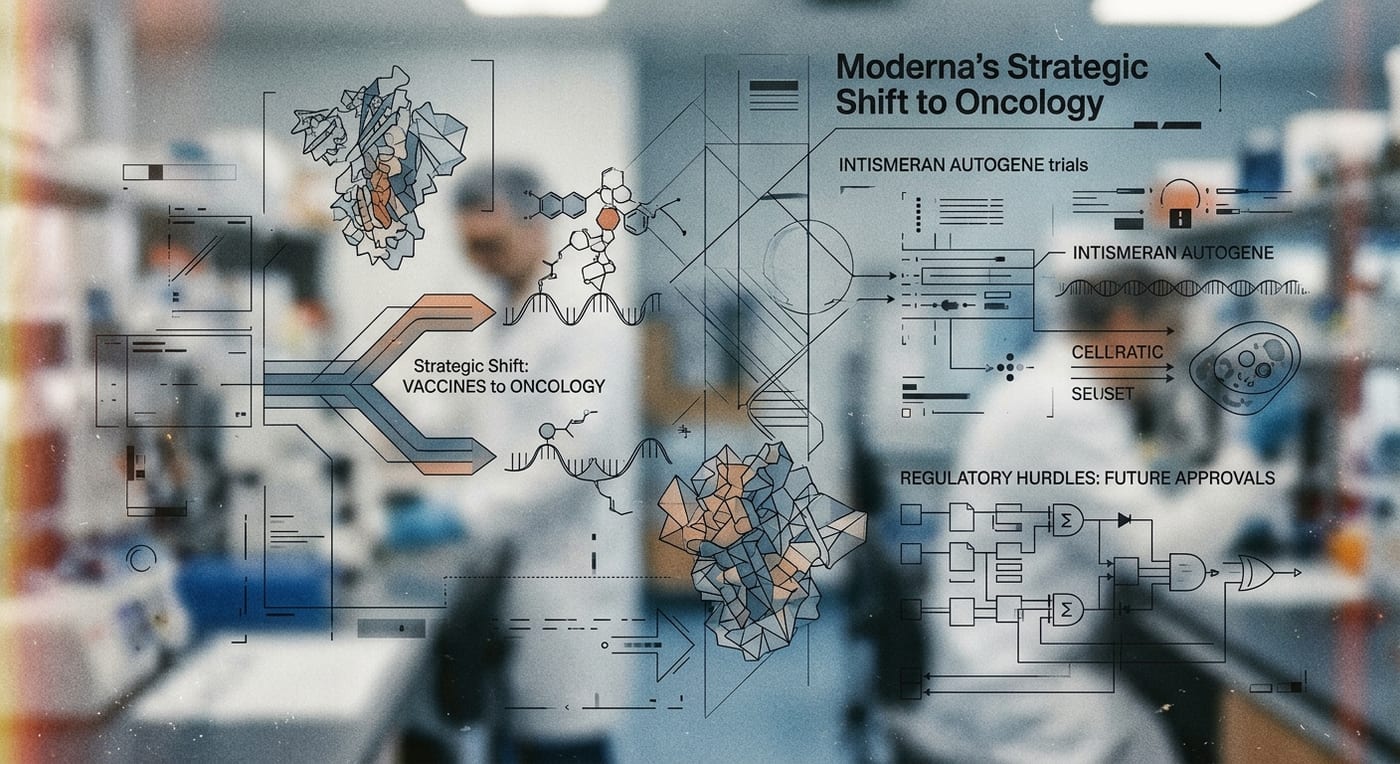
- Moderna shifts focus from vaccines to oncology therapies.
- Promising results seen in the intismeran autogene trials.
- Regulatory hurdles pose challenges for future approvals.
Moderna, Inc. ( MRNA) is embarking on a significant transition as it prioritizes its oncology pipeline following its monumental success with COVID-19 vaccines. This pivot comes at a crucial time when the demand for its pandemic-related products declines and the company seeks to establish a robust foothold in the cancer treatment sector. To understand the implications of this evolving strategy, it is essential to explore the advancements in personalized cancer therapies, the challenges posed by regulatory hurdles, and how this transition affects investor sentiment and market dynamics.
Background: From Vaccines to Cancer Treatment
Initially, Moderna garnered international acclaim for its rapid development of a COVID-19 vaccine, generating over $18 billion in revenue at the pandemic's peak. However, as vaccine demand decreases, the company is redirecting its focus toward personalized oncology therapies. This shift is underscored by the collaboration between Moderna and Merck on an innovative personalized cancer vaccine known as intismeran autogene. The therapy, which tailors cancer treatments based on individual tumor mutations, exemplifies Moderna's commitment to leveraging its mRNA technology in the oncology domain. Their partnership represents a bold strategy not only to diversify their product offerings but to harness their scientific expertise in a burgeoning therapeutic area.
On the Cutting Edge of Oncology
Moderna is well aware that the oncology market presents an array of opportunities. The evolving landscape illustrates a growing demand for innovative treatments that provide personalized care to patients, particularly in cancer treatment. The company is currently advancing its clinical trials, focusing on intismeran's effectiveness against melanoma, lung, kidney, and bladder cancers. During these trials, data has shown promising results, with the combination of intismeran and Merck's Keytruda demonstrating a reduction in melanoma recurrence rates.
Despite these promising developments, investors reacted sharply to a recent data leak concerning the personalized cancer vaccine, which suggested that the vaccine reduced the risk of recurrence or death by only 42%. This figure was lower than the previous reported 49% reduction observed in Phase II trials. Following the leak, Moderna's stock price fluctuated significantly, reflecting the heightened investor anxiety surrounding this data. Such volatility is indicative of the high stakes involved in the pharmaceutical industry and how market expectations can dramatically influence share value.
The implications of this leak were evident, with shares plummeting and trading being temporarily halted amid the uncertainty. Nonetheless, even with this setback, Moderna’s stock has seen a remarkable increase of nearly 580% in 2026, signifying robust investor optimism regarding its future prospects. This decade of significant growth illuminates the potential for revolutionary advancements in cancer therapies, albeit with inherent risks and market unpredictability.
Regulatory Landscape and Market Challenges
Navigating the regulatory environment remains one of Moderna’s significant hurdles as it seeks FDA approval for intismeran. With partnerships established and clinical trials ongoing, the company must adeptly maneuver the complex landscape of drug approvals, which entails time-consuming processes and stringent standards set by regulatory bodies. While promising data has emerged, the company feels the pressure of ensuring that subsequent results meet or exceed market expectations, especially when previous data has caused some volatility in stock performance.
In turn, these regulatory challenges underscore the necessity for transparency with stakeholders. As Moderna continues to push forward, delivering clear communication with investors and addressing potential concerns regarding timelines and outcomes will be pivotal in maintaining investor confidence and stock valuations. Investors are closely monitoring the forthcoming data presentations at the European Society for Medical Oncology (ESMO) meeting, where more detailed trial information will be shared, potentially influencing market sentiment positively or negatively.
The Future Outlook for Moderna
As Moderna transitions more thoroughly into the oncology market, its business model has repositioned from solely pandemic vaccine production to a multi-faceted therapeutic enterprise. This strategic evolution could fortify its long-term growth trajectory, contingent on the success of its oncology pipeline and navigating regulatory challenges ahead. CEO Stéphane Bancel has expressed confidence in the company's approach, favoring a long-term vision focused on healthcare advancements rather than quarterly performance metrics. Building and nurturing a diverse portfolio that includes personalized cancer therapies signals a calculated shift in how Moderna perceives its future position within the healthcare market.
In conclusion, Moderna, Inc. is at a pivotal point in its corporate evolution, where its success in oncology could dictate its relevance in the pharmaceutical landscape moving forward. As the company works diligently on groundbreaking personalized cancer therapies, including intismeran autogene, the road ahead may be fraught with challenges but also laden with opportunities for growth and innovation. Investors and market watchers alike will be attuned to how Moderna seizes these opportunities while managing the inherent uncertainties of the biotechnology sector. The same pressure is reflected in recent reporting on the issue, which helps explain why the company's pricing decisions remain under scrutiny.