

Moderna's Bold New Directions in Oncology
ED
Editorial
Cashu Finance·5 min read
TL;DR
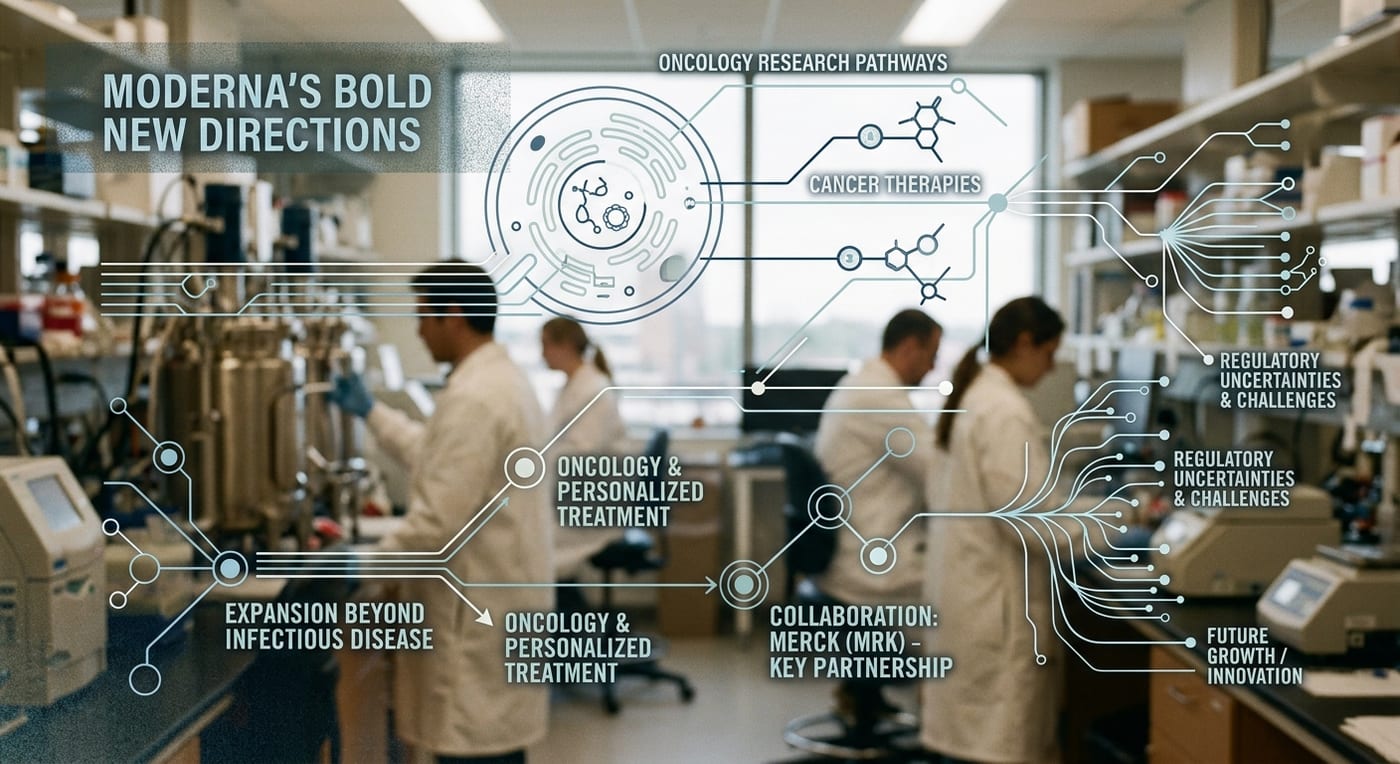
- Moderna expands beyond COVID-19 into oncology therapies.
- Collaboration with Merck on personalized cancer treatments.
- Regulatory uncertainties challenge future growth and innovation.
Moderna, Inc. ( MRNA) has made significant strides in transforming its business model from a COVID-19 vaccine powerhouse to an innovative leader in personalized oncology. This shift comes as demand for traditional vaccines declines and the company positions itself for growth in a highly competitive and rapidly evolving market. Bridging the post-pandemic transition, Moderna has focused on developing its robust mRNA technology into therapeutic applications that promise to redefine cancer care.
A Major Shift in Focus
Initially celebrated for its rapid response to the global pandemic with the development of its COVID-19 vaccine, Moderna is now venturing into more complex therapies, particularly in oncology. This pivot is highlighted by its collaboration with Merck on the mRNA-based therapy intismeran autogene, which aims to provide personalized treatment for melanoma. Unlike the more generic approaches of traditional vaccines, this therapy is tailored to target specific tumor mutations unique to each patient, signaling a new era in cancer treatment.
Exciting results from the Phase 3 trials demonstrated the effectiveness of this partnership. Combining intismeran with Merck's Keytruda immunotherapy has proven successful in significantly extending the time before melanoma recurrence. The promising trial outcomes not only reaffirm the potential of mRNA as a transformative treatment method but also position Moderna favorably among other oncology-focused companies that are rushing to explore similar technologies.
Navigating Regulatory Hurdles
Despite these advancements, Moderna faces notable challenges concerning regulatory approvals, particularly with the changing leadership dynamics within the FDA. The resignation of Peter Marks, the FDA’s prominent vaccine regulator, has propagated uncertainty around the approval processes for new therapies, including the innovative cancer treatments Moderna is actively developing. Such regulatory instability raises concerns among investors about the timeline for potential new product rollouts, which could ultimately impact the firm's revenue streams. In a highly innovative sector, the speed of regulatory actions can dramatically influence market placements.
Industry observers will be keenly watching how Moderna manages these regulatory hurdles while maintaining its growth trajectory. The recent market volatility, marked by declines in stock prices, reflects this uncertainty, leaving investors on edge as they consider the implications of these developments for Moderna’s future.
Market Position and Future Prospects
Moderna's recent inclusion in the Nasdaq-100 is a key highlight for the firm, representing increased visibility among institutional investors. The powerful combination of its established mRNA platform and its ongoing clinical developments ensures that Moderna is positioned as a strong player in the evolving biotechnology landscape. Being part of this esteemed index helps solidify trust from investors, who see this as a bullish development, especially following its impressive stock performance in recent months.
Moreover, the prospect of personalized cancer vaccines presents an appealing narrative for potential investors, especially those looking to delve into innovative health solutions. Moderna's success in this area could redefine both its market standing and the expectations of mRNA technology's applications across various diseases.
As the landscape rapidly changes, Moderna's ability to leverage its recent advancements while adapting to regulatory contexts will be key determinants of its market performance. The company must articulate a clear roadmap that addresses both investor expectations and regulatory concerns to mitigate risks associated with uncertainty around future approvals and product launches.
Competitors and Industry Dynamics
While Moderna aims to cement its reputation in oncology, it is also operating in a space filled with direct competitors, notably BioNTech, which is similarly transitioning its focus from COVID-19 vaccine development to oncological treatments. Equipped with significant cash reserves and a burgeoning cancer treatment pipeline, BioNTech is poised to create a powerful position in the market. This sets a competitive tone between the two firms that could affect market share and investor interest.
The oncology treatment space is complex, with different tumor types necessitating unique interventions. The emerging strategies being developed at both Moderna and BioNTech illustrate this diversity, each carrying the potential for different types of therapeutic advancements to meet specific patient needs. Analysts are closely monitoring both companies as they navigate this crowded landscape, with the outcome of their ongoing trials likely influencing investors’ sentiment and stock movements in both companies.
Both Moderna and BioNTech's strategies reflect a broader trend in the biotechnology sector, where firms are leveraging existing technologies in increasingly sophisticated ways to address unmet medical needs. The industry is poised for significant developments, with both companies pushing boundaries through innovative research and strategic collaborations.
Conclusion
Ultimately, Moderna, Inc.'s path ahead is one of cautious optimism. With its transition to personalized oncology, the company stands at a crossroads, where successful navigation of regulatory challenges and competitive pressures will define its future. Investors will be eagerly watching for milestones that signal the company's ability to leverage its platform in the oncology sphere effectively. As the narrative continues to develop, Moderna's growth potential within this burgeoning field could not only shape its future but potentially fan the flames of a new revolution in cancer treatment. The ability to blend innovation, regulatory savvy, and market strategy will be crucial as the company forges ahead in its journey towards redefining healthcare through mRNA technology. The same pressure is reflected in recent reporting on the issue, which helps explain why the company's pricing decisions remain under scrutiny.