

Microvast's Resilience Amid Legal Struggles
ED
Editorial
Cashu Finance·5 min read
TL;DR
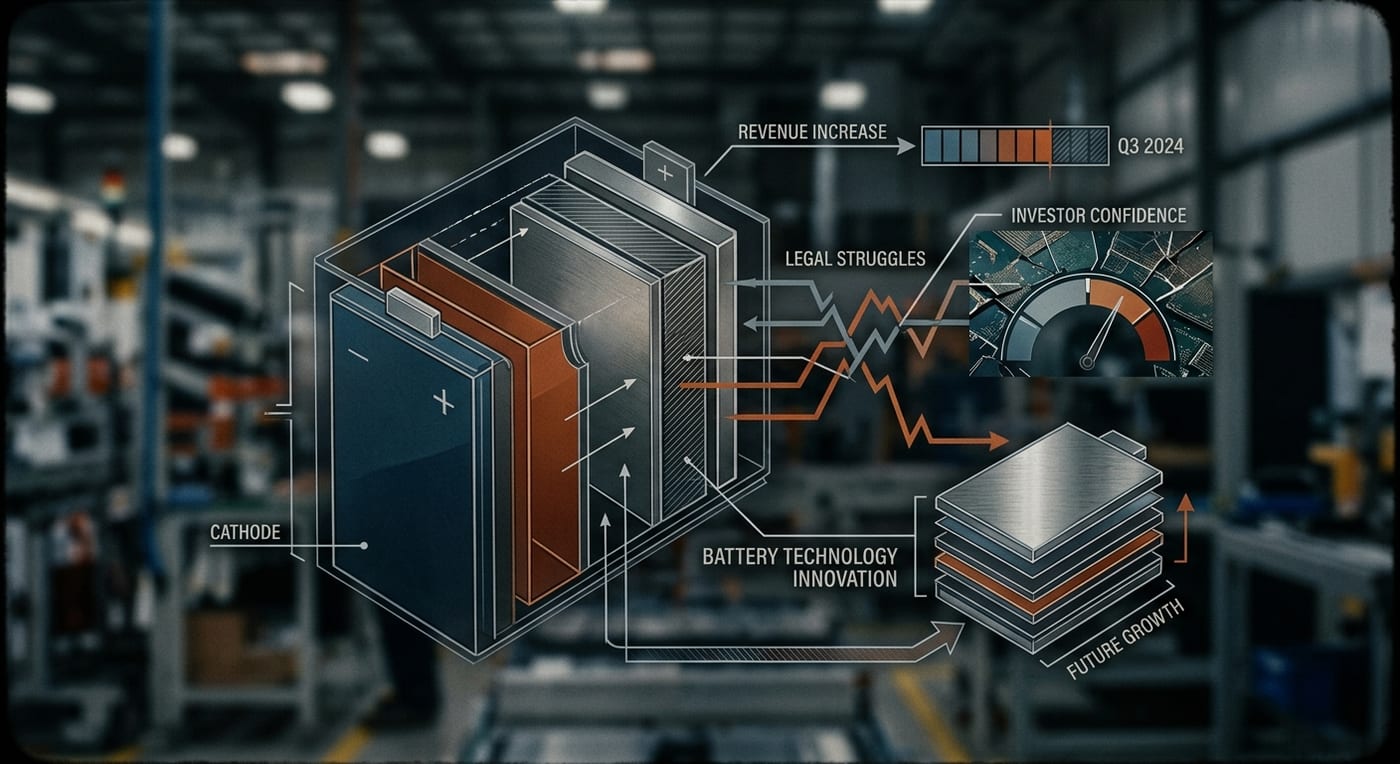
- Microvast reports a 26.6% revenue increase in Q3 2024.
- Ongoing legal issues could impact investor confidence.
- Innovation in battery technology is a focal point for future growth.
Microvast Holdings, Inc. (MVST) is drawing attention as the latest developments come into focus. Microvast Holdings, Inc. (MVST) is making waves in the electric vehicle (EV) battery sector, showcasing impressive revenue growth despite significant legal challenges that threaten to overshadow its success. In its recent Q3 2024 financial report, the company announced a revenue of $101.4 million, reflecting a robust year-over-year increase of 26.6%. However, this growth narrative is complicated by ongoing legal disputes and class-action lawsuits that may pose risks to investor confidence and operational transparency.
Financial Performance: A Spotlight on Growth
Microvast’s remarkable revenue growth in Q3 aligns with a broader trend in the EV market, which has seen increasing demand for innovative battery solutions. The global shift toward sustainable energy has increased interest in advanced battery technology, an arena in which Microvast aims to bolster its market position. This impressive revenue growth highlights Microvast's strong positioning in the highly competitive EV battery sector, where agility and innovation are critical.
Legal Challenges: A Cloud Overhead
Despite its financial successes, Microvast is grappling with ongoing legal challenges, primarily stemming from allegations of misleading operational disclosures. Recent class-action lawsuits have been initiated, as outlined in various reports, including a significant reminder from Faruqi & Faruqi, LLP regarding legal rights for investors affected during the dispute period from April 1, 2025, to March 16, 2026. Investors are urged to take note of the deadline to seek class action participation by September 21, 2026.
The legal actions arise from substantial claims that Microvast executives overstated the company’s operational capabilities and its production timeline related to the much-anticipated Huzhou Phase 3.2 expansion project. The company had previously assured stakeholders that increased production capacity would be realized by the end of 2025; however, this promise was later revised, leading to financial repercussions. Microvast reported a stark decline in gross margins, from approximately 36% to merely 1%, attributed to significant inventory impairment charges.
Connecting the Dots: Financial and Legal Nuances
The juxtaposition of Microvast's revenue surge against its declining gross margins illustrates a complex operational environment. Investors remain wary as the impact of the legal challenges unfolds, potentially affecting not just immediate profitability, but long-term projections and investor confidence.
In a previous piece discussing Microvast's challenges, the heavy implications of ongoing class actions were made clear, noting that the operational intricacies and legal issues interconnect deeply with market perceptions and trust. As investors weigh these challenges, it becomes critical to monitor how Microvast maneuvers through this turbulent period while maintaining its focus on technological innovation.
Strategic Innovations Amidst Turbulence
Amid these challenges, Microvast continues to push forward with innovation in battery technology, emphasizing its commitment to enhancing product offerings and operational capabilities. This focus on technology could play a fundamental role in helping the company re-establish investor confidence and demonstrate its resilience. The development of advanced battery solutions is key to capitalizing on the growing market for EVs, and Microvast's strategic direction to prioritize such innovations might mitigate some of the fallout from the ongoing legal issues.
Moreover, as the demand for EV battery solutions expands, the strategic positioning of Microvast could provide a silver lining, aligning with the overarching trend of technological advancement in the energy sector. For a comprehensive understanding, a comparison to competitors and market benchmarks can enhance insights into how Microvast stacks up against its peers.
The Path Forward: Navigating Challenges Wisely
As Microvast charts its course through this multifaceted landscape, the balance between fostering investor confidence and addressing legal fallout will be pivotal. The company has expressed a commitment to transparency and operational excellence, which are crucial as it seeks to solidify its place in the EV battery market.
In light of the impressive revenue growth reported, the focus must also pivot to how sustainable these gains are amidst the prevailing legal framework and operational criticisms. Delivering clear, actionable insights and updates to investors will be integral to navigating this tightrope of challenges and opportunities.
Looking forward, Microvast’s ability to adapt its operations while maintaining a strong product pipeline may ultimately define its trajectory in the competitive landscape of EV batteries. The coming months will be crucial, not just in resolving the current legal disputes but also in ensuring that the company’s innovative strides are recognized and valued by the market.
As such, the story of Microvast Holdings, Inc. remains one of resilience and challenge—a narrative that reflects both the potential for growth in the energetically evolving EV sector and the sobering reminders of operational transparency and legal accountability. The path may be fraught with challenges, but the company’s professional commitment suggests a determination to emerge stronger in the months and years to come. Navigating these waters effectively will likely require a multi-faceted approach balancing innovation, investor communication, and operational excellence. The same pressure is reflected in recent reporting on the issue, which helps explain why the company's pricing decisions remain under scrutiny.