

Micron's Ascent Amidst AI Demand
ED
Editorial
Cashu Finance·5 min read
TL;DR
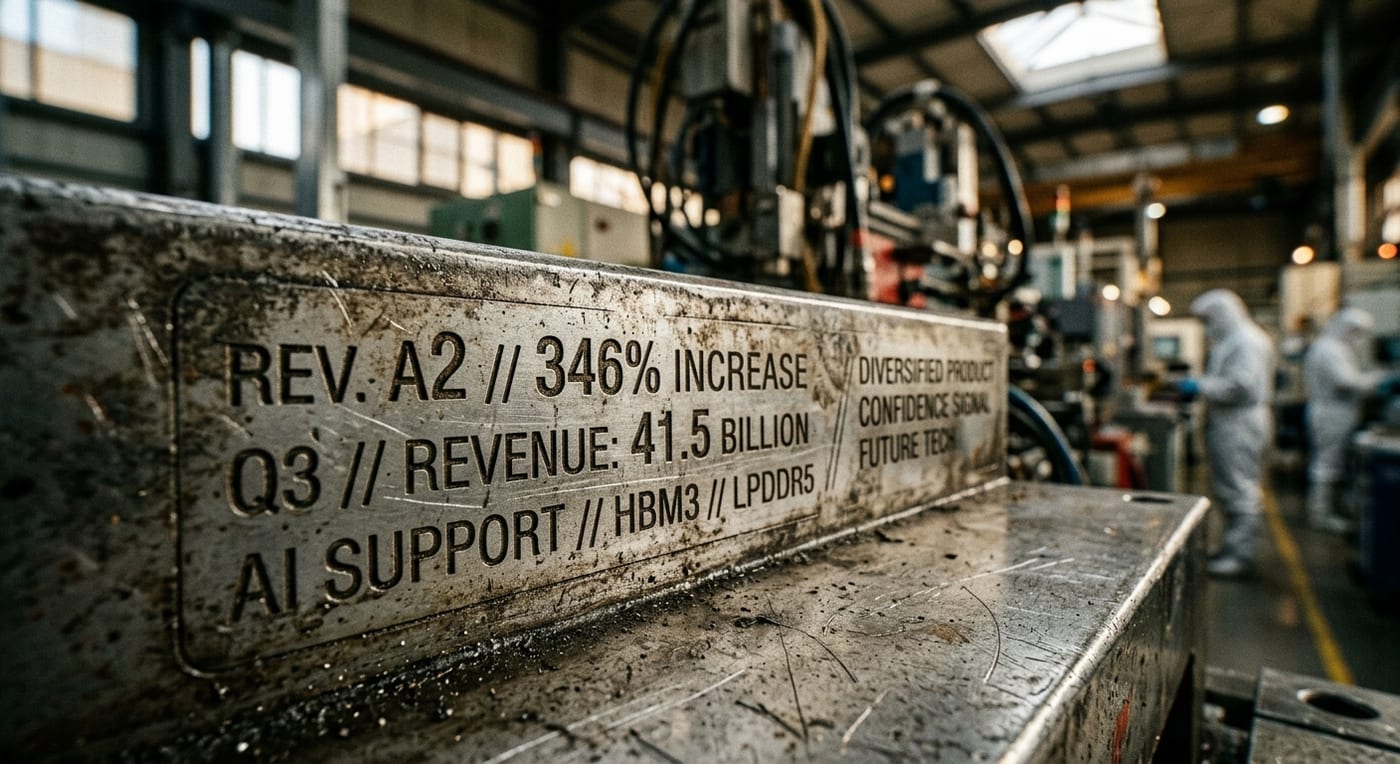
- Micron reports $41.5 billion in Q3 revenue, marking a 346% YoY increase.
- Strategic investments signal confidence in future AI technologies.
- Competitive positioning strengthens with diversified memory product offerings.
Micron Technology, Inc. (MU) stands at a pivotal juncture, emerging as a key player in the semiconductor industry, particularly due to the surging demand for memory products driven by artificial intelligence (AI) applications. As businesses increasingly pivot towards AI technologies, Micron has positioned itself to not only capitalize on the present boom but also lay a strong foundation for future growth.
Overview of Financial Performance
The fiscal report for Q3 of 2026 revealed a staggering revenue figure for Micron, amounting to approximately $41.5 billion. This figure represents an astonishing year-over-year increase of 346%, reflecting the company's effective response to the heightened demand for memory technologies, particularly in AI and data centers. Such remarkable financial performance highlights the crucial role memory solutions play in modern computing.
For instance, the cloud memory and core data center sectors alone contributed roughly $25.3 billion towards the overall revenue, showcasing a nearly fivefold increase compared to prior fiscal results. This trend underscores the strong demand for high-capacity memory solutions as AI technologies continue to proliferate across various industries. As noted in earlier discussions on Micron's ongoing growth, the company's strategic positioning allows it to not only meet current market demand but also adapt to future challenges and opportunities in the semiconductor realm.
The AI Surge Driving Demand
Understanding the context behind this financial upsurge is vital. The landscape of the semiconductor sector has been reshaped by the burgeoning demand from AI, where Micron’s DRAM and NAND products are critical. As businesses and data centers respond to the influx of AI-related workloads, the requirement for efficient, high-capacity memory solutions continues to rise. Companies like Nvidia have underscored this trend; in their latest earnings report, Nvidia pointed to memory costs impacting margins, highlighting that this dynamic is beneficial for suppliers like Micron. The increasing financial commitments from key players in the industry signal a favorable outlook for memory providers as they seek to enhance their infrastructure to support AI applications, thereby boosting Micron's value proposition in the market.
Nvidia's revelations about their gross margins can be seen as a green light for Micron, affirming that increased spending in AI will escalate demand for high-bandwidth memory (HBM) and DRAM, which Micron specializes in. Furthermore, as Nvidia grapples with rising memory costs, it inadvertently expands Micron's pricing power, leading to higher realized average selling prices for memory providers, solidifying Micron’s position in the market. This trend speaks to a larger transformation sweeping across the semiconductor industry—one in which Micron is poised to capitalize.
Strategic Investments for Future Growth
In line with its robust performance, Micron is committed to investing heavily in innovation and production capacity. The company has earmarked $250 million towards developing technologies that are expected to shape the future of AI. This investment not only signals confidence in its growth trajectory but is also indicative of Micron’s proactive stance to stay ahead of the competitive curve. With a particular focus on memory technologies essential for AI applications, Micron aims to ensure its offerings remain relevant in a rapidly evolving tech landscape.
Additionally, with recent discussions pointing to Micron’s need for expanding production facilities, the company appears to be taking comprehensive steps to mitigate any potential supply constraints. While competing firms like Sandisk are also ramping up production capabilities, Micron has been ahead in recognizing the long-term implications of enhancing its operations to meet market demands effectively. This preparedness is crucial as supply chain dynamics continue to evolve, with companies battling to maintain their market positions amid an expanding demand scenario.
The Competitive Landscape
As Micron continues to solidify its standing, it faces competition primarily from firms like Sandisk. The competition in the memory market underscores the importance of strategic positioning and innovation. Both companies report substantial growth figures, driven largely by the escalating prices of memory chips as demand outpaces supply. However, analysts note that Micron’s diversified business—operating in both DRAM and NAND segments—provides a competitive edge over Sandisk, who lacks DRAM capabilities.
Micron's approach to building new production facilities ahead of peak demand mirrors a keener understanding of the cyclical nature of the memory market. By enhancing its production capabilities early, Micron aims to harness the potential of rising memory prices while positioning itself favorably against competitors who may lag in ramping up supplies. This forward-thinking strategy provides Micron with a unique advantage as the market continues to navigate through supply chain challenges.
The Investor Outlook
Given Micron's remarkable revenue growth and strategic investments in its future, investor outlook appears bullish. The expectation for further revenue growth—estimated at around 349% year-over-year—places Micron in a favorable position as it gears up for its fiscal fourth-quarter results. Analysts anticipate that with sustained demand from AI and corresponding investments in production, Micron is likely to report numbers that could outstrip current market expectations.
Overall, while economic conditions present uncertainties, Micron Technology, Inc. (MU) remains poised for robust growth amid the flourishing AI sector. The coupling of strong demand, strategic foresight, and a commitment to innovation underpins Micron’s potential, making it a compelling contender in the semiconductor landscape for years to come. The same pressure is reflected in recent reporting on the issue, which helps explain why the company's pricing decisions remain under scrutiny.