

Micron Technology's Unrivaled Surge in AI Demand
ED
Editorial
Cashu Finance·5 min read
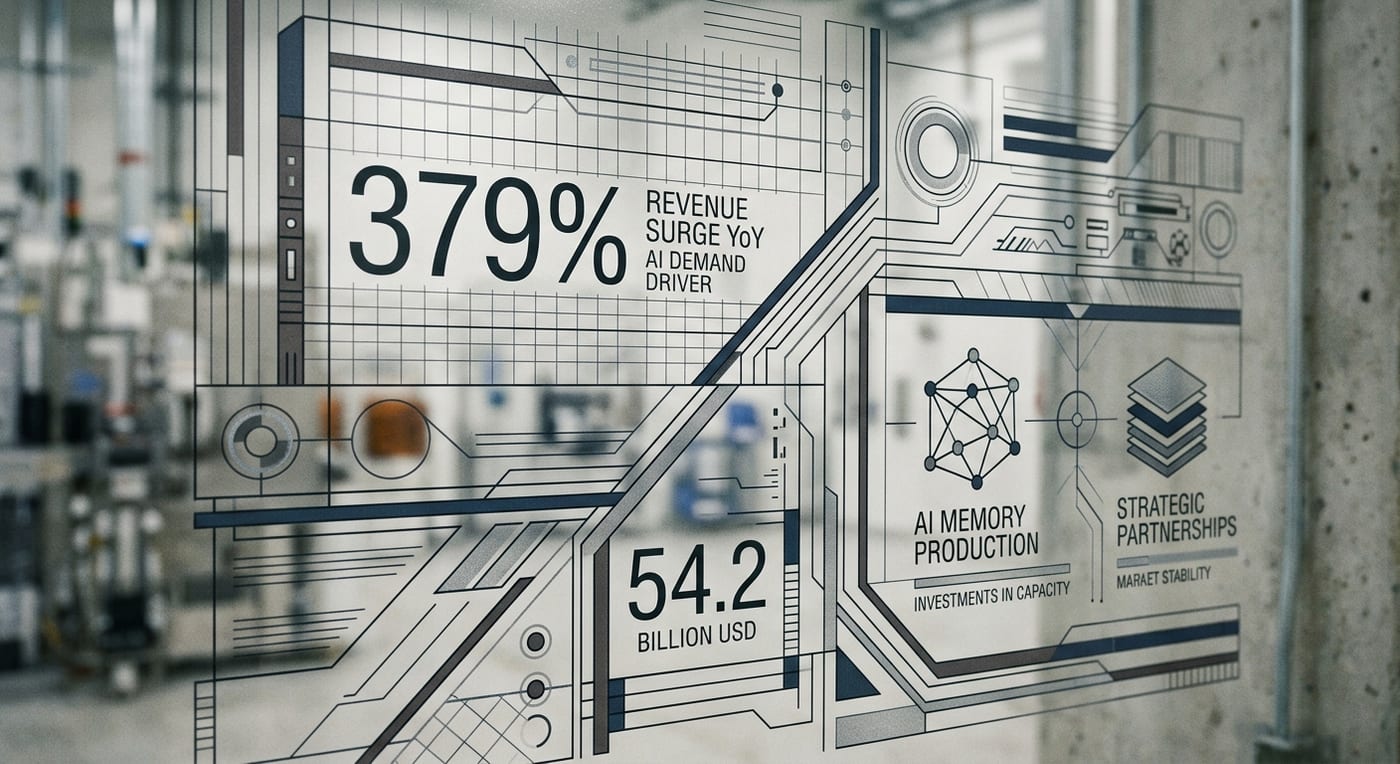
TL;DR
- Micron's revenue surged 379% YoY to $54.2 billion.
- Major investments underway to bolster AI memory production.
- Strategic partnerships enhance market stability and growth potential.
Micron Technology, Inc. (MU) is drawing attention as the latest developments come into focus. Micron Technology, Inc. (MU) is making headlines in the semiconductor landscape, showcasing an extraordinary ascent driven by the exponential demand for memory products, particularly from the artificial intelligence (AI) segment. The company's latest financial disclosures, strategic moves, and industry positioning paint a compelling picture of its trajectory amid a fiercely competitive market. This article delves into the specifics of Micron's growth, the critical drivers behind its success, and the macroeconomic factors influencing its operations.
Unprecedented Financial Performance
The financial outlook for Micron has never been brighter. During its latest fiscal Q4 report for 2026, Micron recorded a staggering revenue of approximately $54.2 billion, signifying a nearly 379% increase year-over-year. This remarkable surge not only highlights the company’s revenue powerhouse but also underscores its pivotal role in addressing the surging demand for dynamic random-access memory (DRAM) and NAND flash memory essential for AI capabilities. As reported, the net income surged to $37.7 billion with adjusted earnings per share of $33.42, showcasing a fifteenfold increase from the previous year.
Micron’s financial might is significantly bolstered by its dominant position within the memory chip market. The increasing utilization of AI technologies across various sectors is compelling organizations to invest heavily in data center resources, resulting in an unprecedented demand for Micron’s memory products. With a robust order book of approximately $150 billion, Micron is well positioned to capitalize on this growing sector.
Strategic Partnerships Enhance Competitiveness
Strategic partnerships have played a crucial role in Micron's successful scaling of operations. Collaborations with major tech firms and data center providers secure long-term contracts, ensuring more stable pricing structures. These partnerships not only enhance Micron’s market position but also fortify its revenue base at a time when many competitors struggle to keep pace with the rapidly evolving technological landscape due to constraints in manufacturing capability.
As highlighted in a recent article on Micron Technology's dominance in the AI memory market, its strategic engagements have led to numerous multi-year agreements, making the firm a reliable supplier in a sector fraught with supply chain volatility. Micron's ability to adapt to demand fluctuations further solidifies its competitive edge.
Investments to Drive Future Growth
Looking forward, Micron is making monumental investments to sustain its growth trajectory. Announced plans include a staggering $250 billion earmarked for new fabrication facilities, crucial for producing advanced high-bandwidth memory (HBM) tailored for AI workloads. The company's new campus designations in Clay, New York, and Boise, Idaho, are revolutionary in their technological approach, with the first new fab expected to commence operations in the near future.
This proactive stance is essential as the market continues to experience unprecedented growth driven by AI advancements. Industry analysis indicates a significant gap between supply and demand for memory solutions, with Micron strategically investing in overcoming these challenges. The ambitious pursuit for more manufacturing space signifies Micron’s commitment to securing its leadership position amid tightening industry dynamics.
Navigating Macroeconomic Challenges
Despite its robust performance, Micron is not immune to the cyclical nature of the semiconductor industry. Some analysts, such as Michael Burry, have expressed concern regarding potential market corrections, suggesting that the supply chain may normalize over the upcoming years. While this perspective holds merit, the current supply constraints highlight the desperation many tech companies have for memory products. As per guidance from Micron's leadership, the company anticipates that demand will remain tight into 2027 and possibly beyond, with management unable to predict when supply will meet demand conclusively.
Furthermore, while prices for DRAM have seen some moderation, they are poised to remain high, driven by sustained market pressures. As Micron continues to invest significantly in its production capabilities, it remains focused on delivering value to shareholders amidst external market fluctuations. In relation to this issue, a recent CNBC report underscored that Micron’s adjustment pathway involves rising memory costs, which are expected to persist as demand outstrips supply.
Positioning for the Future
Micron’s transformation during this pivotal moment is reflective of its stature as a key player in the tech industry. By harnessing the rapid adoption of AI and capitalizing on the need for advanced memory technologies, the company has positioned itself favorably amongst its competitors, including giants like Nvidia and AMD who heavily rely on high-performance memory solutions.
Additionally, the long-standing relationship with these tech titans showcases Micron's dedicated efforts to meet the complex demands of next-generation computing environments. As such, investments directed towards ramping up capacity in anticipation of future AI workloads not only bolster growth potential but also reinforce Micron's reputation as the go-to supplier for critical memory technologies.
Overall, Micron Technology, Inc. is at a transformative juncture fueled by unwavering demand for advanced memory solutions, strategic collaborations, and significant capital investments. The landscape within which it operates may be fraught with competitiveness and macro challenges, yet Micron’s proactive strategies and robust financial results affirm its resolve to lead in the semiconductor revolution powered by AI-driven opportunities. The same pressure is reflected in recent reporting on the issue, which helps explain why the company's pricing decisions remain under scrutiny.