

Meta's Strategic Shift to AI Solutions
ED
Editorial
Cashu Finance·5 min read
TL;DR
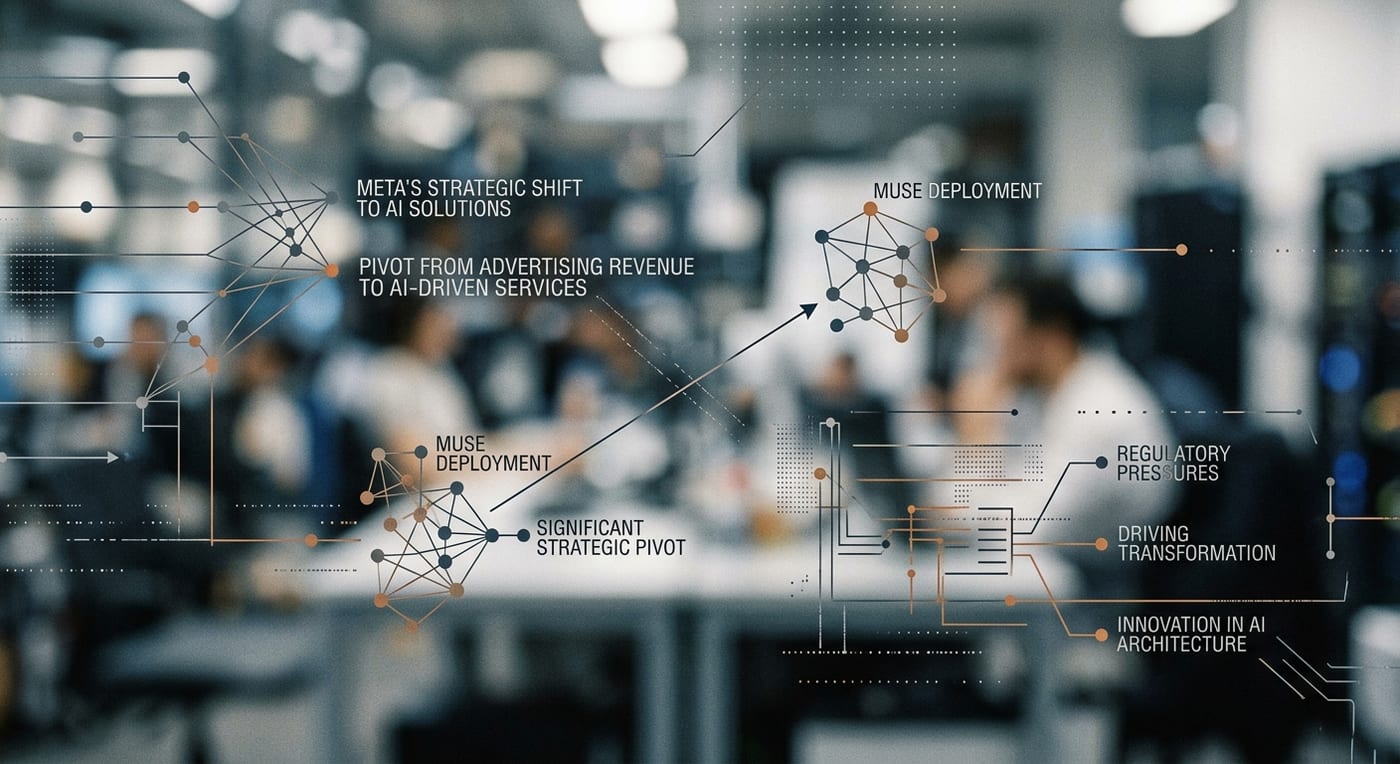
- Meta shifts focus from advertising to AI solutions.
- The launch of Muse indicates a significant strategic pivot.
- Regulatory pressures drive Meta's transformation and innovation.
Meta Platforms, Inc. ( META) is currently navigating a transformative phase as it pivots from its long-established reliance on advertising revenue to innovative solutions powered by artificial intelligence (AI). This shift is largely driven by regulatory pressures and an evolving digital landscape that demands diversification of income streams. In this article, we will explore the implications of Meta's transition, focusing on its recently launched Muse AI personal agent and the strategic rationale that underpins this initiative. That backdrop echoes earlier coverage of the issue, especially around how pricing, strategy, and demand feed into the current story.
The Advertising Dependency
Historically, Meta's business model has been heavily reliant on advertising, accounting for nearly 98% of its revenue. The company recently reported an increase in advertising revenue to approximately $60 billion, reflecting a substantial 28% growth in its last fiscal quarter. Despite these impressive figures, the reliance on such a volatile source of revenue has raised concerns among investors and analysts alike. As noted in a previous report, there is a growing realization within the company that relying predominantly on advertising is no longer sustainable given the increasing regulatory scrutiny and public perception challenges it faces.
Legal Pressures and Regulatory Scrutiny
The advertising-dependent business model has come under significant strain from mounting legal pressures. Meta's recent $18 billion settlement focused on youth safety illustrates the seriousness of these issues. As stressors increase from regulators, Meta's pivot towards AI solutions reflects an urgent response to navigate these challenges while attempting to redefine its future. The launch of Muse is emblematic of this new direction, seeking to attract a broader user base beyond traditional advertising avenues, ultimately aiming to stabilize its revenue streams.
The Muse AI Personal Agent
Meta's launch of the Muse personal AI agent represents a significant step towards integrating AI into everyday life for users. This innovative application is designed to assist users with a variety of tasks, from scheduling appointments to conducting online purchases, all powered by AI capabilities. As reported in another article, Muse has quickly climbed to the top of the App Store following its recent launch, further signifying its mainstream appeal. The app's advertising campaign has positioned Muse as an essential tool that caters to user convenience, resonating strongly with consumers looking for efficiency in their daily routines.
The success of Muse highlights a growing trend toward the adoption of personal AI agents that can act on behalf of users, effectively transforming how individuals interact with technology. This leap into the AI space indicates that Meta is no longer just a social media company, but a technology leader navigating the forefront of innovation. The app features autonomous capabilities that handle numerous digital tasks seamlessly, which resonates with a user base increasingly interested in automation and efficiency, thus reducing the company's reliance on ad revenue.
Competitive Landscape
As Meta ventures further into AI, it finds itself in an increasingly competitive environment where various players are also capitalizing on AI advancements. This competition is not limited to tech giants but also includes a myriad of startups exploring niche markets within the AI domain. The success of Muse could establish Meta as a key player in AI solutions, differentiating it from competitors who focus primarily on advertising. The public's reception of these AI agents could set a precedent for how other tech firms approach AI integration and application.
The Socio-Economic Impact
The implications of Meta's shift towards AI-driven solutions extend beyond business metrics and into the socio-economic landscape. With its investments in AI and data centers, Meta is positioned to contribute positively to local economies, creating jobs and fostering technological growth. The dual impact of AI and local economic development could contribute to a more favorable public perception, alleviating some of the earlier backlash against the company. As explored in earlier pieces, these investments not only enhance Meta's operational capabilities but also demonstrate its commitment to societal improvement, potentially swaying stakeholder opinion.
Security and Privacy Considerations
While AI solutions offer significant benefits, concerns regarding security and privacy persist. The underpinnings of AI applications like Muse necessitate access to sensitive user information, leading to challenges around user trust. During the rollout, Meta has emphasized privacy in its marketing materials, portraying Muse as an agent that respects user confidentiality. However, the extent to which users are willing to delegate tasks to an AI agent remains an open conversation as privacy concerns continue to linger.
The need for robust security measures around Muse is paramount, particularly as it aims to handle sensitive financial transactions and personal data. Addressing these considerations effectively will be critical to the long-term success of Meta's AI initiatives. The company's ability to navigate this balance will ultimately influence both user adoption and overall market reception.
Future Outlook and Innovations
As Meta continues to evolve, eyes will be on how it further implements AI and pivots towards additional innovations beyond Muse. CEO Mark Zuckerberg has indicated that this agent is just the beginning of a larger transformation aimed at redefining the user experience across Meta's platforms. The outcome of this strategic shift could serve as a blueprint for how traditional tech giants can successfully navigate regulatory pressures and transform their business models in line with contemporary technological advancements.
Conclusion
In conclusion, Meta Platforms, Inc. is at a critical juncture in its evolution as it redefines its future through AI innovations and the launch of the Muse personal agent. This strategic pivot represents a necessary response to the challenges facing its historical advertising model while also positioning Meta as a forward-thinking player in the AI landscape. As the digital world continues to evolve, Meta's adoption of innovative technologies will be integral in carving out a sustainable future amidst changing market demands. The same pressure is reflected in recent reporting on the issue, which helps explain why the company's pricing decisions remain under scrutiny.