

Marathon Petroleum's Q3 Triumph Amid Turbulence
Cashu Finance·4 min read
TL;DR
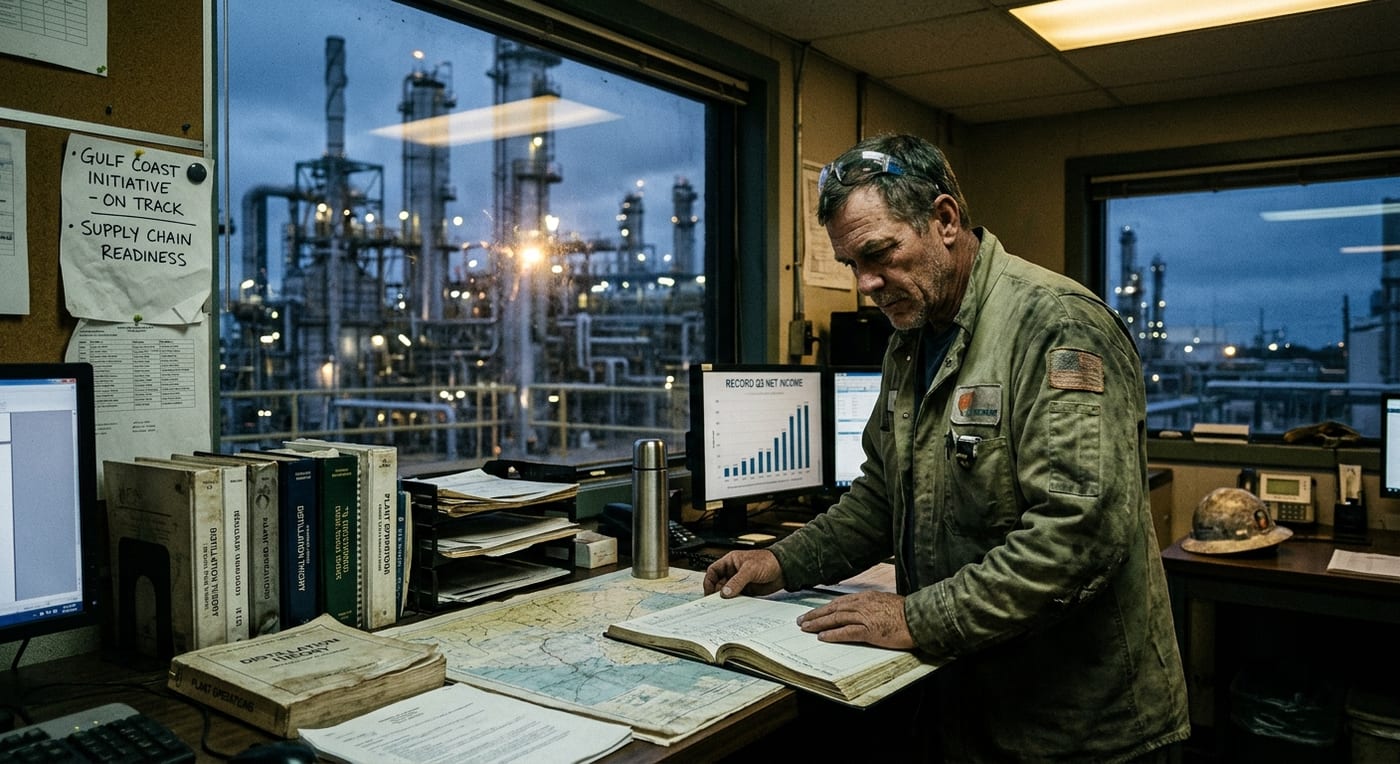
- Record Q3 net income of $7.4 billion.
- Strategic divestitures focusing on Gulf Coast growth.
- Navigating geopolitical challenges impacting supply chains.
Marathon Petroleum Corporation (MPC) has demonstrated remarkable resilience and adaptability amidst a turbulent energy environment in its third-quarter performance. The company's recent earnings report reveals significant growth driven by soaring refining margins and strategic operational adjustments in response to market volatility. As global oil prices surge due to geopolitical tensions, Marathon has navigated through these challenges with impressive results, reaffirming its robust market position and commitment to shareholder value. That backdrop echoes earlier coverage of the issue, especially around how pricing, strategy, and demand feed into the current story.
Eye-Popping Q3 Earnings
Marathon Petroleum recently reported a staggering third-quarter net income of $7.4 billion, or $26.59 per share, a notable jump from $1.4 billion, or $4.51 per share, in the same period last year. This remarkable growth underscores the significant impact of refining margins, which surged due to heightened oil prices amid global uncertainties. The refining & marketing margin climbed to $45.70 per barrel, up from only $17.60 the previous year. Adjusted EBITDA also reflected this success, reaching $11.7 billion compared to $3.2 billion a year ago. The increase in profit primarily stemmed from wider refining margins, a testament to the favorable operational environment for refiners amid the current geopolitical landscape.
Strategic Moves and Market Adaptation
In line with its strategic vision, Marathon Petroleum announced agreements to divest some of its refining assets, including the St. Paul Park and Mandan refineries, to CVR Energy for approximately $4.2 billion. Chief Executive Officer Maryann Mannen highlighted this move as a way to optimize operations and focus on high-growth areas, specifically in the U.S. Gulf Coast. She noted, "We acted on an opportunity to align our portfolio with our strategy at valuations that I think we deem to be very attractive." This divestiture aims to streamline operations and capitalize on the strength of the Gulf Coast region, which is deemed to have strong long-term potential for growth and value creation.