

Lincoln Educational Services Faces Uncertainty
ED
Editorial
Cashu Finance·5 min read
TL;DR
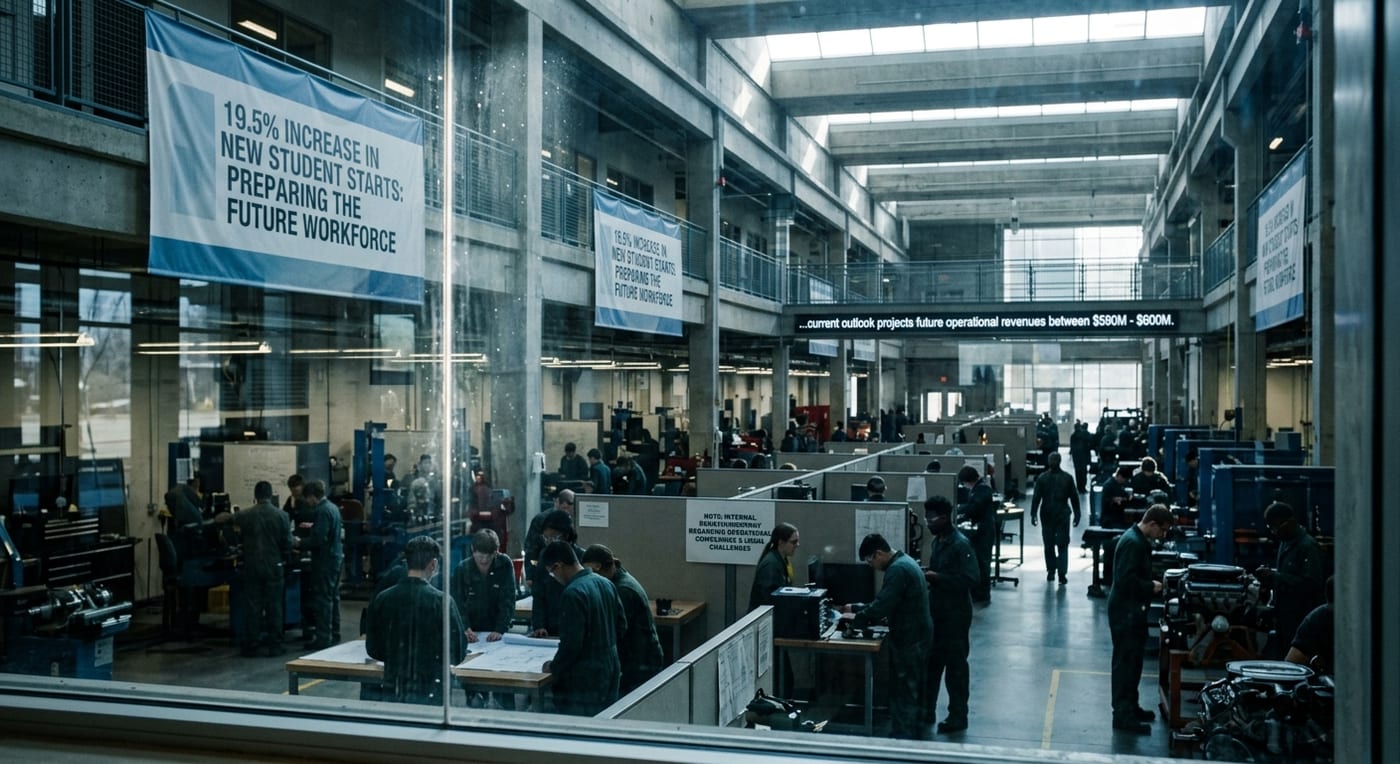
- Significant 19.5% increase in student starts.
- Facing legal challenges affecting stock performance.
- Outlook projects revenues of $590M-$600M for 2026.
Lincoln Educational Services Corporation (LINC) has recently positioned itself as a significant player in the vocational education sector. However, the trajectory of its growth is now clouded by legal challenges and operational difficulties that could significantly affect its ongoing performance. This article explores the recent achievements of Lincoln, particularly in terms of enrollment growth, while also examining the headwinds that the company is currently encountering, including legal scrutiny that has sparked investor concern.
Enrollment Growth Amid Strong Demand
In the first quarter of 2026, Lincoln Educational Services reported a stunning 19.5% increase in student starts, a statistic that reflects an increasing consumer desire for vocational training in light of persistent labor shortages across several key sectors, especially healthcare and automotive. This overwhelming demand is providing a favorable business environment, propelling Lincoln through a substantial revenue increase of approximately 22.5%, nearing $144 million. The increase can be attributed to Lincoln’s careful strategic focus on practical education that aligns well with industry needs.
Lincoln's success, however, is partly dichotomous. While the spike in enrollments paints a rosy picture, the company's financial stability is threatened by underlying operational issues primarily related to its admissions practices. The context of this rapid growth is one of rising scrutiny, particularly concerning how the company manages to convert its prospective students into actual attendees, a metric heavily scrutinized by investors and analysts alike.
Operational Challenges and Legal Scrutiny
Despite the impressive growth, Lincoln Educational Services is now navigating turbulent waters. Following its announcement of the second quarter results on August 10, 2026, investor sentiment swiftly turned negative. The company revealed a disheartening 1% increase in student starts, which starkly contrasts with the previously reported growth and compounded the concerns regarding management's earlier optimistic outlook regarding sustained demand. Investors were left apprehensive, and the share price plummeted by $10.22, or nearly 25%, erasing over $300 million from its market capitalization in just one day.
The legal implications of the company's operational challenges are significant. Following the announcement of the second-quarter results, multiple class action lawsuits have been initiated against Lincoln Educational Services, alleging that the company made materially misleading statements about its business health, particularly in relation to its student start metrics. These lawsuits focus on whether the company effectively converted enrolled students into active participants in its programs. In light of these developments, Lincoln is facing allegations of securities fraud, pressing concerns that could permeate through its investor relations.
Ongoing Legal Issues and Their Impact
The recent spate of lawsuits against Lincoln has prompted national shareholders’ rights firms to issue alerts to investors. Law firms like Hagens Berman and Wolf Haldenstein Adler Freeman & Herz LLP have begun investigations into potential violations of securities laws. These investigations primarily relate to allegations of the disclosure of materially false and misleading statements regarding the company's operational health and its ability to convert student enrollments into actual attendances.
As these lawsuits unfold, the company must balance its strategic growth amidst increasing legal challenges. Lincoln management has emphasized its commitment to addressing the operational issues affecting student conversion rates, indicating that the company is taking steps to enhance its admissions processes and ensure that students who enroll actually commence classes. It remains to be seen whether these measures will restore investor confidence or whether the legal ramifications will continue to disrupt the company’s trajectory.
Market Outlook and Future Prospects
Looking forward, the company has expressed cautious optimism regarding its outlook, projecting revenues between $590 million and $600 million for 2026, despite the ongoing legal troubles. This forecast hinges significantly on Lincoln’s ability to navigate through its operational hurdles and effectively manage its admissions strategies. However, given the recent events, investor confidence may remain shaky until the company can provide more consistent performance signals and clarity regarding its legal challenges.
Competitively, the market for vocational education is robust, largely driven by a persistent demand for skilled labor. If Lincoln can leverage its current enrollment levels to convert more students into active learners while simultaneously addressing the legal embroilments, it stands to benefit from a favorable market environment characterized by high demand for healthcare and automotive training.
Conclusion
In summary, Lincoln Educational Services Corporation is at a critical juncture. The noteworthy growth of 19.5% in student enrollments signals robust market demand for vocational education; however, the company faces significant operational challenges that threaten to undermine investor confidence. Legal developments surrounding allegations of misleading statements regarding student conversions could further complicate Lincoln’s recovery and growth strategy. Investors and stakeholders will need to closely monitor these unfolding events as Lincoln continues to maneuver through both its impressive growth trajectory and the hurdles posed by its legal struggles. Ultimately, the future of Lincoln Educational Services hinges on its ability to address these issues while sustaining growth in a competitive landscape. The same pressure is reflected in recent reporting on the issue, which helps explain why the company's pricing decisions remain under scrutiny.