

Intel's Strategic Pivot to AI Growth
ED
Editorial
Cashu Finance·5 min read
TL;DR
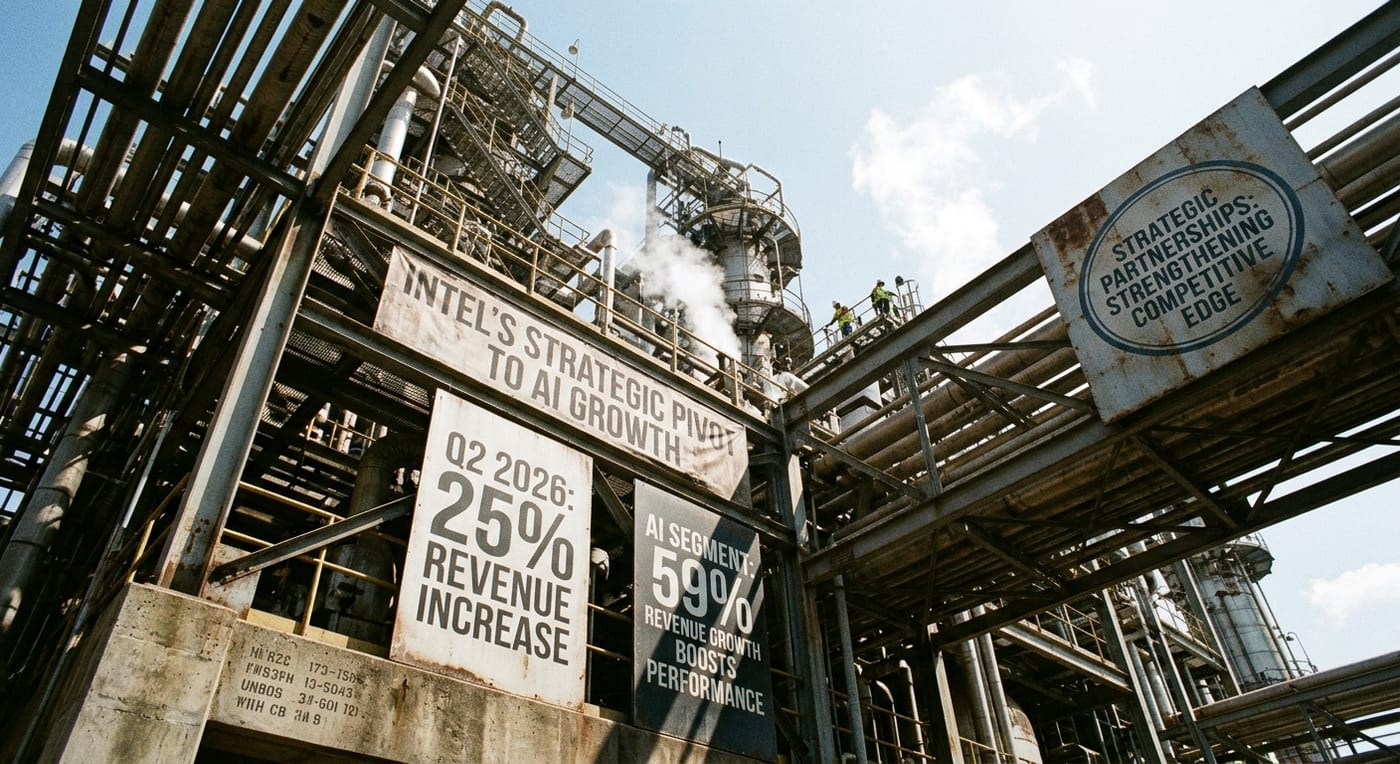
- Intel reports a 25% revenue increase in Q2 2026.
- AI segment revenue grew 59%, boosting overall performance.
- Strategic partnerships strengthen Intel's competitive edge.
Intel Corp. (INTC) is undergoing a transformative journey, significantly shifting its focus towards the artificial intelligence (AI) sector as it seeks to reclaim its position in a fiercely competitive semiconductor market. This strategic pivot has already started to yield impressive results, propelling revenue to heights not seen in years and reflecting a well-calculated response to evolving market demands.
Financial Resurgence in Q2 2026
In the second quarter of 2026, Intel announced a remarkable revenue increase of 25% year-over-year, totaling $16.1 billion. This growth is primarily attributed to its robust performance in the AI and data center divisions, which alone contributed $6.3 billion in revenue—a staggering 59% growth compared to 2025. Such impressive figures not only highlight Intel's strategic realignment but also the growing significance of AI technology in the semiconductor landscape.
The resurgence in financial performance marks a significant shift from previous challenges that had plagued Intel, showcasing the effectiveness of its new direction. The core of this revival lies within Intel's decisive efforts to capitalize on the burgeoning demand for AI and data processing capabilities—a market transforming at an unprecedented pace due to advancements in computing efficiency and processing power.
Navigating Market Pressures
Despite these favorable results, Intel's trajectory has not been without challenges. Recently, a sharp decline in intelligence from rising oil prices and general economic concerns has weighed heavily on investor confidence, causing a temporary setback for the stock. On October 22, 2026, Intel's shares plummeted 8.1%, reflecting wider fears impacting the tech industry, particularly related to costs associated with data center investments and AI development. The issue at hand is that the massive resource requirements for expanding data center infrastructure are leading many companies, including Intel, to grapple with financing hurdles as borrowing costs continue to rise.
More specifically, the increase in Brent crude prices, now above $112 a barrel due to geopolitical tensions, complicates the outlook for chip makers like Intel, suggesting that increasing operational costs could impact margins in the near term. This delicate state of affairs has brought concerns of inflation and sustained higher borrowing rates to the forefront, which could significantly affect the overall market for AI investments.
The situation is further exacerbated by reports from major tech players like Meta Platforms that indicate a shift in capital spending strategies in response to tightening cash flows, adding another layer of complexity to Intel's planning and execution moving forward.
Capitalizing on AI Demand
Intel's prominent role in the AI ecosystem is underscored by its recent partnerships and initiatives aimed at expansion in AI-driven computing. The recent surge in AI adoption has positioned Intel as a key supplier within this landscape. As companies increasingly depend on advanced chips for AI applications, Intel’s revenue streams appear increasingly fortified.
The company's efforts are further illustrated through its 47% stake in Nvidia's investment portfolio. Nvidia's focus on AI positions not just itself but also Intel, given the latter's leadership in CPU markets, thus ensuring mutual growth prospects.
Against this backdrop, Intel is actively enhancing its product offerings, ensuring they are optimized for AI workloads, signaling a critical pivot amidst increasing competition in the tech sector.
Strategic Partnerships and Competitive Edge
To maintain and enhance its competitive edge, Intel is pursuing strategic partnerships that bolster its capabilities in the AI domain. Collaborations with leading tech firms and investment in research and development are central to this strategy. For example, the company's alliances aim to enhance its foundry services, thereby expanding Intel's market share in semiconductor manufacturing. (Read more about these partnerships in our previous piece on Intel’s AI transformation here).
Furthermore, Intel's recent expansions within the AI sector align with its long-term vision. This is about not only increasing market share but also reaffirming its commitment to innovation and technology leadership in semiconductor design and production.
Investor Outlook and Future Considerations
Intel's future is intertwined with its ability to navigate the complexities posed by supply chain constraints, competitive pressures from rivals like AMD and Arm, and macroeconomic factors that have the potential to temper growth in the semiconductor industry. Analysts are keeping a meticulous eye on Intel's maneuvers as it seeks to stabilize its market presence while responding actively to ongoing economic challenges.
Despite the stock's recent volatility, many investors are cautiously optimistic, recognizing the strategic shift towards AI as fundamentally necessary for recovery. In summary, although operational hurdles remain, Intel Corp.'s transformation through AI-centric initiatives reflects a well-considered strategy aimed at substantial long-term growth.
The path forward includes navigating external pressures while leveraging strategic partnerships to minimize risk and enhance product offerings to capitalize on the robust demand for AI technologies. As the company continues to respond to market conditions, the emphasis on innovation and adaptability may very well determine its standing in the semiconductor industry for years to come. The same pressure is reflected in recent reporting on the issue, which helps explain why the company's pricing decisions remain under scrutiny.